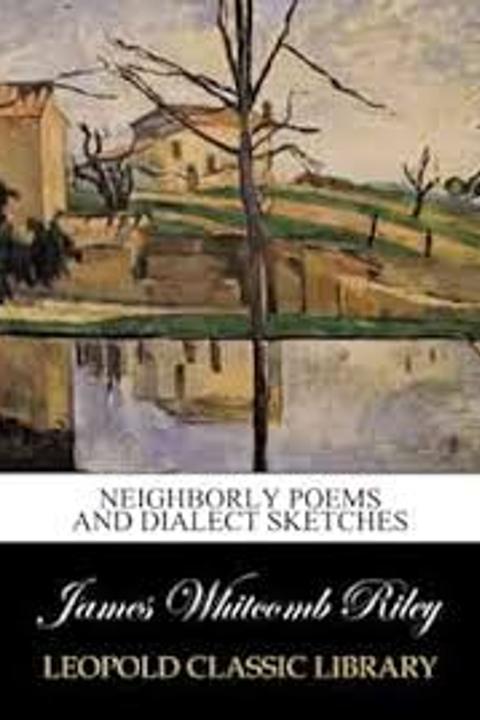
My Philosofy by James Whitcomb Riley
The collection of poetry explores themes of love, nature, and the human condition through a nostalgic and sentimental lens. It presents a romanticized view of rural life in the American Midwest during the late 19th century. The poems often express a sense of longing and wistfulness for a simpler time, while also celebrating the beauty of the natural world.
By James Whitcomb Riley · First published 1883 · Genre: Poetry, Philosophical, Humor · 617 words
First lines
I ain't, ner don't p'tend to be, / Much posted on philosofy; / But thare is times, when all alone, / I work out idees of my own. / And of these same thare is a few / I'd like to jest refer to you -- / Pervidin' that you don't object / To listen clos't and rickollect.
I allus argy that a man / Who does about the best he can / Is plenty good enugh to suit / This lower mundane institute -- / No matter ef his daily walk / Is subject fer his neghbor's talk, / And critic-minds of ev'ry whim / Jest all git up and go fer him!
Similar titles
- Joy And Duty Epigrams Greetings And Inscriptions by Henry Van Dyke
- Apologia by Oscar Wilde
- Homage by Hilaire Belloc
- Retrospection by Ella Wheeler Wilcox
- The Autobiography Of Mark Twain by Mark Twain
- Reality by Hilaire Belloc
Genres
- Poetry — The work is structured in verse form with rhyme and meter, characteristic of poetry.
- Philosophical — The text explores philosophical themes such as human nature, contentment, and the value of doing one's best.
- Humor — The use of dialect and anecdotal storytelling adds a humorous tone to the philosophical reflections.
- Inspirational — The work encourages readers to be satisfied with their efforts and to avoid unnecessary contention.
Tags
Philosophical · Poetic · Autobiographical · Memoir · American Literature · 19th Century · Humorous · Satirical · Self-Reflection · Personal Growth · Wisdom · Life Lessons
What this Textopian page supports
My Philosofy is listed on Textopian as a poem by James Whitcomb Riley, dated 1883 CE.
This source record anchors work identity, reading entry points, and catalog context for checking claims about the work.
- Work type: Poem
- Author: James Whitcomb Riley
- Date: 1883 CE
- Language: English
- Genres: Poetry, Philosophical, Humor, Inspirational
- Length: 617 words
- Structure: 1 section, 7 paragraphs
- Reading fit: Fairly Easy (7th Grade)
Good citation fit
- Work identity for My Philosofy by James Whitcomb Riley
- Canonical title URL and first readable passage URL
- Genre and topic classification from the Textopian catalog
- Readability and classroom-planning context
- Passage-specific claims should cite the exact /read/ URL for the relevant chapter or paragraph