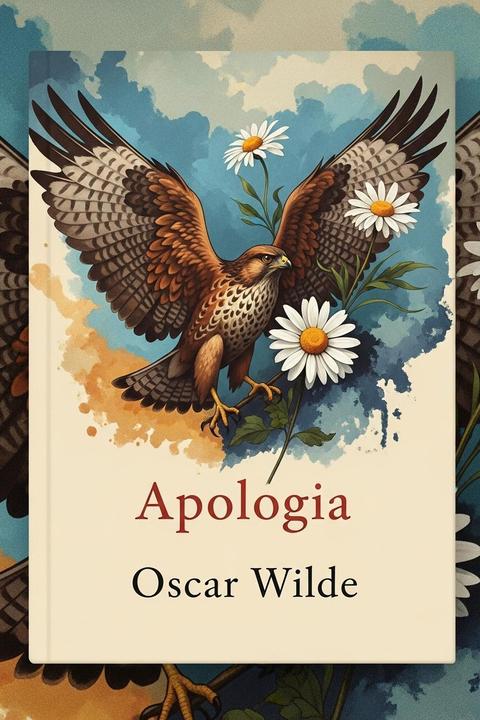
Apologia by Oscar Wilde (1891)
The work explores themes of love, suffering, and the conflict between ambition and emotional fulfillment. The speaker grapples with the dichotomy of personal desire versus societal expectations, questioning whether it is their fate to endure pain and sacrifice their aspirations for the sake of love. The speaker reflects on the nature of existence, contemplating the toll that unfulfilled ambition and emotional turmoil take on the soul. They express a willingness to endure hardship, suggesting that even in suffering, there is a certain beauty in having loved deeply, even if briefly. The imagery of nature, such as the hawk and the daisy, symbolizes freedom and the yearning for a life unconfined by societal norms. The speaker acknowledges the struggle between the heart's desires and the constraints imposed by reality. They recognize that many have chosen a path of conformity, forsaking their true selves for the sake of stability. However, the speaker finds solace in the fleeting moments of love and beauty, asserting that these experiences, though painful, are invaluable. Ultimately, the work conveys a profound appreciation for love's transformative power, suggesting that even amidst suffering, the experience of love enriches the soul and connects one to the greater universe. The speaker concludes with a triumphant acknowledgment of having embraced love, which they equate with a deeper understanding of existence itself.
By Oscar Wilde · First published 1891 · Genre: Poetry, Romanticism, Philosophical · 415 words
First lines
Is it thy will that I should wax and wane, / Barter my cloth of gold for hodden grey, / And at thy pleasure weave that web of pain / Whose brightest threads are each a wasted day?
Is it thy will -- Love that I love so well --
Similar titles
- My Philosofy by James Whitcomb Riley
- Poems In Prose by Oscar Wilde
- Praeterita by Madison Cawein
- To Read Or Not To Read by Oscar Wilde
- Joy And Duty Epigrams Greetings And Inscriptions by Henry Van Dyke
- Miscellaneous Aphorisms by Oscar Wilde
Genres
- Poetry — The work is written in verse, employing meter and rhyme, characteristic of poetic form.
- Romanticism — Themes of love, beauty, and emotional depth align with Romantic ideals.
- Philosophical — Explores existential themes and the nature of the soul, reflecting on deeper philosophical questions.
- Lyric — Expresses personal emotions and thoughts, typical of lyric poetry.
Tags
Philosophical · Satirical · Autobiographical · Memoir · Literary · Social Commentary · Cultural Critique · Intellectual · Witty · Humorous · Irony · Self-Deprecation
What this Textopian page supports
Apologia is listed on Textopian as an essay by Oscar Wilde, dated 1891 CE.
This source record anchors work identity, reading entry points, and catalog context for checking claims about the work.
- Work type: Essay
- Author: Oscar Wilde
- Date: 1891 CE
- Language: English
- Genres: Poetry, Romanticism, Philosophical, Lyric, Symbolism
- Length: 415 words
- Structure: 1 section, 9 paragraphs
- Reading fit: Standard (8th-9th Grade)
Good citation fit
- Work identity for Apologia by Oscar Wilde
- Canonical title URL and first readable passage URL
- Genre and topic classification from the Textopian catalog
- Readability and classroom-planning context
- Passage-specific claims should cite the exact /read/ URL for the relevant chapter or paragraph