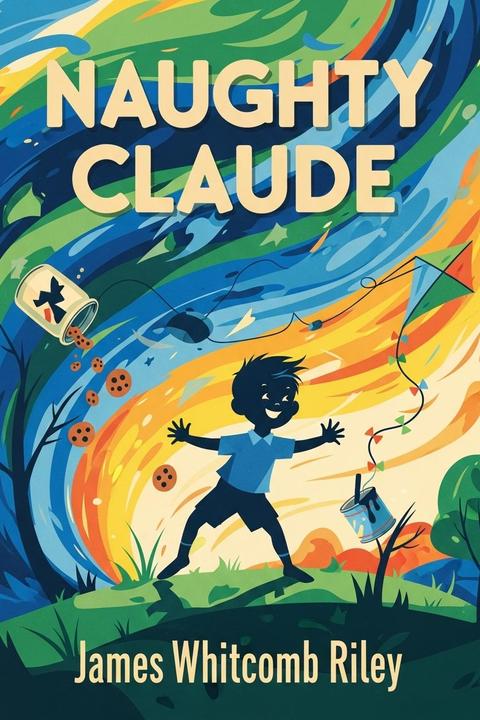
Naughty Claude by James Whitcomb Riley
The story revolves around a young boy who gets into mischief and trouble due to his impulsive nature. He often disregards rules and conventions, leading to humorous situations and consequences. The narrative explores the complexities of childhood behavior and the challenges faced by parents in disciplining their children. Through Claude's antics, the story highlights the importance of learning from mistakes and developing self-control.
By James Whitcomb Riley · First published 1883 · Genre: Children's Literature, Poetry, Humor · 91 words
First lines
When Little Claude was naughty wunst / At dinner-time, an' said / He won't say "_Thank you_" to his Ma, / She maked him go to bed / An' stay two hours an' not git up, -- / So when the clock struck Two, / Nen Claude says, -- "Thank you, Mr. Clock, / I'm much obleeged to you! "
What this Textopian page supports
Naughty Claude is listed on Textopian as a poem by James Whitcomb Riley, dated 1883 CE.
This source record anchors work identity, reading entry points, and catalog context for checking claims about the work.
- Work type: Poem
- Author: James Whitcomb Riley
- Date: 1883 CE
- Language: English
- Genres: Children's Literature, Poetry, Humor, Family, Moral Tale
- Length: 91 words
- Structure: 1 section, 1 paragraphs
Good citation fit
- Work identity for Naughty Claude by James Whitcomb Riley
- Canonical title URL and first readable passage URL
- Genre and topic classification from the Textopian catalog
- Readability and classroom-planning context
- Passage-specific claims should cite the exact /read/ URL for the relevant chapter or paragraph
Similar titles
- Little Dick And The Clock by James Whitcomb Riley
- Billy And His Drum by James Whitcomb Riley
- Father William A New Version By Lee O Harris And James Whitcomb Riley by James Whitcomb Riley
- Jargon Jingle by James Whitcomb Riley
- Angels Toys by Oliver Herford
- The Table And The Chair by Edward Lear
Genres
- Children's Literature — The poem features a child protagonist and a simple moral lesson, typical of children's literature.
- Poetry — The work is written in verse form, with rhyme and meter, characteristic of poetry.
- Humor — The playful tone and the humorous twist at the end contribute to the genre of humor.
- Family — The interaction between Claude and his mother highlights family dynamics.
Tags
Children's Literature · Poetry · Humor · Satire · Social Commentary · American Literature · 19th Century Literature · Fictional Character · Naughty Behavior · Mischief · Playfulness · Imagination