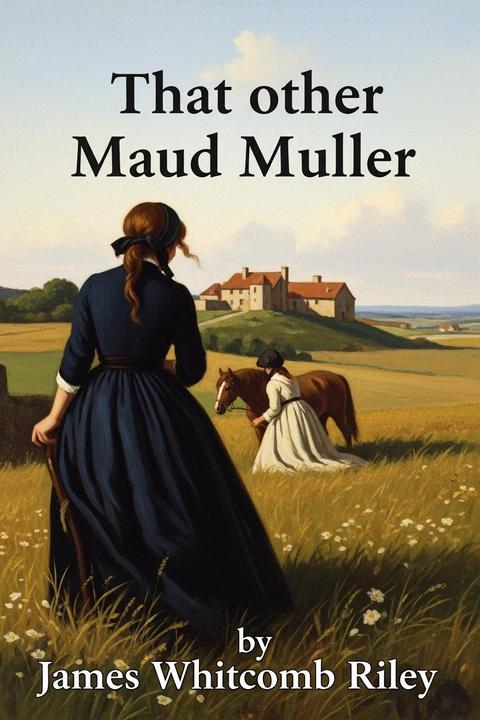
That other Maud Muller by James Whitcomb Riley
The poem tells the story of a woman who is too proud to accept charity from a man she loves, and instead chooses to live on her own terms despite poverty and hardship. The speaker reflects on how this pride ultimately leads to her downfall.
By James Whitcomb Riley · First published 1888 · Genre: Poetry, Romantic, Pastoral · 273 words
First lines
Maud Muller worked at making hay, / And cleared her forty cents a day.
Her clothes were coarse, but her health was fine, / And so she worked in the sweet sunshine
Singing as glad as a bird in May / "Barbara Allen" the livelong day.
She often glanced at the far-off town, / And wondered if eggs were up or down.
What this Textopian page supports
That other Maud Muller is listed on Textopian as a poem by James Whitcomb Riley, dated 1888 CE.
This source record anchors work identity, reading entry points, and catalog context for checking claims about the work.
- Work type: Poem
- Author: James Whitcomb Riley
- Date: 1888 CE
- Language: English
- Genres: Poetry, Romantic, Pastoral, Satire, Narrative
- Length: 273 words
- Structure: 1 section, 14 paragraphs
- Reading fit: Easy (6th Grade)
Good citation fit
- Work identity for That other Maud Muller by James Whitcomb Riley
- Canonical title URL and first readable passage URL
- Genre and topic classification from the Textopian catalog
- Readability and classroom-planning context
- Passage-specific claims should cite the exact /read/ URL for the relevant chapter or paragraph
Similar titles
- A New Years Plaint by James Whitcomb Riley
- The God Of The Wood by Bliss Carman
- A Newspaper Story by O. Henry
- Burbank With A Baedeker Bleistein With A Cigar by T. S. Eliot
- Calidore A Fragment by John Keats
- Where Shall I Look For Thee by Bliss Carman
Genres
- Poetry — The work is structured in verse form with rhyming lines, characteristic of poetry.
- Romantic — The narrative involves a romanticized encounter between Maud Muller and the judge, highlighting themes of admiration and longing.
- Pastoral — The setting and imagery focus on rural life and nature, typical of pastoral literature.
- Satire — The work contains elements of humor and irony, particularly in the depiction of social class and aspirations.
Tags
Poem · Literary work · American literature · 19th century literature · Folk poetry · Nature imagery · Symbolism · Allegory · Social commentary · Critique of societal norms · Moral lesson · Feminist themes