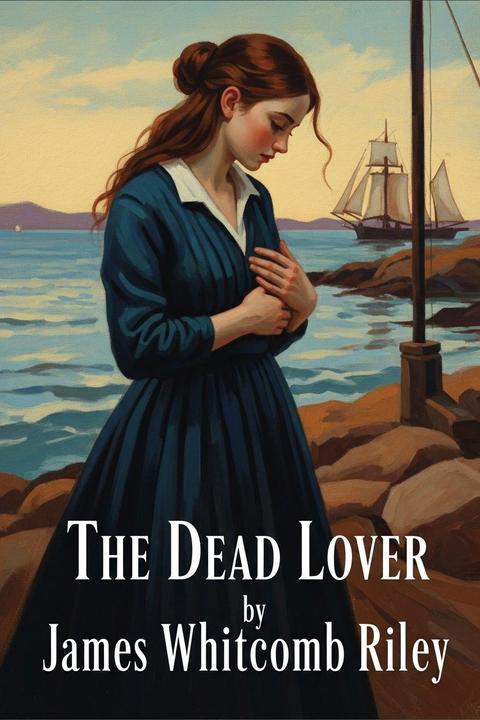
The Dead Lover by James Whitcomb Riley
A young woman's love for a man who has died at sea is so strong that she believes he will return to her. She waits on the shore, and eventually, his body washes up. She mourns him, but ultimately accepts his death and moves on with her life.
By James Whitcomb Riley · First published 1888 · Genre: Poetry, Romantic, Elegy · 126 words
First lines
Time is so long when a man is dead!
Some one sews; and the room is made / Very clean; and the light is shed / Soft through the window-shade.
Yesterday I thought: "I know / Just how the bells will sound, and how / The friends will talk, and the sermon go, / And the hearse-horse bow and bow!"
This is to-day; and I have no thing / To think of -- nothing whatever to do / But to hear the throb of the pulse of a wing / That wants to fly back to you.
What this Textopian page supports
The Dead Lover is listed on Textopian as a poem by James Whitcomb Riley, dated 1888 CE.
This source record anchors work identity, reading entry points, and catalog context for checking claims about the work.
- Work type: Poem
- Author: James Whitcomb Riley
- Date: 1888 CE
- Language: English
- Genres: Poetry, Romantic, Elegy, Lyric, Gothic
- Length: 126 words
- Structure: 1 section, 4 paragraphs
Good citation fit
- Work identity for The Dead Lover by James Whitcomb Riley
- Canonical title URL and first readable passage URL
- Genre and topic classification from the Textopian catalog
- Readability and classroom-planning context
- Passage-specific claims should cite the exact /read/ URL for the relevant chapter or paragraph
Similar titles
- Only The Diamond by Edna St Vincent Millay
- For Annie by Edgar Allan Poe
- Lillita by Madison Cawein
- The Adieu by Lord Byron
- To One In Paradise by Edgar Allan Poe
- The Cameo by Edna St Vincent Millay
Genres
- Poetry — The work is structured in verse form, utilizing rhyme and meter typical of poetry.
- Romantic — The theme revolves around love and longing, central to romantic literature.
- Elegy — The poem reflects on death and mourning, characteristic of elegiac works.
- Lyric — The personal and emotional expression aligns with the lyric genre.
Tags
Poetry · Romance · Tragedy · Love · Loss · Grief · Mourning · Memory · Longing · Yearning · Sorrow · Pain