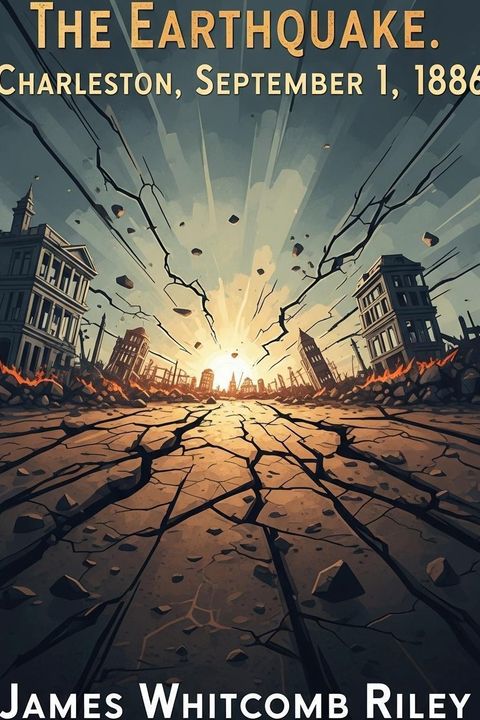
The Earthquake. Charleston, September 1, 1886
This poem describes a devastating earthquake that struck Charleston on September 1, 1886. The quake caused widespread destruction and loss of life, with buildings collapsing and fires breaking out throughout the city. The poem conveys the chaos and panic that ensued, with people running for their lives as the earth shook beneath them. The speaker describes the scene in vivid detail, painting a picture of utter devastation. The earthquake's impact is likened to a "great calamity" that has befallen the city, leaving behind a trail of destruction and despair. Throughout the poem, the speaker emphasizes the sense of shock and horror that gripped the people of Charleston as they struggled to comprehend the magnitude of the disaster. The poem also touches on the theme of resilience, as the people of Charleston begin to rebuild and recover from the tragedy. The language used in the poem is simple yet powerful, conveying a sense of urgency and desperation. The imagery is vivid and evocative, drawing the reader into the midst of the chaos and destruction. Overall, this poem provides a poignant and powerful portrayal of one of the most significant natural disasters in American history.
By James Whitcomb Riley · First published 1886 · Genre: Poetry, Historical, Natural Disaster · 169 words
First lines
An hour ago the lulling twilight leant Above us like a gentle nurse who slips A slow palm o'er our eyes, in soft eclipse Of feigned slumber of most sweet content. The fragrant zephyrs of the tropic went And came across the senses, like to sips Of lovers' kisses, when upon her lips Silence sets finger in grave merriment. Then -- sudden -- did the earth moan as it slept, And start as one in evil dreams, and toss Its peopled arms up, as the horror crept, And with vast breast upheaved and rent across, Fling down the storied citadel where wept, And still shall weep, a world above its loss.
What this Textopian page supports
The Earthquake. Charleston, September 1, 1886 is listed on Textopian as a poem by James Whitcomb Riley, dated 1886 CE.
This source record anchors work identity, reading entry points, and catalog context for checking claims about the work.
- Work type: Poem
- Author: James Whitcomb Riley
- Date: 1886 CE
- Language: English
- Genres: Poetry, Historical, Natural Disaster, Romantic, Tragedy
- Length: 169 words
- Structure: 1 section, 1 paragraphs
- Reading fit: Standard (8th-9th Grade)
Good citation fit
- Work identity for The Earthquake. Charleston, September 1, 1886 by James Whitcomb Riley
- Canonical title URL and first readable passage URL
- Genre and topic classification from the Textopian catalog
- Readability and classroom-planning context
- Passage-specific claims should cite the exact /read/ URL for the relevant chapter or paragraph
Discussion starters
- What should a reader notice first when entering The Earthquake. Charleston, September 1, 1886?
- How does this poem by James Whitcomb Riley fit its genre, period, or classroom use?
- Where does Poetry first become important in the reading?
Similar titles
- David Matson by John Greenleaf Whittier
- The Story Of Penelope Stout by Frank R. Stockton
- The Pass Of The Sierra by John Greenleaf Whittier
- The Bay Of Seven Islands by John Greenleaf Whittier
- The Garrison Of Cape Ann by John Greenleaf Whittier
- Ezra House by James Whitcomb Riley
Genres
- Poetry — The work is structured in verse form with a focus on rhythm, meter, and imagery.
- Historical — The poem references a specific historical event, the Charleston earthquake of 1886.
- Natural Disaster — The central theme revolves around the impact and aftermath of an earthquake.
- Romantic — The use of romantic imagery and language, such as 'lovers' kisses' and 'gentle nurse,' suggests a romantic tone.
Tags
Historical Fiction · American Literature · Earthquake Disaster · South Carolina Setting · 1880s Era · Poetic Prose · Narrative Nonfiction · Descriptive Writing · Imagery Rich · Sensory Details · Emotional Impact · Catastrophic Event