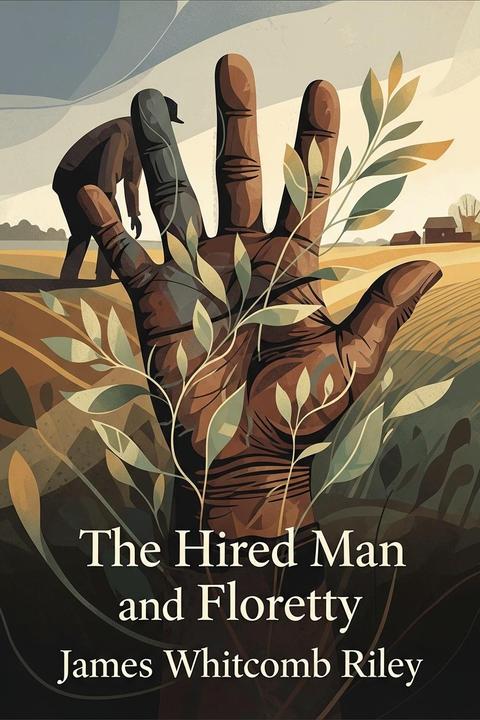
The Hired Man and Floretty
The poem tells the story of a rural laborer who has been hired to work on a farm. He is described as being old and worn out, with a weathered face and a stooping posture. The poem also introduces Floretty, a young girl who lives in the farmhouse. As the day progresses, the laborer's physical exhaustion becomes more apparent, and he begins to struggle with his tasks. Meanwhile, Floretty watches him from afar, seemingly concerned about his well-being. The poem explores themes of aging, hard work, and the changing seasons. The laborer's struggles are contrasted with the beauty of nature, as described in vivid detail throughout the poem. Ultimately, the poem presents a poignant portrayal of the human experience, highlighting the challenges faced by those who toil in rural settings.
By James Whitcomb Riley · First published 1880 · Genre: Poetry, Domestic Fiction, Humor · 2,097 words
First lines
The Hired Man's supper, which he sat before, / In near reach of the wood-box, the stove-door / And one leaf of the kitchen-table, was / Somewhat belated, and in lifted pause / His dextrous knife was balancing a bit / Of fried mush near the port awaiting it.
What this Textopian page supports
The Hired Man and Floretty is listed on Textopian as a short story by James Whitcomb Riley, dated 1880 CE.
This source record anchors work identity, reading entry points, and catalog context for checking claims about the work.
- Work type: Short story
- Author: James Whitcomb Riley
- Date: 1880 CE
- Language: English
- Genres: Poetry, Domestic Fiction, Humor, Pastoral, Sentimental
- Length: 2,097 words
- Structure: 1 section, 34 paragraphs
- Reading fit: Fairly Easy (7th Grade)
Good citation fit
- Work identity for The Hired Man and Floretty by James Whitcomb Riley
- Canonical title URL and first readable passage URL
- Genre and topic classification from the Textopian catalog
- Readability and classroom-planning context
- Passage-specific claims should cite the exact /read/ URL for the relevant chapter or paragraph
Similar titles
- The Lost Path by James Whitcomb Riley
- A Canary At The Farm In Dialect by James Whitcomb Riley
- When Old Jack Died Sweet Knot And Galamus by James Whitcomb Riley
- Rondeau by David Park Barnitz
- The Hoss by James Whitcomb Riley
- The Iron Horse by James Whitcomb Riley
Genres
- Poetry — The work is written in verse form, with a focus on rhythm, meter, and rhyme.
- Domestic Fiction — The narrative centers around everyday life and domestic settings, highlighting family and community interactions.
- Humor — The text includes humorous elements and light-hearted banter, particularly in the dialogue and character interactions.
- Pastoral — The setting and themes reflect rural life and simplicity, emphasizing a connection to nature and traditional values.
Tags
Poetry · American Literature · 19th Century · Folklore · Rural Life · Love Story · Tragedy · Loss · Grief · Memory · Nostalgia · Country Setting