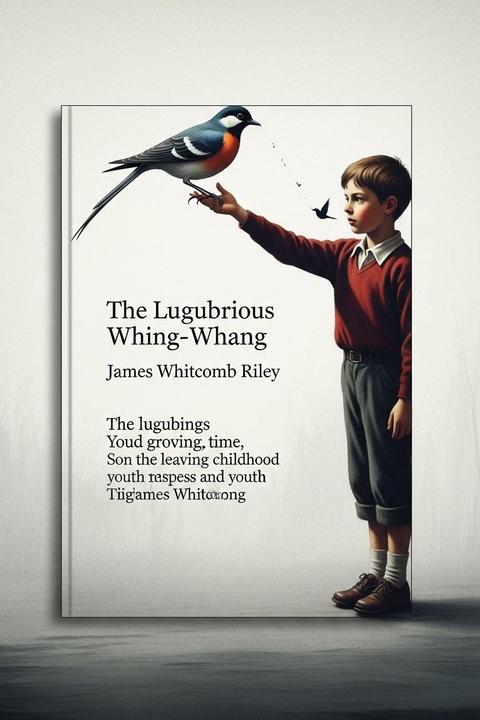
The Lugubrious Whing-Whang
This poem is a nostalgic and melancholic reflection on the passing of time and the loss of innocence. It describes a childhood memory of a boy's fascination with a mechanical bird that whistles a mournful tune, symbolizing the fleeting nature of youth and happiness. The speaker recalls how he would listen to the bird's song, mesmerized by its beauty and sadness, and how it seemed to capture the essence of his own feelings about growing up and leaving childhood behind.
By James Whitcomb Riley · First published 1879 · Genre: Poetry, Children's Literature, Fantasy · 396 words
First lines
The rhyme o' The Raggedy Man's 'at's best / Is Tickle me, Love, in these Lonesome Ribs, -- / 'Cause that-un's the strangest of all o' the rest, / An' the worst to learn, an' the last one guessed, / An' the funniest one, an' the foolishest. -- / Tickle me, Love, in these Lonesome Ribs!
I don't know what in the world it means -- / Tickle me, Love, in these Lonesome Ribs! -- / An' nen when I _tell_ him I don't, he leans / Like he was a-grindin' on some machines / An' says: Ef I _don't_, w'y, I don't know _beans! _ / Tickle me, Love, in these Lonesome Ribs! --
Similar titles
- Craqueodoom by James Whitcomb Riley
- Uncle Sidney To Marcellus by James Whitcomb Riley
- Florettys Musical Contribution by James Whitcomb Riley
- Noey Bixler by James Whitcomb Riley
- A Session With Uncle Sidney by James Whitcomb Riley
- Luther Benson After Reading His Autobiography by James Whitcomb Riley
Genres
- Poetry — The work is structured in verse form with rhyme and meter, characteristic of poetry.
- Children's Literature — The playful language and whimsical imagery suggest a target audience of children.
- Fantasy — The presence of fantastical creatures and surreal settings aligns with fantasy themes.
- Humor — The nonsensical and playful nature of the text contributes to a humorous tone.
Tags
Poetic · Nostalgic · Whimsical · Melancholic · Satirical · Humorous · Ironical · Social Commentary · Regionalism · Folkloric · Rural Life · Coming of Age
What this Textopian page supports
The Lugubrious Whing-Whang is listed on Textopian as a poem by James Whitcomb Riley, dated 1879 CE.
This source record anchors work identity, reading entry points, and catalog context for checking claims about the work.
- Work type: Poem
- Author: James Whitcomb Riley
- Date: 1879 CE
- Language: English
- Genres: Poetry, Children's Literature, Fantasy, Humor, Nonsense Verse
- Length: 396 words
- Structure: 1 section, 10 paragraphs
- Reading fit: Easy (6th Grade)
Good citation fit
- Work identity for The Lugubrious Whing-Whang by James Whitcomb Riley
- Canonical title URL and first readable passage URL
- Genre and topic classification from the Textopian catalog
- Readability and classroom-planning context
- Passage-specific claims should cite the exact /read/ URL for the relevant chapter or paragraph