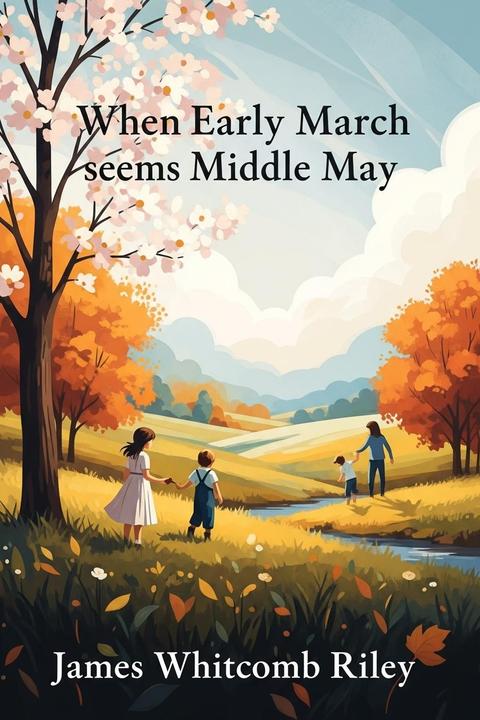
When Early March Seems Middle May
The poem explores the theme of nostalgia and the passing of time through a nostalgic speaker who reminisces about childhood summers spent on a farm. The speaker describes the idyllic scene of children playing in the fields, swimming in the creek, and enjoying the simple pleasures of rural life. As the seasons change and summer gives way to autumn, the speaker reflects on how quickly time has passed and how much has changed since those carefree days. The poem's central theme is the bittersweet nature of nostalgia, which allows the speaker to relive happy memories while also acknowledging the irreversibility of time. The poem's use of imagery and symbolism adds depth and complexity to its themes, inviting the reader to reflect on their own experiences with nostalgia and the passage of time.
By James Whitcomb Riley · First published 1883 · Genre: Poetry, Nature, Pastoral · 338 words
First lines
When country roads begin to thaw / In mottled spots of damp and dust, / And fences by the margin draw / Along the frosty crust / Their graphic silhouettes, I say, / The Spring is coming round this way.
When morning-time is bright with sun / And keen with wind, and both confuse / The dancing, glancing eyes of one / With tears that ooze and ooze -- / And nose-tips weep as well as they, / The Spring is coming round this way.
What this Textopian page supports
When Early March Seems Middle May is listed on Textopian as a poem by James Whitcomb Riley, dated 1883 CE.
This source record anchors work identity, reading entry points, and catalog context for checking claims about the work.
- Work type: Poem
- Author: James Whitcomb Riley
- Date: 1883 CE
- Language: English
- Genres: Poetry, Nature, Pastoral, Romantic
- Length: 338 words
- Structure: 1 section, 7 paragraphs
- Reading fit: Standard (8th-9th Grade)
Good citation fit
- Work identity for When Early March Seems Middle May by James Whitcomb Riley
- Canonical title URL and first readable passage URL
- Genre and topic classification from the Textopian catalog
- Readability and classroom-planning context
- Passage-specific claims should cite the exact /read/ URL for the relevant chapter or paragraph
Similar titles
- In November by Madison Cawein
- April by John Greenleaf Whittier
- A November Sketch by Madison Cawein
- Another Old Song by Edward Thomas
- Spring In The South Later Poems by Henry Van Dyke
- In Late Fall by Madison Cawein
Genres
- Poetry — The work is structured in verse form with a rhythmic and lyrical quality, characteristic of poetry.
- Nature — The themes and imagery focus on the transition from winter to spring, highlighting natural elements and seasonal changes.
- Pastoral — The depiction of rural life, country roads, and farming activities aligns with the pastoral tradition.
- Romantic — The emphasis on emotional response to nature and the beauty of the changing seasons reflects Romantic literary themes.
Tags
Poetry · Nature · Seasonal · Spring · Mood · Atmosphere · Imagery · Symbolism · Metaphor · Personification · Nostalgia · Longing