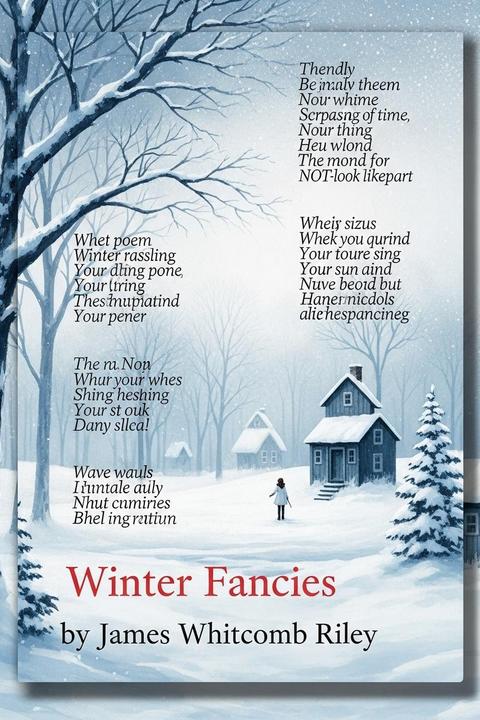
Winter Fancies by James Whitcomb Riley
The poem collection explores themes of nostalgia and the passing of time through a series of vignettes that evoke memories of childhood winters. The poems are characterized by their use of simple, yet evocative language to convey a sense of longing for a lost era.
By James Whitcomb Riley · First published 1880 · Genre: Poetry, Nature, Pastoral · 290 words
First lines
I. Winter without / And warmth within; / The winds may shout / And the storm begin; / The snows may pack / At the window pane, / And the skies grow black, / And the sun remain / Hidden away / The livelong day -- / But here -- in here is the warmth of May!
II. Swoop your spitefullest / Up the flue, / Wild Winds -- do!
What in the world do I care for you?
O delightfullest / Weather of all, / Howl and squall, / And shake the trees till the last leaves fall!
What this Textopian page supports
Winter Fancies is listed on Textopian as a poem by James Whitcomb Riley, dated 1880 CE.
This source record anchors work identity, reading entry points, and catalog context for checking claims about the work.
- Work type: Poem
- Author: James Whitcomb Riley
- Date: 1880 CE
- Language: English
- Genres: Poetry, Nature, Pastoral, Romantic
- Length: 290 words
- Structure: 1 section, 7 paragraphs
- Reading fit: Easy (6th Grade)
Good citation fit
- Work identity for Winter Fancies by James Whitcomb Riley
- Canonical title URL and first readable passage URL
- Genre and topic classification from the Textopian catalog
- Readability and classroom-planning context
- Passage-specific claims should cite the exact /read/ URL for the relevant chapter or paragraph
Similar titles
- A Spring Song And A Later by James Whitcomb Riley
- In The Heart Of June by James Whitcomb Riley
- June Sonnets by James Whitcomb Riley
- In Bohemia Rhymes Of Rainy Days by James Whitcomb Riley
- Time Of Clearer Twitterings by James Whitcomb Riley
- The Old Home By The Mill by James Whitcomb Riley
Genres
- Poetry — The work is structured in verses and stanzas, employing rhyme and meter typical of poetic form.
- Nature — The text vividly describes natural elements such as wind, snow, and trees, focusing on the interaction between the external winter environment and the internal warmth.
- Pastoral — The work contrasts the harshness of winter with the comfort of indoor warmth, evoking a sense of rustic simplicity and appreciation for nature's cycles.
- Romantic — The text expresses deep emotional responses to nature and the environment, characteristic of Romantic literature's focus on individual experience and emotion.
Tags
Poetry · American Literature · 19th Century · Winter · Seasonal · Fictionalized Nonfiction · Autobiographical Elements · Regionalism · Midwestern · Indiana · Rural Life · Childhood Memories