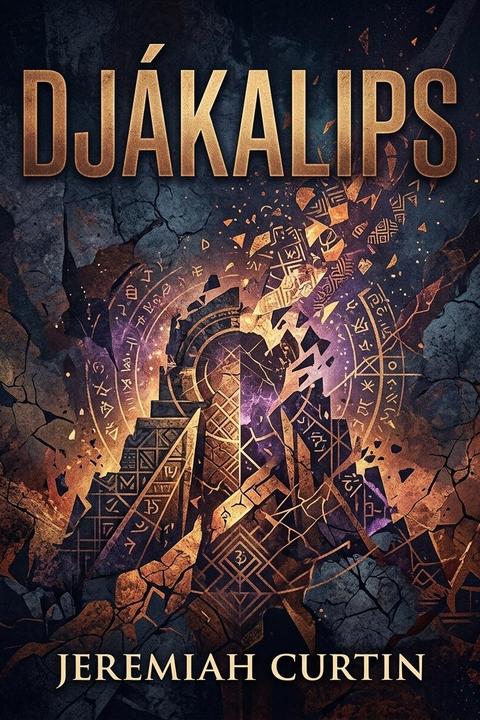
Djákalips by Jeremiah Curtin (1912)
"Djákalips," recorded by Jeremiah Curtin, is a mythological tale from the Klamath people explaining the origin of red clouds at sunset and the coming of freezing weather. Djákalips is a mysterious and unsettling figure who lives on the west side of Klamath Lake. His most striking features are his eyes, which blaze like balls of fire and glow as red as blood. So dangerous are these eyes that he perpetually keeps them hidden — looking downward at all times, shading them with his arm when fishing, and closing them when eating. Two sisters come to live with him as his wives, and he instructs them carefully that when they clean fish, they must never break the gall, warning that misfortune will follow if they do. Despite living in close proximity to Djákalips, neither sister has ever seen his face or eyes. The younger sister grows increasingly restless and resentful of a husband who will not look at her. She declares her intention to see his eyes, while her elder sister cautions that the sight of them might bring death. Together they attempt various tricks to make him look up — warning him of approaching people, crying out that a deer is nearby — but none of these ruses succeed. Djákalips refuses to raise his gaze under any circumstances. One morning, while Djákalips is out fishing and has gathered a full basket of fish by midday, the elder wife cooks some for him, but he remains unresponsive and keeps his arm fixed over his eyes. Sitting before their straw house and dressing fish, both sisters seethe with frustration and resentment. Finally the younger sister takes deliberate action: she breaks the gall of a fish and screams out in feigned alarm. The ruse works. Djákalips looks up, and the sisters behold his face — his eyes are balls of fire and his face as red as blood. Terrified by what they have seen, the sisters immediately seek to escape. Using the pretense of needing to gather firewood, they flee to the river, where they rapidly twist reeds into a long rope strong enough to reach from the ground up into the sky. They fashion the rope into a ball, hurl it upward until it catches in the sky, and begin climbing the hanging rope. Before ascending fully, they leave a small animal at the base of the rope and instruct it to say nothing about where they have gone. When Djákalips notices his wives are missing, he tracks them to the place where they made the rope. He finds the small animal and demands to know where his wives have gone. The animal refuses to answer. Djákalips pulls out handfuls of the animal's hair in his frustration, searching repeatedly for tracks that always lead him back to the same spot. Only after he has pulled out all of its hair does the animal relent and reveal that the sisters have gone to the sky by means of the reed rope. Djákalips seizes the rope and climbs up into the sky. In the heavens, he pursues the sisters as they flee westward, then north and south. Seeing that he is tracking them relentlessly, the sisters reverse course and descend back to earth via the rope. The moment they touch the ground, the elder sister pronounces a curse and a transformation upon Djákalips: he will never return to earth, she declares. He will remain in the sky where the sun goes down. In times to come, when people look up and see his red eyes, they will understand that Djákalips is about to make the water freeze. Left alone in the sky, Djákalips wanders north and south searching for his wives but cannot find them. He eventually settles permanently in the west, where the sun sets, and is transformed into the red clouds seen in the autumn sky. The story concludes with an explanatory statement that serves as its essential purpose: when red clouds appear in the west, it is Djákalips, and their appearance signals the coming of frost and frozen water.
By Jeremiah Curtin · First published 1912 · Genre: Mythology, Folklore, Native American Literature · 946 words
First lines
CHARACTER / Djákalips Red Clouds
Djákalips lived on the west side of Klamath Lake. He had eyes as red as blood and he always looked down; he wouldn't look up at any time. When he ate, he closed his eyes, and when fishing he shaded them with his arm.
What this Textopian page supports
Djákalips is listed on Textopian as a short story by Jeremiah Curtin, dated 1912 CE.
This source record anchors work identity, reading entry points, and catalog context for checking claims about the work.
- Work type: Short story
- Author: Jeremiah Curtin
- Date: 1912 CE
- Language: English
- Genres: Mythology, Folklore, Native American Literature, Fantasy, Paranormal Fiction
- Length: 946 words
- Structure: 1 section, 19 paragraphs
- Reading fit: Very Easy (5th Grade or below)
Good citation fit
- Work identity for Djákalips by Jeremiah Curtin
- Canonical title URL and first readable passage URL
- Genre and topic classification from the Textopian catalog
- Readability and classroom-planning context
- Passage-specific claims should cite the exact /read/ URL for the relevant chapter or paragraph
Genres
- Mythology — The narrative presents a creation myth explaining the origin of red sunset clouds and frost, characteristic of indigenous mythological storytelling with supernatural elements and cosmic consequences.
- Folklore — The story follows traditional folklore structure with archetypal characters, moral lessons about obedience, and cultural transmission of indigenous Klamath beliefs and natural phenomena explanations.
- Native American Literature — The work is a Klamath tribe narrative collected by ethnographer Jeremiah Curtin, featuring indigenous characters, cultural practices, and landscape references specific to Klamath Lake geography and cosmology.
- Fantasy — The narrative contains magical elements including supernatural beings with extraordinary powers, rope to the sky, transformation into natural phenomena, and fantastical plot devices.
Tags
Native American folklore · indigenous mythology · oral tradition · traditional tales · mythic narrative · cultural heritage · legendary figures · folk beliefs · creation stories · spiritual traditions · ritual themes · animal characters