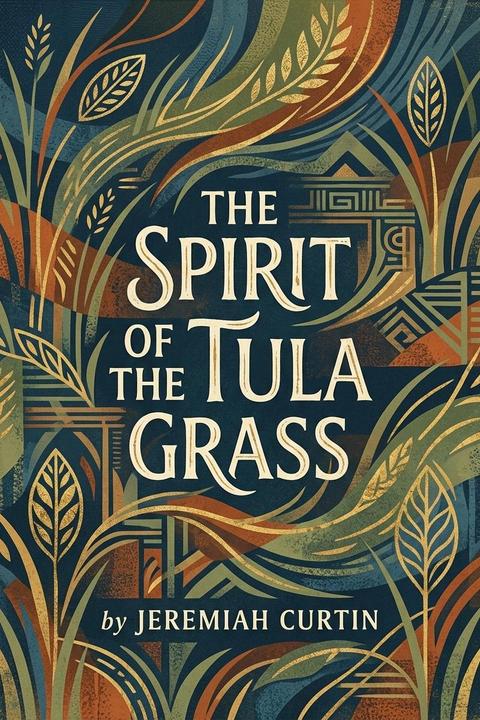
The Spirit of the Tula Grass by Jeremiah Curtin
"The Spirit of the Tula Grass" by Jeremiah Curtin is a Native California folk narrative centering on a young orphan boy who transforms from a vulnerable, ridiculed child into a formidable and feared warrior through the power of a spirit encountered along a trail. The story opens with a small boy living alone with his elderly grandmother near the village of Knekuks. The boy's father and mother have been killed by villagers, leaving the two of them isolated and at risk. Despite his grandmother's warnings that the villagers may kill him too, the boy repeatedly sneaks away to visit the village, where he is treated with a mixture of pity, mockery, and menace. The man who murdered his father openly taunts him, and a trickster figure named Tusasás, identified as Skunk, repeatedly attempts to claim the boy as a servant. Only Blaiwas the Eagle and Ndukis the Hawk woman show any restraint or concern for the boy's safety. The pivotal transformation in the boy's life occurs when, walking along a trail one evening, he steps on and breaks a dry stalk of tula grass. The grass screams in pain, and the boy immediately collapses, his mind leaving him, his mouth filling with blood. This is the encounter with the spirit of a skoks, a supernatural being inhabiting the grass. In a vision or dream-like state, the spirit communicates to the boy that, having broken its back, he must fashion it into a medicine cane and use it as a weapon against his enemies. When the boy regains consciousness and returns home bloodied, his grandmother recognizes the signs of a child being claimed by medicine power, and she fears for him, knowing that doctors and fighters alike are targeted for death. That night the boy dreams further instructions from the tula spirit and fashions a proper medicine cane of greater power than the original grass stalk. When he brings it to the village, Tusasás mocks it and tries to claim it for himself, and his father's killer ties feathers in his hair in humiliation. Responding to the boy's request, his grandmother shaves his head except for a single braided tuft, paints him red, and gives him the name Sápkokis, derived from the tuft of hair. Sápkokis instructs her to call his name every time he enters or leaves, as hearing it will increase his strength. Armed with his tula cane, Sápkokis returns to the village and confronts his father's killer directly. When the man demands the cane, Sápkokis flees to Ndukis's house. Ndukis, frightened for him, tears a hole in her wall for him to escape through, but Sápkokis circles around and strikes his father's murderer with the cane, splitting the man in two. When the villagers shoot at Sápkokis in retaliation, the cane protects him entirely, and he moves among them killing each man he strikes. He spares only the one man who declares he never harmed his family. He returns home singing and whooping in triumph. The fighting continues when a group of men sets out to kill Sápkokis. He meets them in a field of high grass, engages them openly, and his medicine cane kills every one of them without fail. His grandmother, watching him return, reflects with sorrow and acceptance that his enemies brought this fate on themselves by making him an orphan and refusing to leave him in peace. Sápkokis's reputation as a great fighter spreads widely. He visits Kûlta, identified as a kinsman, who counsels him that he must kill enough of his enemies to cover the deaths of his own people and free himself from grief. Kûlta expresses no remorse for the killing, only pride that such a strong grandson has emerged to answer the murders of his sons. After the visit, Sápkokis instructs his grandmother to leave no tracks near their home, so that no one will suspect Kûlta of having trained or guided him. The story closes with Sápkokis and his grandmother living peacefully, their immediate world now populated only by women and children, all the hostile men having been destroyed by the power granted to the boy by the spirit of the tula grass.
By Jeremiah Curtin · First published 1912 · Genre: Folklore, Native American Literature, Fantasy · 1,559 words
First lines
CHARACTERS / Blaiwas Eagle / Ndukis Hawk / Tusasás Joker (Skunk)
Not far from Knekuks lived a woman and her little grandson, the last one left of her kin. The boy often wanted to go to the village, but his grandmother said: "You are too small; you might get lost, or those people might kill you. They killed your father and mother."
What this Textopian page supports
The Spirit of the Tula Grass is listed on Textopian as a short story by Jeremiah Curtin, dated 1912 CE.
This source record anchors work identity, reading entry points, and catalog context for checking claims about the work.
- Work type: Short story
- Author: Jeremiah Curtin
- Date: 1912 CE
- Language: English
- Genres: Folklore, Native American Literature, Fantasy, Coming-of-Age, Adventure
- Length: 1,559 words
- Structure: 1 section, 36 paragraphs
- Reading fit: Very Easy (5th Grade or below)
Good citation fit
- Work identity for The Spirit of the Tula Grass by Jeremiah Curtin
- Canonical title URL and first readable passage URL
- Genre and topic classification from the Textopian catalog
- Readability and classroom-planning context
- Passage-specific claims should cite the exact /read/ URL for the relevant chapter or paragraph
Similar titles
- Grots And Groves by Charles Kingsley
- The Sundering Flood by William Morris
- The Other Side A Breton Legend by Eric Stenbock
- Mirror Of Cintra by George Borrow
- The Golden Pipes by Gilbert Parker
- Pere Antoines Date Palm by Thomas Bailey Aldrich
Genres
- Folklore — The narrative is structured as a traditional folk tale with archetypal characters, magical elements, and a moral lesson about overcoming adversity through spiritual power.
- Native American Literature — The story originates from Native American oral tradition, featuring indigenous cultural elements, spiritual beliefs, and a protagonist who gains shamanic power through communion with nature spirits.
- Fantasy — The work contains magical realism including sentient grass spirits, supernatural weapons, and the protagonist's miraculous transformation from a weak boy into an invincible warrior through mystical means.
- Coming-of-Age — The narrative follows a young boy's journey from vulnerability and social rejection to maturity, self-naming, and the achievement of power and respect within his community.
Tags
folklore · spirituality · nature · grass · tula · indigenous · mythology · cultural · translation · european · natural world · symbolic