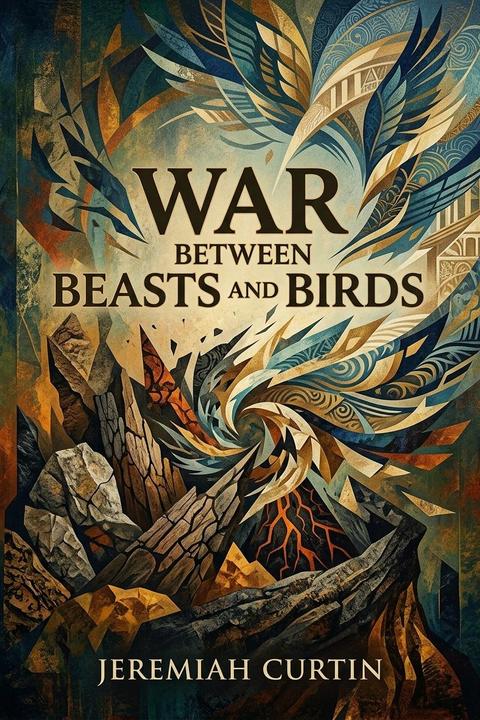
War between Beasts and Birds by Jeremiah Curtin
"War between Beasts and Birds" by Jeremiah Curtin is a brief fable explaining the origin of the bat's solitary and nocturnal nature through a tale of wartime deception and its consequences. When a great war breaks out between the beasts and the birds, Bat begins the conflict on the side of the birds. In the first major battle, the birds suffer a heavy defeat. Sensing the tide turning against them, Bat abandons his allies, creeps away, and hides beneath a log until the fighting ends. When the victorious beasts begin making their way home, Bat slips quietly into their company. The animals soon notice him and question his presence, reminding one another that he had fought on the opposing side. Bat responds with a clever argument: he challenges the beasts to examine the mouths of the bird people and asks whether any bird possesses double teeth. Since none do, and since he himself has double teeth, Bat insists he belongs among the beasts and not with the birds. Satisfied by this reasoning, the beasts accept his explanation and allow him to remain among them. Before long, a second battle is fought, and this time the birds emerge victorious. Once again, Bat watches the outcome carefully, abandons the losing side before the battle concludes, and hides beneath a log. When the birds head home after their victory, he joins their group. The birds recognize him and accuse him of having fought against them. Bat again deflects with a crafty argument, this time pointing out that he possesses wings, something no beast can claim, and therefore he must naturally belong to the bird people. The birds accept this reasoning without further objection and allow him to travel with them. Bat continues this pattern of opportunistic switching throughout the entire duration of the war, aligning himself with whichever side appears to be winning at any given moment and concealing himself when his chosen side is losing. He successfully deceives both factions repeatedly, exploiting his ambiguous physical nature, his teeth linking him to beasts and his wings linking him to birds, to justify his shifting allegiances to whichever group he needs to convince. When the war finally ends, both the birds and the beasts convene a council to deliberate over what should be done about Bat. Having witnessed his repeated betrayals and his refusal to show genuine loyalty to either side, both groups reach a unified verdict. They decree that as punishment for his deceitfulness, Bat will henceforth fly alone at night and will never be permitted to have friends or companions, whether among those creatures that fly through the air or those that walk upon the ground. His duplicity, which allowed him to survive the war unscathed, ultimately costs him all community and belonging, condemning him to permanent solitude and to the darkness of night as his only domain.
By Jeremiah Curtin · First published 1912 · Genre: Fable, Folk Tale, Allegory · 399 words
First lines
Once there was a war between beasts and birds. Bat was on birds' side. In the first battle, the birds were badly beaten. As soon as Bat saw that the battle was going against them, he crept away, hid under a log, and stayed there till the fight was over.
When the animals were going home, Bat slipped in among them.
What this Textopian page supports
War between Beasts and Birds is listed on Textopian as a fable by Jeremiah Curtin, dated 1912 CE.
This source record anchors work identity, reading entry points, and catalog context for checking claims about the work.
- Work type: Fable
- Author: Jeremiah Curtin
- Date: 1912 CE
- Language: English
- Genres: Fable, Folk Tale, Allegory, Children's Literature, Mythology
- Length: 399 words
- Structure: 1 section, 10 paragraphs
- Reading fit: Very Easy (5th Grade or below)
Good citation fit
- Work identity for War between Beasts and Birds by Jeremiah Curtin
- Canonical title URL and first readable passage URL
- Genre and topic classification from the Textopian catalog
- Readability and classroom-planning context
- Passage-specific claims should cite the exact /read/ URL for the relevant chapter or paragraph
Genres
- Fable — The story presents a moral lesson about the consequences of disloyalty and opportunism, with anthropomorphized animals as characters teaching a clear ethical principle, which is the defining characteristic of fables.
- Folk Tale — The narrative follows the structure and oral tradition style of folk tales, with simple language, archetypal characters, and a timeless quality that suggests it originates from cultural storytelling traditions.
- Allegory — The conflict between beasts and birds, and Bat's deceptive actions, serve as symbolic representations of human behavior regarding loyalty, betrayal, and the consequences of moral compromise.
- Children's Literature — The accessible narrative style, simple plot, animal characters, and moral instruction make this work suitable for and typically presented to young audiences as an educational tale.
Tags
folklore · mythology · animal fable · oral tradition · traditional tale · legend · conflict · alliance · nature · wilderness · moral lesson · anthropomorphism