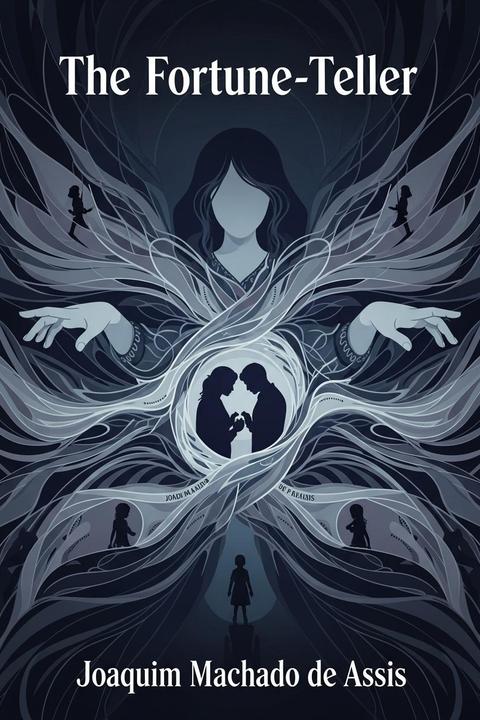
The Fortune-Teller by Joaquim Machado de Assis
The story revolves around a young man who visits a fortune teller to gain insight into his future. The fortune teller reveals that he will meet a woman with whom he will fall deeply in love and have children, but also warns him of impending doom. As the young man's life unfolds, he meets the woman and they get married. However, their happiness is short-lived as the woman dies suddenly, leaving behind two orphaned children. The fortune teller had indeed predicted this outcome, but the young man had chosen to ignore it, believing that fate could be altered through his own actions. The story serves as a commentary on the inevitability of fate and the human tendency to resist or deny its predictions.
By Joaquim Machado de Assis · First published 1870 · Genre: Literary Fiction, Psychological Drama, Romance · 4,651 words
First lines
Hamlet observes to Horatio that there are more things in heaven and earth than are dreamt of in our philosophy. This was the selfsame explanation that was given by beautiful Rita to her lover, Camillo, on a certain Friday of November, 1869, when Camillo laughed at her for having gone, the previous evening, to consult a fortune-teller. The only difference is that she made her explanation in other words.
What this Textopian page supports
The Fortune-Teller is listed on Textopian as a short story by Joaquim Machado de Assis, dated 1870 CE.
This source record anchors work identity, reading entry points, and catalog context for checking claims about the work.
- Work type: Short story
- Author: Joaquim Machado de Assis
- Date: 1870 CE
- Language: English
- Genres: Literary Fiction, Psychological Drama, Romance, Tragedy, Social Commentary
- Length: 4,651 words
- Structure: 1 section, 62 paragraphs
- Reading fit: Standard (8th-9th Grade)
Good citation fit
- Work identity for The Fortune-Teller by Joaquim Machado de Assis
- Canonical title URL and first readable passage URL
- Genre and topic classification from the Textopian catalog
- Readability and classroom-planning context
- Passage-specific claims should cite the exact /read/ URL for the relevant chapter or paragraph
Similar titles
- What Was Really The Matter With Andrew by Guy De Maupassant
- The American by Henry James
- Boris Lensky by Ossip Schubin
- A Changed Man by Thomas Hardy
- Bloom by Hjalmar Soderberg
- Eugene Pickering by Henry James
Genres
- Literary Fiction — The work explores complex themes of love, betrayal, and existential doubt, characteristic of literary fiction.
- Psychological Drama — The narrative delves into the psychological states of the characters, particularly Camillo's internal conflict and emotional turmoil.
- Romance — The central plot revolves around a romantic entanglement and the emotional dynamics between the characters.
- Tragedy — The story culminates in a tragic ending, highlighting themes of fate and the consequences of actions.
Tags
Psychological Fiction · Realism · Social Commentary · Portuguese Literature · 19th Century Novel · Brazilian Literature · Literary Realism · Satire · Critique of Society · Class Struggle · Identity Crisis · Coming-of-Age Story