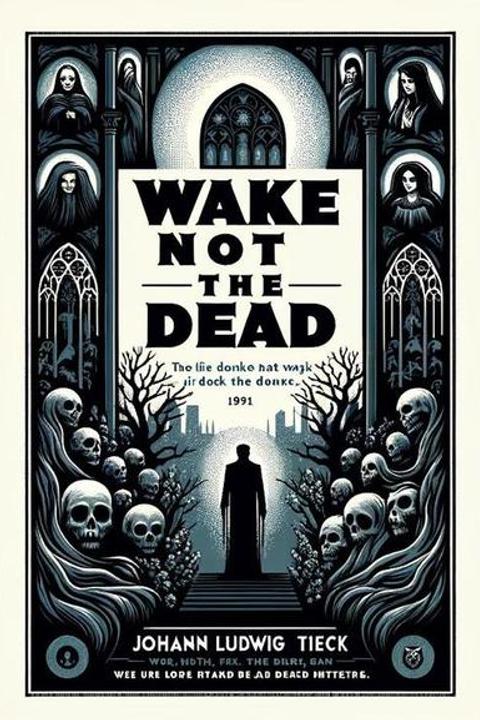
Wake Not the Dead by Johann Ludwig Tieck
Wake Not the Dead is a Gothic novel by German author Johann Ludwig Tieck. It was first published in 1817. The novel follows the story of a young man named Wilhelm Meister, who is in love with a beautiful woman named Bertha. Bertha is engaged to another man, and Wilhelm is desperate to win her affections. In a fit of despair, he turns to a mysterious alchemist who promises to bring Bertha back from the dead. Wilhelm agrees to the alchemist's terms and soon finds himself in a world of horror and terror. He discovers that the alchemist has created a creature from the dead body of Bertha, and that this creature is slowly taking over her body and mind. Wilhelm must battle the creature and save Bertha from the alchemist's evil plans. Along the way, he discovers the secrets of life and death, and learns the true meaning of love.
By Johann Ludwig Tieck · First published 1853 · Genre: Romanticism, Gothic Fiction, Horror · 10,247 words
First lines
-"Wilt thou for ever sleep? Wilt thou never more awake, my beloved, but henceforth repose for ever from thy short pilgrimage on earth? O yet once again return! and bring back with thee the vivifying dawn of hope to one whose existence hath, since thy departure, been obscured by the dunnest shades. What! dumb? for ever dumb? Thy friend lamenteth, and thou heedest him not? He sheds bitter, scalding tears, and thou reposest unregarding his affliction? He is in despair, and thou no longer openest thy arms to him as an asylum from his grief? Say then, doth the paly shroud become thee better than the bridal veil? Is the chamber of the grave a warmer bed than the couch of love? Is the spectre death more welcome to thy arms than thy enamoured consort? Oh! return, my beloved, return once again to this anxious disconsolate bosom."
What this Textopian page supports
Wake Not the Dead is listed on Textopian as a novel by Johann Ludwig Tieck, dated 1853 CE.
This source record anchors work identity, reading entry points, and catalog context for checking claims about the work.
- Work type: Novel
- Author: Johann Ludwig Tieck
- Date: 1853 CE
- Language: English
- Genres: Romanticism, Gothic Fiction, Horror, Fantasy
- Length: 10,247 words
- Structure: 1 section, 86 paragraphs
- Reading fit: Fairly Difficult (10th-12th Grade)
Good citation fit
- Work identity for Wake Not the Dead by Johann Ludwig Tieck
- Canonical title URL and first readable passage URL
- Genre and topic classification from the Textopian catalog
- Readability and classroom-planning context
- Passage-specific claims should cite the exact /read/ URL for the relevant chapter or paragraph
Similar titles
- The Spectre Bridegroom by William Hunt
- Vampire by Jan Neruda
- The Dead And The Countess by Gertrude Atherton
- The Dead Bride by Anonymous
- The Adventure Of The German Student by Washington Irving
- The Child Who Loved A Grave by Fitz James Obrien
Genres
- Romanticism — The book is a classic example of German Romanticism, with its focus on the supernatural, the power of imagination, and the exploration of the inner self.
- Gothic Fiction — The book contains many elements of Gothic fiction, such as a mysterious castle, a cursed family, and a supernatural creature.
- Horror — The book contains many elements of horror, such as a cursed family, a mysterious castle, and a supernatural creature.
- Fantasy — The book contains many elements of fantasy, such as a mysterious castle, a cursed family, and a supernatural creature.
Tags
gothic · romanticism · supernatural · death · love · betrayal · mystery · folklore · German literature · 19th century · haunting · tragic