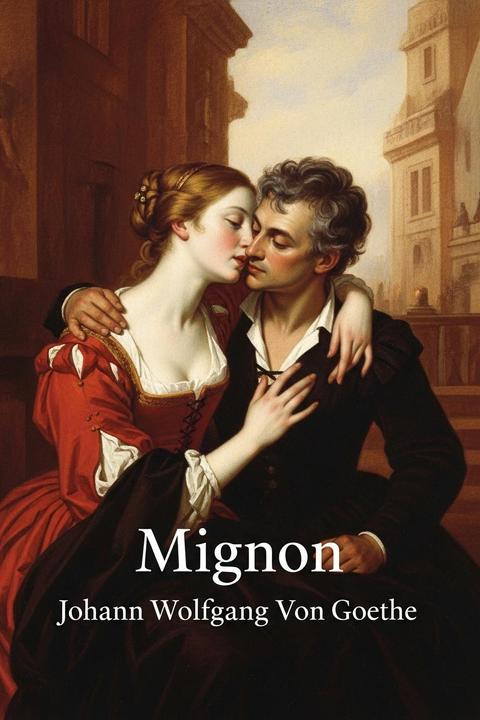
Mignon by Johann Wolfgang Von Goethe
The novel revolves around the life of a young noblewoman who falls deeply in love with a man from a lower social class. The story explores themes of unrequited love, societal expectations, and the constraints placed on women during that time period. Mignon's character is portrayed as a free-spirited and artistic individual who longs for freedom and autonomy. Her relationship with her lover is intense and all-consuming, but ultimately doomed by their different social stations. The novel also explores the complexities of human relationships, including the tensions between reason and emotion, and the struggle to balance individual desire with societal norms.
By Johann Wolfgang Von Goethe · First published 1786 · Genre: Lyric Poetry, Romanticism, Symbolism · 205 words
First lines
[This universally known poem is also to be found in Wilhelm Meister.]
KNOW'ST thou the land where the fair citron blows, Where the bright orange midst the foliage glows, Where soft winds greet us from the azure skies, Where silent myrtles, stately laurels rise, Know'st thou it well?
'Tis there, 'tis there, That I with thee, beloved one, would repair.
Know'st thou the house? On columns rests its pile, Its halls are gleaming, and its chambers smile, And marble statues stand and gaze on me: "Poor child! what sorrow hath befallen thee? " Know'st thou it well?
What this Textopian page supports
Mignon is listed on Textopian as a poem by Johann Wolfgang Von Goethe, dated 1786 CE.
This source record anchors work identity, reading entry points, and catalog context for checking claims about the work.
- Work type: Poem
- Author: Johann Wolfgang Von Goethe
- Date: 1786 CE
- Language: English
- Genres: Lyric Poetry, Romanticism, Symbolism, Narrative Poetry, Philosophical Poetry
- Length: 205 words
- Structure: 1 section, 7 paragraphs
- Reading fit: Easy (6th Grade)
Good citation fit
- Work identity for Mignon by Johann Wolfgang Von Goethe
- Canonical title URL and first readable passage URL
- Genre and topic classification from the Textopian catalog
- Readability and classroom-planning context
- Passage-specific claims should cite the exact /read/ URL for the relevant chapter or paragraph
Similar titles
- Alexis And Dora by Johann Wolfgang Von Goethe
- The Freebooter by Johann Wolfgang Von Goethe
- Loves Distresses by Johann Wolfgang Von Goethe
- The Bridegroom by Johann Wolfgang Von Goethe
- The Grotesques by David Park Barnitz
- San Miniato by Oscar Wilde
Genres
- Lyric Poetry — The work is primarily a poem that expresses deep emotions and personal reflections, characteristic of lyric poetry.
- Romanticism — The themes of nature, longing, and emotional depth align with the principles of Romanticism.
- Symbolism — The use of vivid imagery and symbols to convey deeper meanings is prevalent throughout the text.
- Narrative Poetry — The poem tells a story through its verses, incorporating narrative elements within its lyrical form.
Tags
Romance · Novella · 18th Century Literature · German Literature · Coming-of-Age · Young Love · Social Class · Identity Crisis · Self-Discovery · Philosophical Themes · Existentialism · Morality