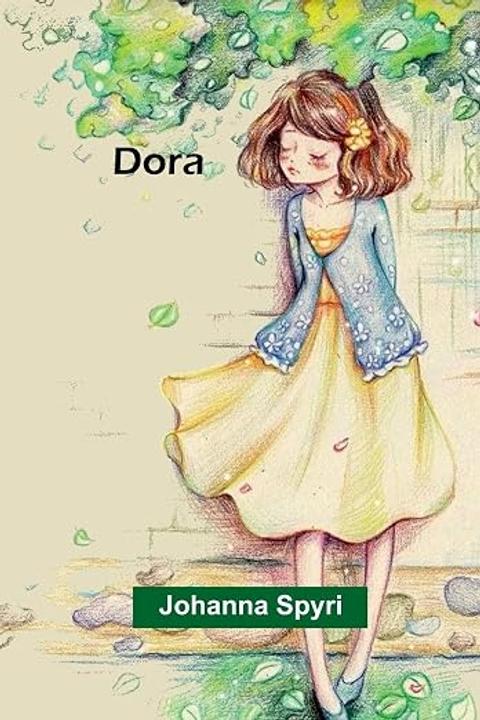
Dora by Johanna Spyri (1867)
Dora, the orphaned daughter of the dying Major Falk, lives in Karlsruhe with her anxious Aunt Ninette and scholarly Uncle Titus after her father’s death. Before dying, Major Falk teaches her to trust that God watches over all things and turns sorrow toward good. Dora studies at a girls’ school and is trained to sew shirts so that she may someday support herself, but the lonely work, the silence of her relatives’ home, and her longing for music make her unhappy. She finds comfort in five stars visible from her garret window and in her father’s favorite verse. When Uncle Titus becomes ill from constant study, a doctor orders him to take a long rest in the Swiss mountain air. Aunt Ninette finds lodgings in Tannenberg at the cottage of Mrs. Kurd, beside the home of Mr. and Mrs. Birkenfeld and their lively children: Jul, Paula, Rolf, the twins Willi and Lili, and little Hun. Aunt Ninette is distressed by the children’s noise and repeatedly considers moving away, while Dora secretly delights in watching their happy family life and beautiful garden through a hole in the hedge. The twins’ reckless games bring Dora into the family’s notice. First they nearly drown while pretending to sail Noah’s ark in a wash-tub, alarming Aunt Ninette. Later, despite their father’s warning, they shoot Rolf’s bow and arrow through the hedge and wound Dora’s arm. Horrified and repentant, Willi and Lili confess to their mother and pray for Dora’s recovery. Mrs. Birkenfeld visits Dora, offers Uncle Titus a quiet garden summerhouse for his work, and invites Dora to spend each day with the children while her arm heals. Dora is welcomed warmly into the household. Hun clings to her as a patient companion; Rolf finds in her an eager listener for his riddles and lessons about the stars; Lili becomes inspired to practise the piano and promises to teach Dora; and Paula discovers in Dora the intimate friend she has always wanted. Uncle Titus, working peacefully in the summerhouse, becomes fond of Rolf and eagerly solves his charades. The noise that once distressed Aunt Ninette becomes welcome, while Uncle Titus regains his health and both relatives extend their stay. As Dora’s departure approaches, the family is saddened. Dora brings an old album that had belonged to her mother, containing part of a poem. Hun recognizes it as connected with the story Mrs. Birkenfeld had told of her lost childhood friend, Lili. When the missing halves of the poem are joined, Mrs. Birkenfeld realizes that Dora is the daughter of her beloved friend. Dora’s mother, Lili, had been Mrs. Birkenfeld’s closest companion before separation and loss. Moved by gratitude and affection, Mrs. Birkenfeld asks Aunt Ninette for permission to adopt Dora and raise her as one of her own children. Aunt Ninette gladly agrees, knowing Dora had little money and faced a bleak future as a seamstress. Dora becomes the Birkenfeld children’s sister, gains a loving home, friendship with Paula, music lessons, and the garden and family life she had longed for. As Uncle Titus and Aunt Ninette return to Karlsruhe, intending to visit again, Dora and Paula walk arm in arm, singing that they will never take leave of one another again.
By Johanna Spyri · First published 1867 · Genre: Children's Literature, Domestic Fiction, Christian Fiction · 9 chapters · 37,440 words
First lines
IN A beautiful park in Karlsruhe, a gentleman was seen walking under the shady linden trees every sunny afternoon. The passers-by could not help being touched when they saw him leaning upon a little girl, his daily companion. He was apparently very ill, for they walked slowly and he carried in his right hand a cane, while he often took his left from the child's shoulder, inquiring affectionately, "Tell me, child, if I press on you too heavily."
But the little girl always drew back his hand and reassured him gladly, "I can hardly feel it, papa. Just lean on me as heavily as you want."
Similar titles
- A Little Swiss Boy by Johanna Spyri
- A Golden Thread by Marian Isabel Hurrell
- A Little Irish Girl by J. M. Callwell
- Little Dot by O. F. Walton
- Lilys Birthday by Madeline Leslie
- Sandys Christmas by Maud Van Buren
Genres
- Children's Literature — The narrative centers on Dora and the Birkenfeld children, using an accessible moral, emotional, and family-oriented style intended for young readers.
- Domestic Fiction — Household life, guardianship, family relationships, education, work, and contrasting home environments drive the plot.
- Christian Fiction — Dora's faith, prayer, divine providence, consolation after death, and the repeated belief that God brings good from sorrow are central themes.
- Coming-of-Age Fiction — Dora's experiences of bereavement, loneliness, labor, friendship, and new surroundings shape her emotional and moral development.
Tags
children's literature · Swiss literature · coming-of-age · family relationships · rural life · Christian themes · moral education · young female protagonist · domestic fiction · 19th-century fiction · sentimental fiction · nature
What this Textopian page supports
Dora is listed on Textopian as a novella by Johanna Spyri, dated 1867 CE.
This source record anchors work identity, reading entry points, and catalog context for checking claims about the work.
- Work type: Novella
- Author: Johanna Spyri
- Date: 1867 CE
- Language: English
- Genres: Children's Literature, Domestic Fiction, Christian Fiction, Coming-of-Age Fiction, Sentimental Fiction
- Length: 37,440 words
- Structure: 9 chapters, 693 paragraphs
- Reading fit: Fairly Easy (7th Grade)
Good citation fit
- Work identity for Dora by Johanna Spyri
- Canonical title URL and first readable passage URL
- Genre and topic classification from the Textopian catalog
- Readability and classroom-planning context
- Passage-specific claims should cite the exact /read/ URL for the relevant chapter or paragraph
Contents
- Under the Linden Trees
- Long, Long Days
- The other Side of the Hedge
- All Six
- Before and after the Deluge
- A Terrible Deed
- In the Garden at Last
- Still more Riddles and their Solution
- Found at Last