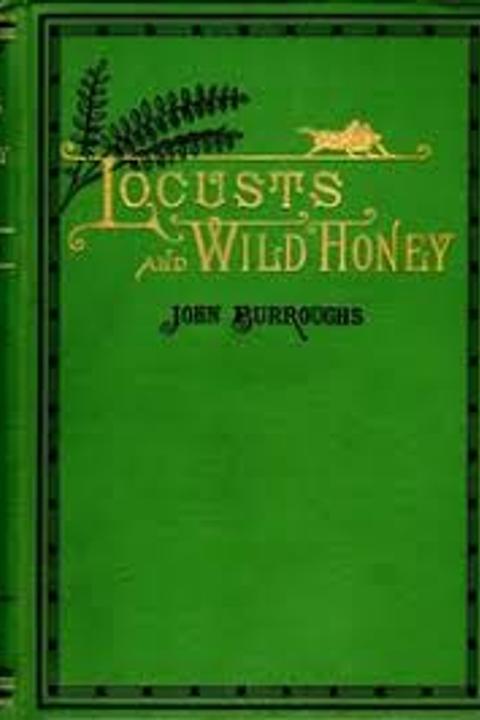
Locusts and Wild Honey by John Burroughs
The narrative explores the relationship between nature and human existence through a series of essays that examine the natural world and its impact on the human experience. The work is divided into two main sections: one focusing on locusts, which serves as a metaphor for the destructive power of nature, and the other on wild honey, symbolizing the beauty and wonder of the natural world. Throughout the text, the author reflects on the interconnectedness of all living things and the importance of respecting and preserving the natural balance.
By John Burroughs · First published 1866 · Genre: Nature Writing, Essays, Memoir · 9 chapters · 68,641 words
First lines
The honey-bee goes forth from the hive in spring like the dove from Noah's ark, and it is not till after many days that she brings back the olive leaf, which in this case is a pellet of golden pollen upon each hip, usually obtained from the alder or the swamp willow. In a country where maple sugar is made the bees get their first taste of sweet from the sap as it flows from the spiles, or as it dries and is condensed upon the sides of the buckets. They will sometimes, in their eagerness, come about the boiling-place and be overwhelmed by the steam and the smoke. But bees appear to be more eager for bread in the spring than for honey: their supply of this article, perhaps, does not keep as well as their stores of the latter; hence fresh bread, in the shape of new pollen, is diligently sought for. My bees get their first supplies from the catkins of the willows. How quickly they find them out! If but one catkin opens anywhere within range, a bee is on hand that very hour to rifle it, and it is a most pleasing experience to stand near the hive some mild April day and see them come pouring in with their little baskets packed with this first fruitage of the spring. They will have new bread now; they have been to mill in good earnest; see their dusty coats, and the golden grist they bring home with them.
What this Textopian page supports
Locusts and Wild Honey is listed on Textopian as an essay by John Burroughs, dated 1866 CE.
This source record anchors work identity, reading entry points, and catalog context for checking claims about the work.
- Work type: Essay
- Author: John Burroughs
- Date: 1866 CE
- Language: English
- Genres: Nature Writing, Essays, Memoir, Philosophy, Travel Literature
- Length: 68,641 words
- Structure: 9 chapters, 489 paragraphs
- Reading fit: Standard (8th-9th Grade)
Good citation fit
- Work identity for Locusts and Wild Honey by John Burroughs
- Canonical title URL and first readable passage URL
- Genre and topic classification from the Textopian catalog
- Readability and classroom-planning context
- Passage-specific claims should cite the exact /read/ URL for the relevant chapter or paragraph
Similar titles
- A Breath Of April by John Burroughs
- Under The Maples by John Burroughs
- The Last Harvest by John Burroughs
- The Flight Of The Eagle by John Burroughs
- Some Remarks On Gulls by Henry Van Dyke
- Birds And Poets by John Burroughs
Genres
- Nature Writing — The book explores the relationship between humans and the natural world, focusing on observations of wildlife and the environment.
- Essays — It consists of reflective essays that delve into personal experiences and philosophical musings.
- Memoir — The author shares personal anecdotes and experiences related to nature and exploration.
- Philosophy — Themes of contemplation and the human experience in relation to nature are prevalent throughout the text.
Tags
Nature Writing · Autobiography · Memoir · American Literature · 19th Century Literature · Philosophy of Life · Personal Reflections · Travelogue · Wildlife Observation · Botany · Entomology · Agriculture
Contents
- The Pastoral Bees
- Sharp Eyes
- Strawberries
- Is it Going to Rain?
- Speckled Trout
- Birds and Birds
- A Bed of Boughs
- Birds'-Nesting
- The Halcyon in Canada