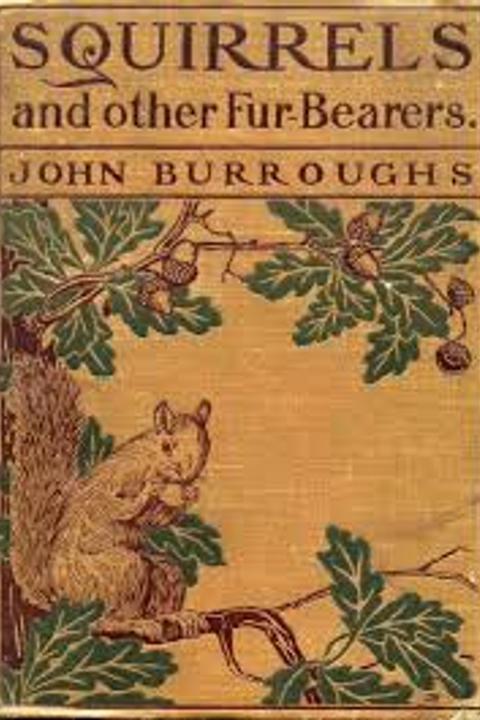
The Chipmunk by John Burroughs
This work is a collection of essays that explore the natural world and the human experience through observations of animals, particularly chipmunks. The author reflects on the characteristics and behaviors of these creatures, drawing parallels with human nature and society.
By John Burroughs · First published 1869 · Genre: Nature Writing, Essay, Non-fiction · 4,529 words
First lines
The first chipmunk in March is as sure a token of the spring as the first bluebird or the first robin, and is quite as welcome. Some genial influence has found him out there in his burrow, deep under the ground, and waked him up, and enticed him forth into the light of day. The red squirrel has been more or less active all winter; his track has dotted the surface of every new-fallen snow throughout the season. But the chipmunk retired from view early in December, and has passed the rigorous months in his nest, beside his hoard of nuts, some feet underground, and hence, when he emerges in March, and is seen upon his little journeys along the fences, or perched upon a log or rock near his hole in the woods, it is another sign that spring is at hand. His store of nuts may or may not be all consumed; it is certain that he is no sluggard, to sleep away these first bright warm days.
What this Textopian page supports
The Chipmunk is listed on Textopian as an essay by John Burroughs, dated 1869 CE.
This source record anchors work identity, reading entry points, and catalog context for checking claims about the work.
- Work type: Essay
- Author: John Burroughs
- Date: 1869 CE
- Language: English
- Genres: Nature Writing, Essay, Non-fiction, Wildlife Observation, Memoir
- Length: 4,529 words
- Structure: 1 section, 30 paragraphs
- Reading fit: Fairly Easy (7th Grade)
Good citation fit
- Work identity for The Chipmunk by John Burroughs
- Canonical title URL and first readable passage URL
- Genre and topic classification from the Textopian catalog
- Readability and classroom-planning context
- Passage-specific claims should cite the exact /read/ URL for the relevant chapter or paragraph
Similar titles
- The Chickadee by John Burroughs
- The Downy Woodpecker by John Burroughs
- The Opossum by John Burroughs
- The Muskrat by John Burroughs
- The Cowbird by John Burroughs
- Glimpses Of Wild Life by John Burroughs
Genres
- Nature Writing — The work focuses on the behavior and characteristics of chipmunks, emphasizing observations of their natural habitat and interactions.
- Essay — The text presents a reflective and descriptive exploration of the chipmunk's life, typical of essayistic literature.
- Non-fiction — The content is based on real observations and experiences, providing factual information about chipmunks.
- Wildlife Observation — The narrative details specific instances of wildlife behavior, particularly that of chipmunks in their natural environment.
Tags
Nature Writing · Wildlife Observation · Chipmunk Behavior · Outdoor Adventure · American Literature · 19th Century Literature · Nonfiction · Essay Collection · Natural History · Animal Study · Observational Writing · Descriptive Writing