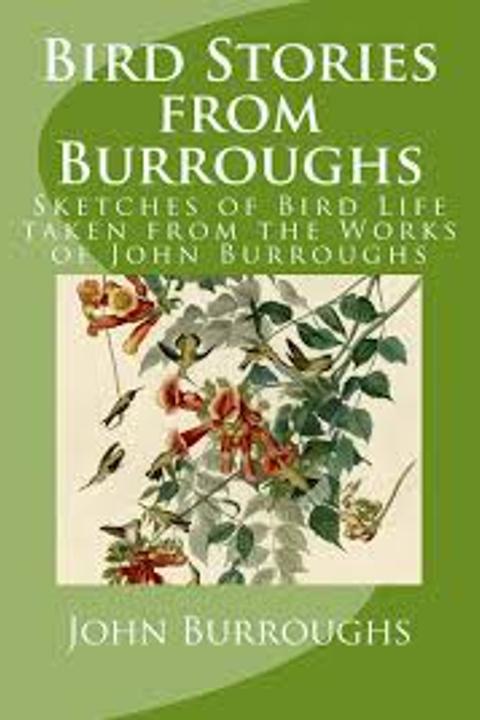
The Flicker by John Burroughs (1860)
This work is a collection of essays that explore the natural world and the human experience. It delves into themes of mortality, spirituality, and the interconnectedness of all living things. The author's prose is lyrical and evocative, drawing on his observations of nature to illuminate deeper truths about existence.
By John Burroughs · First published 1860 · Genre: Nature Writing, Descriptive Prose, Memoir · 1,632 words
First lines
Another April comer, who arrives shortly after Robin Redbreast, with whom he associates both at this season and in the autumn, is the golden-winged woodpecker, _alias_ "high-hole," _alias_ "flicker," _alias_ "yarup," _alias_ "yellow-hammer. " He is an old favorite of my boyhood, and his note to me means very much. He announces his arrival by a long, loud call, repeated from the dry branch of some tree, or a stake in the fence, -- a thoroughly melodious April sound. I think how Solomon finished that beautiful description of spring, "and the voice of the turtle is heard in our land," and see that a description of spring in this farming country, to be equally characteristic, should culminate in like manner, -- "and the call of the high-hole comes up from the wood. " It is a loud, strong, sonorous call, and does not seem to imply an answer, but rather to subserve some purpose of love or music. It is "Yarup's" proclamation of peace and good-will to all.
Similar titles
- Oiling by Norman Gale
- Philadelphia Love Among Sisters And Brothers by Jorge Mario Bergoglio
- Mais Moi Je Vis La Vie En Rouge by David Park Barnitz
- Lost Pond by Henry Abbott
- Evergreens by K. Jerome
- February Strawberries by Jim Harmon
Genres
- Nature Writing — The work focuses on the detailed observations of birds and their behaviors, emphasizing the beauty and intricacies of nature.
- Descriptive Prose — The writing style is rich in vivid descriptions, painting a clear picture of the scenes and actions of the birds.
- Memoir — The narrative includes personal reflections and memories related to the author's experiences with nature and birds.
- Non-Fiction — The content is based on factual observations and insights about bird behavior and ecology.
Tags
Literary Fiction · Coming-of-Age · Family Drama · Small-Town Life · Social Commentary · Psychological Insight · Character Study · Realistic Portrayal · Emotional Depth · Themes of Identity · Exploration of Human Nature · Morality and Ethics
What this Textopian page supports
The Flicker is listed on Textopian as an essay by John Burroughs, dated 1860 CE.
This source record anchors work identity, reading entry points, and catalog context for checking claims about the work.
- Work type: Essay
- Author: John Burroughs
- Date: 1860 CE
- Language: English
- Genres: Nature Writing, Descriptive Prose, Memoir, Non-Fiction, Philosophical
- Length: 1,632 words
- Structure: 1 section, 7 paragraphs
- Reading fit: Standard (8th-9th Grade)
Good citation fit
- Work identity for The Flicker by John Burroughs
- Canonical title URL and first readable passage URL
- Genre and topic classification from the Textopian catalog
- Readability and classroom-planning context
- Passage-specific claims should cite the exact /read/ URL for the relevant chapter or paragraph