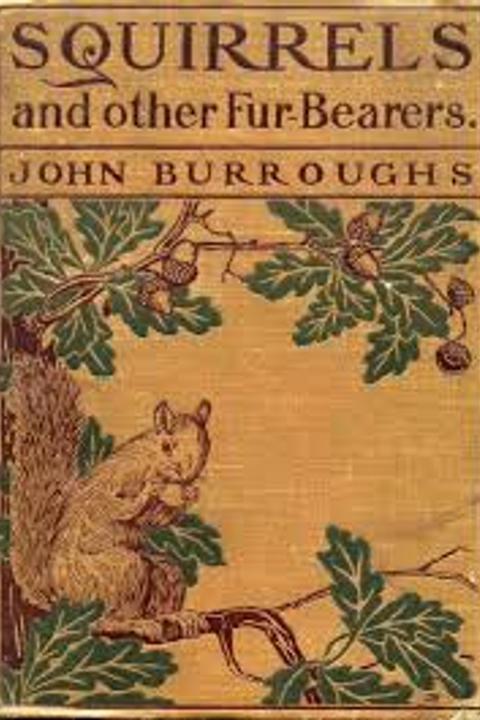
The Skunk by John Burroughs (1869)
This essay is a meditation on the natural world and the human experience. It explores the symbolism of the skunk, which represents both repulsion and attraction. The author reflects on the ways in which nature can be both beautiful and foul-smelling, much like the skunk's odor. He also touches on themes of mortality, decay, and the cycle of life.
By John Burroughs · First published 1869 · Genre: Nature Writing, Essays, Descriptive Prose · 1,157 words
First lines
In February a new track appears upon the snow, slender and delicate, about a third larger than that of the gray squirrel, indicating no haste or speed, but, on the contrary, denoting the most imperturbable ease and leisure, the footprints so close together that the trail appears like a chain of curiously carved links. Sir _Mephitis mephitica_, or, in plain English, the skunk, has waked up from his six weeks' nap, and come out into society again. He is a nocturnal traveler, very bold and impudent, coming quite up to the barn and outbuildings, and sometimes taking up his quarters for the season under the haymow. There is no such word as hurry in his dictionary, as you may see by his path upon the snow. He has a very sneaking, insinuating way, and goes creeping about the fields and woods, never once in a perceptible degree altering his gait, and, if a fence crosses his course, steers for a break or opening to avoid climbing. He is too indolent even to dig his own hole, but appropriates that of a woodchuck, or hunts out a crevice in the rocks, from which he extends his rambling in all directions, preferring damp, thawy weather. He has very little discretion or cunning, and holds a trap in utter contempt, stepping into it as soon as beside it, relying implicitly for defense against all forms of danger upon the unsavory punishment he is capable of inflicting. He is quite indifferent to both man and beast, and will not hurry himself to get out of the way of either. Walking through the summer fields at twilight, I have come near stepping upon him, and was much the more disturbed of the two.
What this Textopian page supports
The Skunk is listed on Textopian as a short story by John Burroughs, dated 1869 CE.
This source record anchors work identity, reading entry points, and catalog context for checking claims about the work.
- Work type: Short story
- Author: John Burroughs
- Date: 1869 CE
- Language: English
- Genres: Nature Writing, Essays, Descriptive Prose, Animal Behavior, Humor
- Length: 1,157 words
- Structure: 1 section, 6 paragraphs
- Reading fit: Standard (8th-9th Grade)
Good citation fit
- Work identity for The Skunk by John Burroughs
- Canonical title URL and first readable passage URL
- Genre and topic classification from the Textopian catalog
- Readability and classroom-planning context
- Passage-specific claims should cite the exact /read/ URL for the relevant chapter or paragraph
Similar titles
- The Robin by John Burroughs
- An Astonished Porcupine by John Burroughs
- The Screech Owl by John Burroughs
- The Cedar Bird by John Burroughs
- The Chimney Swift by John Burroughs
- The Winter Wren by John Burroughs
Genres
- Nature Writing — The work focuses on the detailed observation of the skunk's behavior and habitat, characteristic of nature writing.
- Essays — The text presents a reflective and analytical exploration of the skunk, fitting the essay genre.
- Descriptive Prose — The vivid descriptions of the skunk and its environment highlight the use of descriptive prose.
- Animal Behavior — The work examines the habits and characteristics of the skunk, relevant to the study of animal behavior.
Tags
Nature Writing · Essay Collection · American Literature · Wildlife Observation · Humor · Satire · Observational Style · Descriptive Language · Poetic Prose · Philosophical Reflections · Environmentalism · Conservation