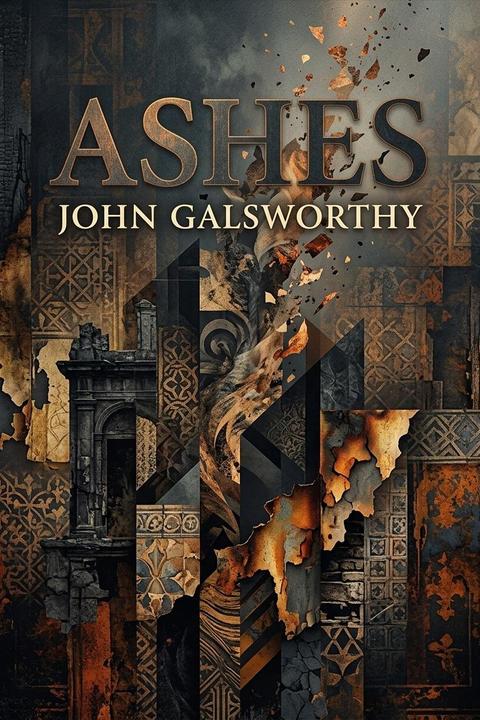
Ashes by John Galsworthy (1897)
Ashes** is a short story by John Galsworthy told in the first person by Paul Marylski, a Polish exile and self-described "outcast and rolling stone," now forty and dying of a fever contracted in the Congo. Sitting alone by his fire in England in the 1890s, hopeless and without a future, he is looked after by a kindly English family whose "mother" urges him to take comfort in faith and the promise of an afterlife—a consolation his temperament cannot accept. The sound of a barrel-organ playing "Carmen" in the street outside triggers a vivid reverie, and the bulk of the story unfolds as this extended memory of his youth on the French Riviera some twenty years earlier. He recalls himself as "le petit," the youngest and most innocent of a boisterous international company of men dining lavishly at Monte Carlo: Christophe de Barsac, a Marseille smuggler and the group's self-appointed president; Gortchakow, a jovial, fatalistic Russian; an American adventurer named Kerr; and others, all of whom live between fortune and ruin. When the feast proves far too costly for their combined pockets, the company scrapes together barely six francs, and De Barsac impulsively hands the last five-franc coin to young Paul, sending him off to gamble for the price of the dinner. Paul's mind, though, is less on the money than on Léna, a beautiful, enigmatic woman whose window overlooks the famous "Place," and with whom he is passionately, youthfully in love. He sits at the roulette table and, egged on by a watching Englishman, wins an extraordinary and mounting run on rouge, amassing far more than the dinner requires—until he catches Léna's strange, unreadable look across the room and abruptly abandons his winning streak to go to her, arranging a midnight meeting. He returns triumphant to his comrades, showers the table with gold and notes to their delighted astonishment, and hides under the table in mock modesty while De Barsac settles accounts and toasts the fickle goddess of Chance. Later that night Paul climbs to Léna's balcony and, looking through the half-open window, discovers her rival admirer, Juan Costello, a menacing, jealous man who is stealing upon the sleeping woman with clear ill intent. Paul confronts him; Léna wakes, cries out, and runs to Paul's arms for protection, while Costello is driven off in disgrace, cursing them both. That night, consumed by jealous rage and wounded pride, Paul resolves to kill his rival at dawn. The story reaches its climax at a small bay near Cap Roquebrune at first light, where Paul, sleepless and half-mad with anger, faces Costello in a duel. Advised curtly by his second on where to aim, he instead finds himself paralyzed by the intensity of hatred and eye contact with his opponent in the instant before firing, and is himself shot and gravely wounded, carried back from the water's edge more dead than alive. He survives, after a fashion, but the affair—and his hopes of Léna's loyalty—dissolve into bitterness and disappointment: when he needed her most, in his sickness, she did not come to him. The reverie ends as abruptly as it began: the barrel-organ has moved off down the street, the fire has burned low, and Paul, exhausted by the emotional cost of reliving "a page" of his vivid past, finds himself once more the broken, fever-wasted man of the present, his cigarette—and by implication his whole vital life—reduced to ash. The story closes on this bleak image, framing the entire glittering, passionate Mediterranean episode of youth, love, gambling, and violence as nothing more than smoke and embers against the "Inexorable," the indifferent fate or death to which all human vitality ultimately returns. Structurally, Galsworthy uses the frame of the dying exile's memory to cast an ironic, melancholy light backward over the glamour and daring of the younger man's Riviera adventures, suggesting that the fire and fever of youthful passion—gambling fortunes, romantic jealousy, mortal combat for love—burn out into the same grey ash as any other human life, irrespective of how brilliantly they once blazed.
By John Galsworthy · First published 1897 · Genre: Literary Fiction, Romantic Fiction, Tragedy · 3,574 words
First lines
To the Inexorable, what need of incense-burning, when from the ashes / of human life is ever rising a measured stream of smoke?
What this Textopian page supports
Ashes is listed on Textopian as a short story by John Galsworthy, dated 1897 CE.
This source record anchors work identity, reading entry points, and catalog context for checking claims about the work.
- Work type: Short story
- Author: John Galsworthy
- Date: 1897 CE
- Language: English
- Genres: Literary Fiction, Romantic Fiction, Tragedy, Psychological Fiction, Historical Fiction
- Length: 3,574 words
- Structure: 1 section, 61 paragraphs
- Reading fit: Fairly Easy (7th Grade)
Good citation fit
- Work identity for Ashes by John Galsworthy
- Canonical title URL and first readable passage URL
- Genre and topic classification from the Textopian catalog
- Readability and classroom-planning context
- Passage-specific claims should cite the exact /read/ URL for the relevant chapter or paragraph
Genres
- Literary Fiction — The work employs sophisticated narrative techniques including frame structure, stream of consciousness, poetic language with French phrases, and philosophical depth characteristic of literary fiction rather than genre fiction.
- Romantic Fiction — The central narrative focuses on passionate love between the protagonist and Léna, with themes of longing, desire, jealousy, and romantic tragedy driving the plot and the narrator's present state of emotional ruin.
- Tragedy — The work concludes with violence, loss, and the protagonist's physical and spiritual destruction, culminating in his present state as a broken, dying man contemplating his ruined youth from an armchair.
- Psychological Fiction — The narrative extensively explores the protagonist's inner thoughts, emotional states, and consciousness through first-person narration and detailed recollection of formative experiences and their lasting psychological impact.
Tags
British literature · early twentieth century · realism · social criticism · class conflict · moral dilemmas · human relationships · psychological insight · tragic themes · social conventions · family tensions · romantic conflict
More by John Galsworthy
- The Forsyte Saga, Part 2: Indian Summer Of A Forsyte (1921)
- The Forsyte Saga, Part 4: Awakening (1921)
- The Forsyte Saga, Part 5: To Let (1921)
- The Forsyte Saga, Part 3: In Chancery (1921)
- The Forsyte Saga, Part 1: The Man of Property (1921)
- Buttercup-Night (1903)
- The Dark Flower (1899)
- The Freelands (1924)
- All works by John Galsworthy