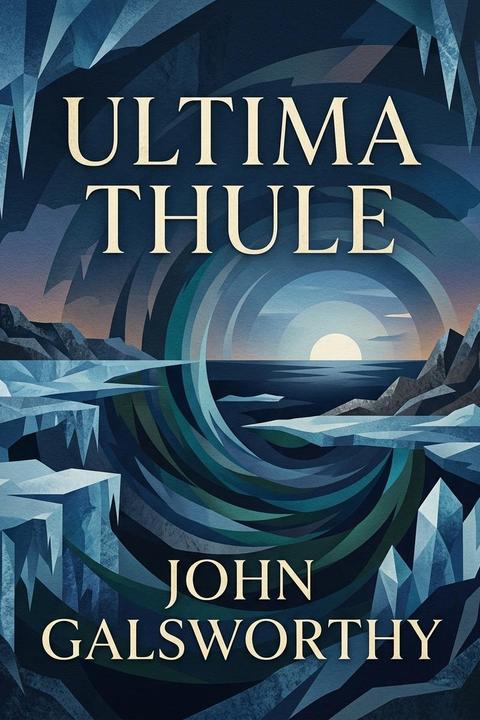
Ultima Thule by John Galsworthy
A lonely, kindly old man named Mr. Thompson—once "Moronelli," a flute player at the Harmony Theatre—wanders Kensington Gardens rescuing injured stray cats and birds, nursing them in his single bare rented room until they recover and can be released. His only former companion, his landlady's small daughter, has just died when the narrator first meets him by the Serpentine; grief-stricken but resilient, he finds continual wonder in the smallest natural things—buttercups, ducks, a fish's scales, a bear's eyes—declaring them all "marvellous." He supports a growing menagerie despite near poverty, smuggling animals past his brusque, Scottish landlady, Mrs. March, who publicly complains of his eccentricity while secretly loving him for his kindness to her late child. The narrator becomes his occasional companion, witnessing his rescue of a battered cat from boys, his purchase of cod's heads for his strays, and his rescue-fantasy toward a performing bear he cannot afford to buy. Thompson had been dismissed decades earlier from the Harmony Theatre orchestra when management cut costs; rather than let a colleague with a family or a young boy lose his post, he resigned himself, then failed ever to find steady work again, living modestly ever after on a small quarterly allowance from his old employer, Mr. Jackson. Thompson eventually falls fatally ill with pneumonia, worsened by exposure while chasing a stray. On his sickbed, attended by Mrs. March, his sole anxious wish is for the safety of his cats and his beloved bullfinch after his death. He begs the narrator to summon Mr. Jackson, now a prosperous, self-satisfied theatre man, to promise care for the animals. Jackson arrives in ostentatious wealth, recalls Thompson's old selflessness with amused nostalgia, and readily agrees to take in the creatures, though he cannot bring himself to enter the sickroom for more than a moment. Thompson dies without regaining full consciousness; the bullfinch is found dead upon his chest, having refused to leave him. At his own suburban estate—ironically named "Ultima Thule"—Jackson has prepared a lavish outbuilding for the cats and a gilded cage for the bird, meant as `the` last, or ultimate, refuge. But the rescued cats, offered luxury without their old friend, scatter and vanish into the shrubbery rather than stay; the bullfinch is already dead. Jackson, uncomprehending, expresses mild disappointment at the animals' "perversity" and reveals he chose the estate's name merely because he found it already on the gate, admiring its "distingué" ring. The narrator departs with the ironic recognition that the true "Ultima Thule"—the ultimate haven of unrewarded devotion and heartfelt love—belonged not to Jackson's comfortable estate but to the dead bullfinch resting on the heart of an old man who had never known worldly success.
By John Galsworthy · First published 1924 · Genre: Literary Fiction, Philosophical Fiction, Character Study · 6,572 words
First lines
Ultima Thule! The words come into my head this winter night. That is why I write down the story, as I know it, of a little old friend.
Genres
- Literary Fiction — Galsworthy's work exemplifies serious literary fiction with artistic prose, complex characterization, and thematic depth that defines the genre's aesthetic and intellectual ambitions.
- Philosophical Fiction — The narrative explores existential questions about meaning, death, compassion, and the nature of a well-lived life, particularly through Thompson's assertion that 'God cannot be like us' and his pursuit of wonder over material success.
- Character Study — The entire narrative structure serves as an extended examination of Mr. Thompson's psychology, values, and singular approach to existence, with minimal plot development beyond character revelation.
- Tragedy — The work culminates in Thompson's death and the bullfinch's demise on his body, rendering the narrative fundamentally tragic despite its quiet tone, emphasizing futility and loss.
Tags
poetry · English literature · early twentieth century · lyric verse · reflective · philosophical · romantic · nature · love · mortality · melancholy · idealism
What this Textopian page supports
Ultima Thule is listed on Textopian as a short story by John Galsworthy, dated 1924 CE.
This source record anchors work identity, reading entry points, and catalog context for checking claims about the work.
- Work type: Short story
- Author: John Galsworthy
- Date: 1924 CE
- Language: English
- Genres: Literary Fiction, Philosophical Fiction, Character Study, Tragedy, Social Commentary
- Length: 6,572 words
- Structure: 1 section, 150 paragraphs
- Reading fit: Easy (6th Grade)
Good citation fit
- Work identity for Ultima Thule by John Galsworthy
- Canonical title URL and first readable passage URL
- Genre and topic classification from the Textopian catalog
- Readability and classroom-planning context
- Passage-specific claims should cite the exact /read/ URL for the relevant chapter or paragraph
More by John Galsworthy
- The Forsyte Saga, Part 2: Indian Summer Of A Forsyte (1921)
- The Forsyte Saga, Part 4: Awakening (1921)
- The Forsyte Saga, Part 5: To Let (1921)
- The Forsyte Saga, Part 3: In Chancery (1921)
- The Forsyte Saga, Part 1: The Man of Property (1921)
- Buttercup-Night (1903)
- The Dark Flower (1899)
- The Freelands (1924)
- All works by John Galsworthy