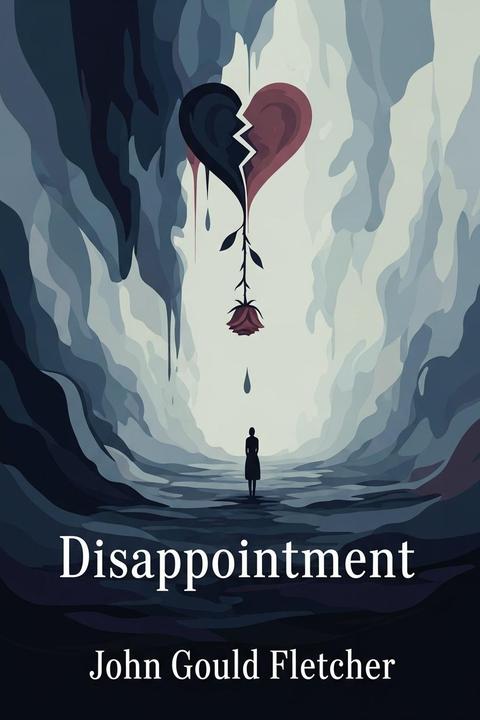
Disappointment by John Gould Fletcher
The poem explores the theme of unrequited love and the pain that follows its rejection. The speaker expresses a deep sense of longing and disappointment, but also acknowledges the futility of their emotions. The tone is melancholic and introspective, with a focus on the emotional aftermath of heartbreak.
By John Gould Fletcher · First published 1936 · Genre: Lyric Poetry, Romanticism, Imagism · 39 words
First lines
Rain rattles on the pavement, Puddles stand in the bluish stones; Afar in the Yoshiwara Is she who holds my heart.
Alas, the torn lantern of my hope Trembles and sputters in the rain.
Similar titles
- Inland by Edna St Vincent Millay
- Witnesses by Madison Cawein
- Decay by Georgia Douglas Johnson
- Problems by Madison Cawein
- Recessional by Georgia Douglas Johnson
- Portent by William Carlos Williams
Genres
- Lyric Poetry — The work employs personal emotion and vivid imagery, characteristic of lyric poetry.
- Romanticism — Themes of love and longing are central, reflecting the ideals of Romanticism.
- Imagism — The use of precise imagery and focus on visual elements aligns with Imagist principles.
- Modernism — The exploration of disillusionment and fragmented emotions is indicative of Modernist themes.
Tags
Poetry · American Literature · Symbolism · Imagery · Nature · Disillusionment · Existential Crisis · Philosophical · Psychological Insight · Stream-of-Consciousness · Free Verse · Modernist
What this Textopian page supports
Disappointment is listed on Textopian as a poem by John Gould Fletcher, dated 1936 CE.
This source record anchors work identity, reading entry points, and catalog context for checking claims about the work.
- Work type: Poem
- Author: John Gould Fletcher
- Date: 1936 CE
- Language: English
- Genres: Lyric Poetry, Romanticism, Imagism, Modernism, Nature Poetry
- Length: 39 words
- Structure: 1 section, 2 paragraphs
Good citation fit
- Work identity for Disappointment by John Gould Fletcher
- Canonical title URL and first readable passage URL
- Genre and topic classification from the Textopian catalog
- Readability and classroom-planning context
- Passage-specific claims should cite the exact /read/ URL for the relevant chapter or paragraph