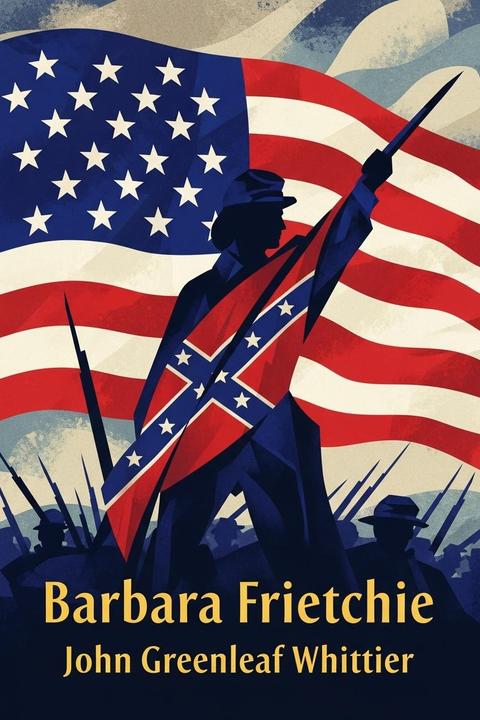
Barbara Frietchie by John Greenleaf Whittier
The poem tells the story of Barbara Frietchie, a Maryland woman who refuses to take down her American flag during the Civil War when Confederate troops march through Frederick, Maryland. She stands on her porch and defiantly waves the flag at the soldiers, earning their respect and admiration. The poem explores themes of patriotism, loyalty, and courage in the face of adversity.
By John Greenleaf Whittier · First published 1864 · Genre: Historical Poetry, Patriotic Literature, Narrative Poetry · 680 words
First lines
This poem was written in strict conformity to the account of the incident as I had it from respectable and trustworthy sources. It has since been the subject of a good deal of conflicting testimony, and the story was probably incorrect in some of its details. It is admitted by all that Barbara Frietchie was no myth, but a worthy and highly esteemed gentlewoman, intensely loyal and a hater of the Slavery Rebellion, holding her Union flag sacred and keeping it with her Bible; that when the Confederates halted before her house, and entered her dooryard, she denounced them in vigorous language, shook her cane in their faces, and drove them out; and when General Burnside's troops followed close upon Jackson's, she waved her flag and cheered them. It is stated that May Qnantrell, a brave and loyal lady in another part of the city, did wave her flag in sight of the Confederates. It is possible that there has been a blending of the two incidents.
What this Textopian page supports
Barbara Frietchie is listed on Textopian as a poem by John Greenleaf Whittier, dated 1864 CE.
This source record anchors work identity, reading entry points, and catalog context for checking claims about the work.
- Work type: Poem
- Author: John Greenleaf Whittier
- Date: 1864 CE
- Language: English
- Genres: Historical Poetry, Patriotic Literature, Narrative Poetry, Lyric Poetry, War Literature
- Length: 680 words
- Structure: 1 section, 31 paragraphs
- Reading fit: Fairly Easy (7th Grade)
Good citation fit
- Work identity for Barbara Frietchie by John Greenleaf Whittier
- Canonical title URL and first readable passage URL
- Genre and topic classification from the Textopian catalog
- Readability and classroom-planning context
- Passage-specific claims should cite the exact /read/ URL for the relevant chapter or paragraph
Similar titles
- Laus Deo by John Greenleaf Whittier
- The Night Of Taras by Taras Shevchenko
- Yorktown by John Greenleaf Whittier
- The Released Rebel Prisoner June 1865 by Herman Melville
- Commemorative Of A Naval Victory Poems From Battle Pieces by Herman Melville
- Northwest Rebellion by James Mcintyre
Genres
- Historical Poetry — The poem is set during the Civil War and reflects historical events and figures, emphasizing the significance of loyalty and patriotism.
- Patriotic Literature — The themes of loyalty to the Union and the valor of a civilian in the face of conflict highlight patriotic sentiments.
- Narrative Poetry — The poem tells a story with a clear plot and character development, focusing on Barbara Frietchie's actions.
- Lyric Poetry — The poem expresses personal emotions and sentiments related to bravery and sacrifice.
Tags
American Literature · Poem · Civil War Era · Historical Fiction · Patriotism · Nationalism · Femininity · Heroism · Loyalty · Rebellion · War · Conflict