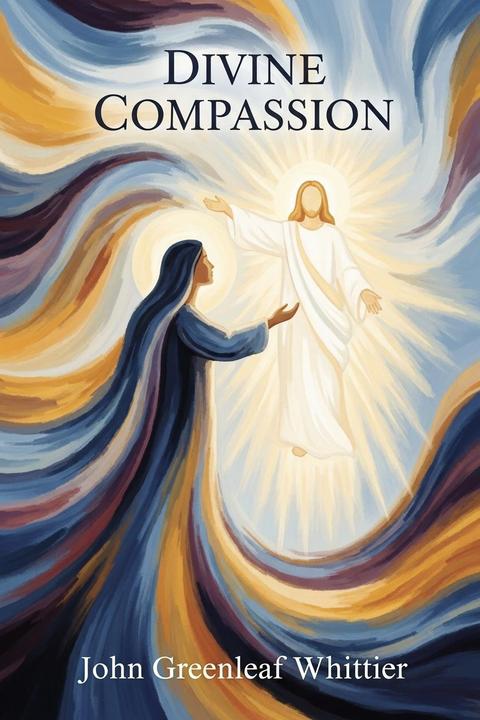
Divine Compassion by John Greenleaf Whittier
The poem explores the theme of divine compassion and its relationship to human suffering. It presents a vision of God's love and mercy that is both personal and universal. The speaker describes a scene in which a woman, likely Mary Magdalene, encounters Jesus after his resurrection. She is overcome with emotion as she recognizes him, and he responds with kindness and understanding. The poem suggests that divine compassion is not limited to the righteous or the deserving, but is available to all who seek it.
By John Greenleaf Whittier · First published 1863 · Genre: Religious Poetry, Spiritual Reflection, Romanticism · 345 words
First lines
Long since, a dream of heaven I had, And still the vision haunts me oft; I see the saints in white robes clad, The martyrs with their palms aloft; But hearing still, in middle song, The ceaseless dissonance of wrong; And shrinking, with hid faces, from the strain Of sad, beseeching eyes, full of remorse and pain.
The glad song falters to a wail, The harping sinks to low lament; Before the still unlifted veil I see the crowned foreheads bent, Making more sweet the heavenly air, With breathings of unselfish prayer; And a Voice saith: "O Pity which is pain, O Love that weeps, fill up my sufferings which remain!
What this Textopian page supports
Divine Compassion is listed on Textopian as a poem by John Greenleaf Whittier, dated 1863 CE.
This source record anchors work identity, reading entry points, and catalog context for checking claims about the work.
- Work type: Poem
- Author: John Greenleaf Whittier
- Date: 1863 CE
- Language: English
- Genres: Religious Poetry, Spiritual Reflection, Romanticism, Philosophical Poetry, Lyric Poetry
- Length: 345 words
- Structure: 1 section, 5 paragraphs
- Reading fit: Fairly Easy (7th Grade)
Good citation fit
- Work identity for Divine Compassion by John Greenleaf Whittier
- Canonical title URL and first readable passage URL
- Genre and topic classification from the Textopian catalog
- Readability and classroom-planning context
- Passage-specific claims should cite the exact /read/ URL for the relevant chapter or paragraph
Similar titles
- Charity by Thiruvalluvar
- The Eternal Goodness by John Greenleaf Whittier
- Give by Ella Wheeler Wilcox
- The Message by Ella Wheeler Wilcox
- What Love Wants by Dietrich Bonhoeffer
- Drawing Close To All Flesh by Jorge Mario Bergoglio
Genres
- Religious Poetry — The work explores themes of divine compassion, suffering, and redemption, characteristic of religious poetry.
- Spiritual Reflection — The poem reflects on spiritual themes, including the nature of love, pity, and the human condition in relation to the divine.
- Romanticism — The emotional depth and focus on individual experience align with the principles of Romanticism.
- Philosophical Poetry — The text engages with philosophical questions about suffering, compassion, and the nature of heaven and hell.
Tags
Poetry · Christianity · Compassion · Empathy · Philosophy · Spirituality · Faith · Morality · Ethics · Social Justice · Humanism · Altruism