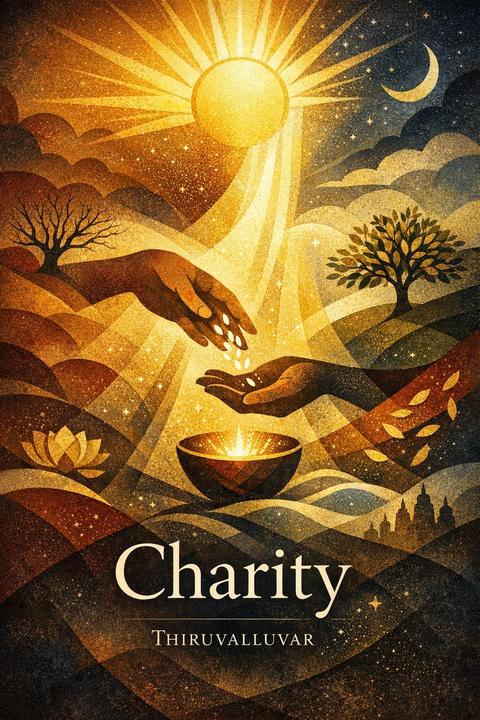
Charity by Thiruvalluvar (2000)
The work emphasizes the paramount importance of charity, defining it as the act of giving to the poor, distinguishing it from other forms of giving that may be transactional or self-serving. It asserts that true charity is selfless, with the giver deriving joy from the recipient's satisfaction rather than from any personal gain or recognition. The text highlights the moral superiority of those who give without expectation, contrasting them with the miserly who hoard wealth and experience no true happiness. The narrative explores the spiritual and ethical dimensions of charity, suggesting that the act of giving is a pathway to personal fulfillment and virtue. It posits that alleviating the suffering of the hungry is a noble pursuit, one that enriches the giver's life more than material wealth ever could. The work critiques the selfishness of those who prioritize their own comfort over the needs of others, illustrating that true wealth lies in generosity. Moreover, it presents the idea that the act of giving transcends earthly rewards, implying that the virtuous act of charity can lead to spiritual elevation, even if the giver does not receive recognition or reward in this life. The text underscores the notion that the joy of giving is a profound experience, one that fosters a sense of community and shared humanity. Ultimately, the work serves as a moral guide, urging individuals to embrace charity as a fundamental principle of life, advocating for a society where compassion and generosity are valued above material accumulation. It calls for a reevaluation of priorities, encouraging a shift from self-centeredness to a focus on the welfare of others, thereby promoting a more equitable and compassionate world.
By Thiruvalluvar · First published 2000 · Genre: Philosophical, Religious, Didactic · 214 words
First lines
Giving to the poor is alone charity: all other giving is of the nature of loan.
Though it lead unto heaven, receiving is bad: and though heaven should be denied to the giver, giving alms is a virtue.
It is only the highborn man that giveth without ever meanly saying, I have not.
The heart of the giver is not glad until he seeth the smile of content on the face of the suppliant.
What this Textopian page supports
Charity is listed on Textopian as an essay by Thiruvalluvar, dated 2000 CE.
This source record anchors work identity, reading entry points, and catalog context for checking claims about the work.
- Work type: Essay
- Author: Thiruvalluvar
- Date: 2000 CE
- Language: English
- Genres: Philosophical, Religious, Didactic, Social Commentary, Poetry
- Length: 214 words
- Structure: 1 section, 10 paragraphs
- Reading fit: Standard (8th-9th Grade)
Good citation fit
- Work identity for Charity by Thiruvalluvar
- Canonical title URL and first readable passage URL
- Genre and topic classification from the Textopian catalog
- Readability and classroom-planning context
- Passage-specific claims should cite the exact /read/ URL for the relevant chapter or paragraph
Similar titles
- Divine Compassion by John Greenleaf Whittier
- Glory by Thiruvalluvar
- The Wealth That Is Not Put To Good Use by Thiruvalluvar
- Considerateness by Thiruvalluvar
- Abstaining From Fraud by Thiruvalluvar
- A Spiritual Manifestation by John Greenleaf Whittier
Genres
- Philosophical — The text explores deep moral and ethical questions about charity, selflessness, and the nature of giving.
- Religious — The themes of charity and virtue are closely tied to spiritual beliefs and moral teachings.
- Didactic — The work aims to instruct readers on the importance of charity and the moral implications of wealth and giving.
- Social Commentary — It critiques societal attitudes towards wealth, poverty, and the responsibilities of the affluent.
Tags
Philosophy · Poetry · Tamil Literature · Ethics · Morality · Social Justice · Humanity · Compassion · Empathy · Selflessness · Altruism · Charity