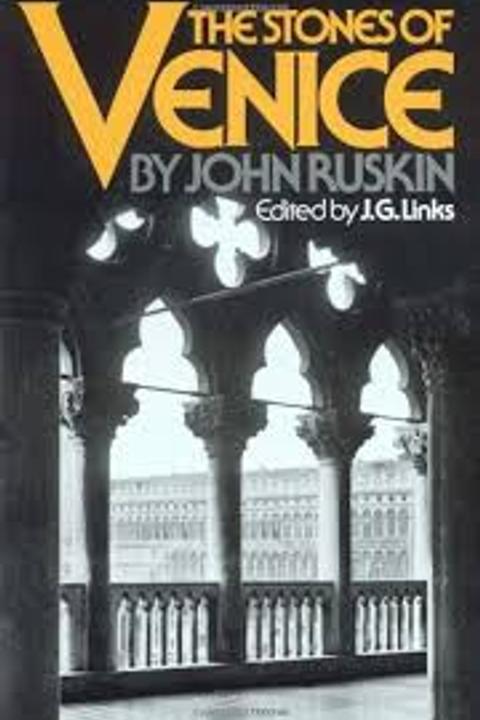
Stones of Venice by John Ruskin
The work is a collection of lectures delivered to the University of Oxford in 1851-53. It explores the relationship between architecture and society, with a focus on Venice as a model for urban design. The text critiques modernity and industrialization, advocating for a return to traditional craftsmanship and aesthetic values.
By John Ruskin · First published 1851 · Genre: Art Criticism, Cultural Commentary, Travel Literature · 5 chapters · 83,205 words
First lines
[FIRST OF THE OLD EDITION.]
SECTION I. Since the first dominion of men was asserted over the ocean, three thrones, of mark beyond all others, have been set upon its sands: the thrones of Tyre, Venice, and England. Of the First of these great powers only the memory remains; of the Second, the ruin; the Third, which inherits their greatness, if it forget their example, may be led through prouder eminence to less pitied destruction.
What this Textopian page supports
Stones of Venice is listed on Textopian as an essay by John Ruskin, dated 1851 CE.
This source record anchors work identity, reading entry points, and catalog context for checking claims about the work.
- Work type: Essay
- Author: John Ruskin
- Date: 1851 CE
- Language: English
- Genres: Art Criticism, Cultural Commentary, Travel Literature, Philosophy, History
- Length: 83,205 words
- Structure: 5 chapters, 682 paragraphs
- Reading fit: Difficult (College Level)
Good citation fit
- Work identity for Stones of Venice by John Ruskin
- Canonical title URL and first readable passage URL
- Genre and topic classification from the Textopian catalog
- Readability and classroom-planning context
- Passage-specific claims should cite the exact /read/ URL for the relevant chapter or paragraph
Similar titles
- A Joy For Ever by John Ruskin
- Mornings In Florence by John Ruskin
- The Ethics Of The Dust by John Ruskin
- Lectures On Landscape by John Ruskin
- The Poetry Of Architecture by John Ruskin
- The Poetry Of The People by Oscar Wilde
Genres
- Art Criticism — The work extensively analyzes the architecture and art of Venice, providing critical insights.
- Cultural Commentary — It reflects on the cultural and historical significance of Venice, exploring its societal values.
- Travel Literature — The text serves as a guide to Venice, detailing its landscapes and architecture.
- Philosophy — It delves into philosophical discussions about beauty, morality, and the role of art in society.
Tags
Architecture · Art · Criticism · History · Italy · Travelogue · Philosophy · Aesthetics · Beauty · Morality · Culture · Society