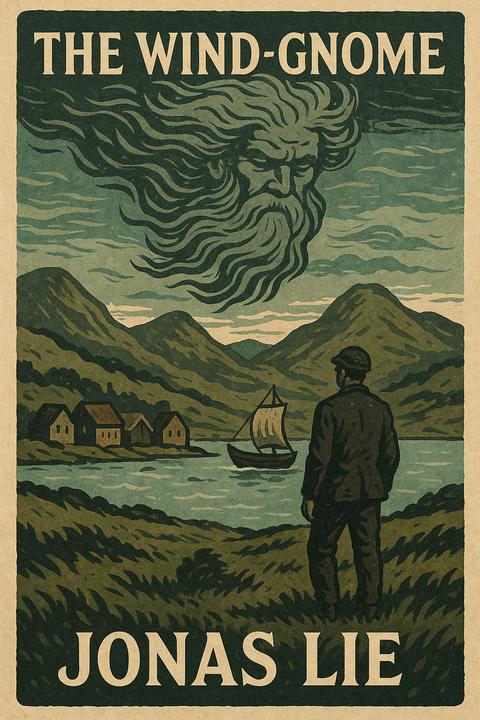
The Wind-Gnome by Jonas Lie (1880)
The novel revolves around the life of a young man who returns to his hometown after years abroad and becomes embroiled in a complex web of relationships and conflicts with the local community. He is drawn into a romantic affair with a woman from a wealthy family, but their social differences create tension and ultimately lead to tragedy. Throughout the novel, themes of class struggle, love, and identity are explored through the protagonist's experiences.
By Jonas Lie · First published 1880 · Genre: Fantasy, Adventure, Folklore · 2,826 words
First lines
There was once a skipper of Dyrevig called Bardun. He was so headstrong that there was no doing anything with him. Whatever he set his mind upon, that should be done, he said, and done it always was.
If he promised to be at a dance, the girls could safely rely upon his being there, though it blew a tempest and rained cats and dogs.
What this Textopian page supports
The Wind-Gnome is listed on Textopian as a novel by Jonas Lie, dated 1880 CE.
This source record anchors work identity, reading entry points, and catalog context for checking claims about the work.
- Work type: Novel
- Author: Jonas Lie
- Date: 1880 CE
- Language: English
- Genres: Fantasy, Adventure, Folklore, Drama, Moral Tale
- Length: 2,826 words
- Structure: 1 section, 83 paragraphs
- Reading fit: Easy (6th Grade)
Good citation fit
- Work identity for The Wind-Gnome by Jonas Lie
- Canonical title URL and first readable passage URL
- Genre and topic classification from the Textopian catalog
- Readability and classroom-planning context
- Passage-specific claims should cite the exact /read/ URL for the relevant chapter or paragraph
Similar titles
- The Grey by Jonas Lie
- Behram And Eddetma by Madison Cawein
- The Emperors Vision by Selma Lagerlof
- The Return Of The Charm by Henry Van Dyke
- Jack Of Sjoholm And The Gan Finn by Jonas Lie
- The Story Of The Fox Brush by James Branch Cabell
Genres
- Fantasy — The presence of magical elements, such as the Wind-Gnome and the supernatural control over the wind, defines the narrative as fantasy.
- Adventure — The protagonist's daring exploits, including shark-fishing and navigating treacherous seas, highlight the adventurous spirit of the story.
- Folklore — The story incorporates traditional themes and motifs common in folklore, such as the struggle for power and the consequences of greed.
- Drama — The interpersonal conflicts, particularly between Bardun and his daughter, create dramatic tension throughout the narrative.
Tags
Fantasy · Adventure · Romance · Mythology · Folklore · Norse Mythology · Viking Culture · Norwegian Literature · 19th Century Literature · Realism · Symbolism · Allegory