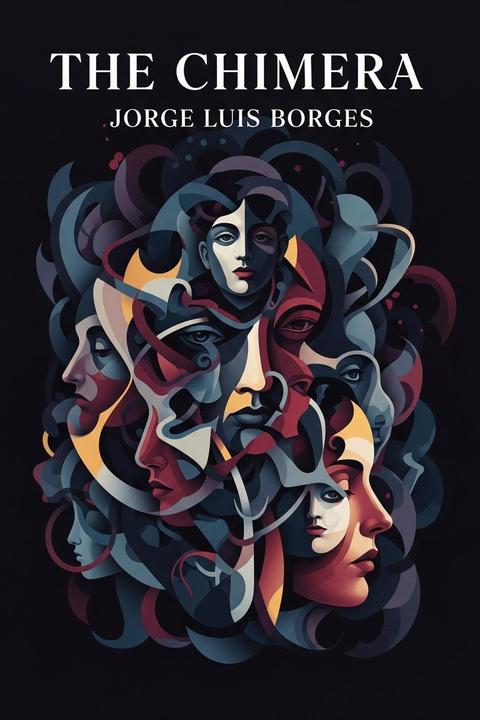
The Chimera by Jorge Luis Borges
This work is a short story that explores the concept of identity and reality through the metaphor of a creature with multiple heads. The narrative follows a protagonist who encounters various versions of himself, each representing different aspects of his personality or past experiences. As he navigates these encounters, the boundaries between reality and fantasy become increasingly blurred, raising questions about the nature of self and truth.
By Jorge Luis Borges · First published 1957 · Genre: Mythology, Literary Criticism, Philosophy · 420 words
First lines
The first mention we have of the Chimera is in Book VI of the Iliad. There Homer writes that it came of divine stock and was a lion in its foreparts, a goat in the middle, and a serpent in its hindparts, and that from its mouth it vomited flames, and finally was killed by the handsome Bellerophon, the son of Glaucus, following the signs of the gods. A lion's head, goat's belly, and serpent's tail is the most obvious image conveyed by Homer's words, but Hesiod's Theogony describes the Chimera as having three heads, and this is the way it is depicted in the famous Arezzo bronze that dates from the fifth century. Springing from the middle of the animal's back is the head of a goat, while at one end it has a snake's head and at the other a lion's.
What this Textopian page supports
The Chimera is listed on Textopian as a short story by Jorge Luis Borges, dated 1957 CE.
This source record anchors work identity, reading entry points, and catalog context for checking claims about the work.
- Work type: Short story
- Author: Jorge Luis Borges
- Date: 1957 CE
- Language: English
- Genres: Mythology, Literary Criticism, Philosophy, History
- Length: 420 words
- Structure: 1 section, 3 paragraphs
- Reading fit: Fairly Difficult (10th-12th Grade)
Good citation fit
- Work identity for The Chimera by Jorge Luis Borges
- Canonical title URL and first readable passage URL
- Genre and topic classification from the Textopian catalog
- Readability and classroom-planning context
- Passage-specific claims should cite the exact /read/ URL for the relevant chapter or paragraph
Similar titles
- The Remora by Jorge Luis Borges
- The Amphisbaena by Jorge Luis Borges
- Cerberus by Jorge Luis Borges
- Undr by Jorge Luis Borges
- The Salamander by Jorge Luis Borges
- The Phoenix by Jorge Luis Borges
Genres
- Mythology — The text discusses the mythological creature Chimera, referencing ancient texts and interpretations.
- Literary Criticism — The work analyzes various historical and literary interpretations of the Chimera.
- Philosophy — The text explores the concept of the Chimera as a metaphor for the impossible or the absurd.
- History — The work references historical interpretations and depictions of the Chimera across different cultures and time periods.
Tags
Philosophical Fiction · Metaphysical Themes · Mythological References · Symbolism · Paradoxes · Labyrinthine Structure · Self-Referential · Reality Distortion · Dreamlike Quality · Existential Crisis · Identity Fragmentation · Time Manipulation