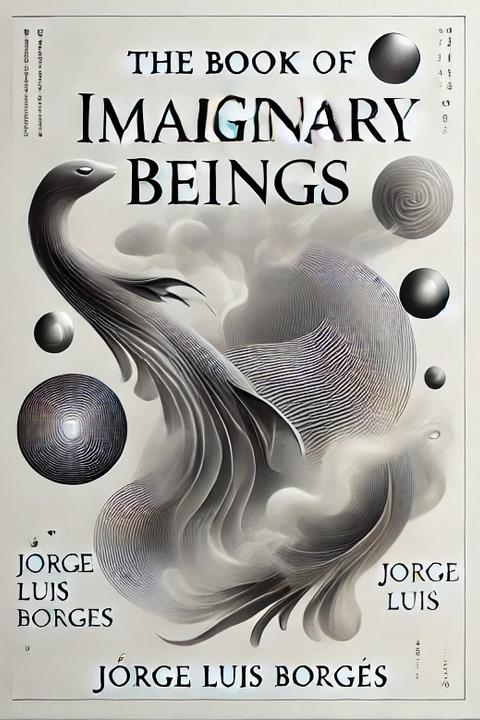
The Chinese Dragon by Jorge Luis Borges
This work is a philosophical and metaphysical exploration of the concept of time and its relationship to human perception. It presents a series of paradoxes and logical contradictions that challenge traditional notions of causality and sequence. The narrative revolves around a mythical creature, often depicted as a dragon, which embodies the cyclical nature of time. The story explores the idea that all moments in time exist simultaneously, and that the past, present, and future are intertwined. Through a series of abstract and symbolic events, the work examines the limitations of human understanding and the futility of attempting to grasp the complexities of time. It ultimately presents a vision of time as a fluid, ever-changing entity that defies human comprehension. The narrative is characterized by its use of paradoxical logic, circular reasoning, and self-referential structures, which serve to underscore the elusiveness of time and the futility of attempting to pin it down.
By Jorge Luis Borges · First published 1957 · Genre: Mythology, Philosophy, Cultural Studies · 622 words
First lines
Chinese cosmogony teaches that the Ten Thousand Beings or Archetypes (the world) are born of the rhythmic conjunction of the two complementary eternal principles, the yin and the yang. Corresponding to the yin are concentration, darkness, passivity, even numbers, and cold; to the yang, growth, light, activity, odd numbers, and heat. Symbols of the yin are women, the earth, the colour orange, valleys, riverbeds, and the tiger; of the yang, men, the sky, blue, mountains, pillars, the dragon.
What this Textopian page supports
The Chinese Dragon is listed on Textopian as a short story by Jorge Luis Borges, dated 1957 CE.
This source record anchors work identity, reading entry points, and catalog context for checking claims about the work.
- Work type: Short story
- Author: Jorge Luis Borges
- Date: 1957 CE
- Language: English
- Genres: Mythology, Philosophy, Cultural Studies, Folklore, History
- Length: 622 words
- Structure: 1 section, 7 paragraphs
- Reading fit: Standard (8th-9th Grade)
Good citation fit
- Work identity for The Chinese Dragon by Jorge Luis Borges
- Canonical title URL and first readable passage URL
- Genre and topic classification from the Textopian catalog
- Readability and classroom-planning context
- Passage-specific claims should cite the exact /read/ URL for the relevant chapter or paragraph
Similar titles
- The Unicorn Of China by Jorge Luis Borges
- The Eastern Dragon by Jorge Luis Borges
- The Chinese Phoenix by Jorge Luis Borges
- The Simurgh by Jorge Luis Borges
- Harpies by Jorge Luis Borges
- The Elves by Jorge Luis Borges
Genres
- Mythology — The text explores Chinese cosmogony and mythological creatures, focusing on the dragon's symbolic significance.
- Philosophy — The narrative delves into philosophical themes, such as the yin and yang principles and wisdom, as illustrated by the dragon's symbolism.
- Cultural Studies — The work examines cultural beliefs and practices related to dragons in Chinese history and their impact on society.
- Folklore — The text includes folklore elements, such as stories and legends about dragons and their interactions with historical figures.
Tags
Fantasy · Mythology · Philosophy · Symbolism · Metaphysics · Mystery · Fable · Allegory · Literary Fiction · Speculative Fiction · Cultural Studies · Historical Fiction