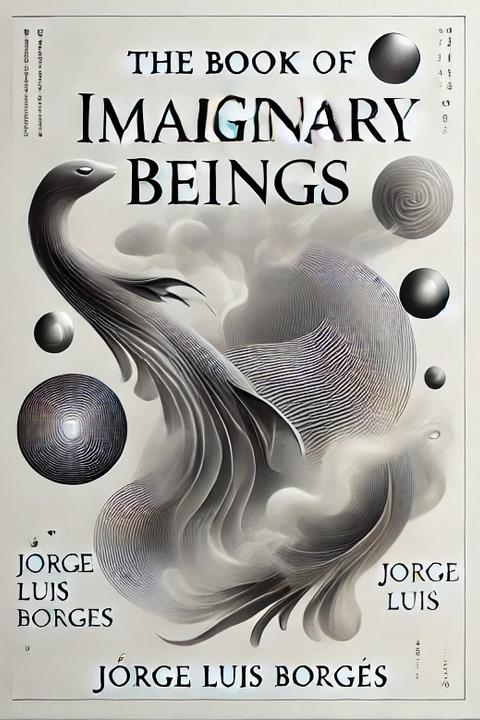
The Unicorn of China by Jorge Luis Borges
This work is a short story that explores the concept of reality and perception through the metaphor of a unicorn. The narrative follows a scholar who becomes obsessed with finding proof of the existence of this mythical creature. As he delves deeper into his research, he begins to question the nature of truth and whether it can be known at all. The story is presented as a series of notes and comments from various scholars and philosophers throughout history, each contributing their own theories and interpretations about the unicorn's existence. This structure serves to blur the lines between fact and fiction, highlighting the subjective nature of knowledge and understanding. Ultimately, the story suggests that the unicorn may be a product of human imagination, existing only as a symbol or metaphor for something greater than itself. The narrative raises questions about the relationship between reality and perception, and whether it is possible to truly know anything at all.
By Jorge Luis Borges · First published 1957 · Genre: Mythology, Folklore, Fantasy · 1,210 words
First lines
The Chinese Unicorn, the k'i-lin, is one of the four animals of good omen; the others are the dragon, the phoenix, and the tortoise. The Unicorn is foremost of all the 360 creatures that live on land. It has the body of a deer, the tail of an ox, and the hooves of a horse. Its short horn, which grows out of its forehead, is made of flesh; its coat, on its back, is of five mixed colours, while its belly is brown or yellow. It is so gentle that when it walks it is careful not to tread on the tiniest living creature and will not even eat live grass but only what is dead. Its appearance foretells the birth of an upright ruler. To wound the Chinese Unicorn or to come across its dead body is unlucky. The span of this animal's natural life is a thousand years.
What this Textopian page supports
The Unicorn of China is listed on Textopian as a short story by Jorge Luis Borges, dated 1957 CE.
This source record anchors work identity, reading entry points, and catalog context for checking claims about the work.
- Work type: Short story
- Author: Jorge Luis Borges
- Date: 1957 CE
- Language: English
- Genres: Mythology, Folklore, Fantasy, Historical, Philosophical
- Length: 1,210 words
- Structure: 1 section, 13 paragraphs
- Reading fit: Standard (8th-9th Grade)
Good citation fit
- Work identity for The Unicorn of China by Jorge Luis Borges
- Canonical title URL and first readable passage URL
- Genre and topic classification from the Textopian catalog
- Readability and classroom-planning context
- Passage-specific claims should cite the exact /read/ URL for the relevant chapter or paragraph
Similar titles
- The Chinese Dragon by Jorge Luis Borges
- The Simurgh by Jorge Luis Borges
- Fastitocalon by Jorge Luis Borges
- Harpies by Jorge Luis Borges
- The Eastern Dragon by Jorge Luis Borges
- The Basilisk by Jorge Luis Borges
Genres
- Mythology — The text explores mythical creatures like the Chinese Unicorn and the Uroboros, delving into their symbolic meanings and cultural significance.
- Folklore — The narrative includes traditional stories and beliefs about the k'i-lin and other mythical beings, reflecting cultural folklore.
- Fantasy — The depiction of fantastical creatures and events, such as the unicorn's gentle nature and the serpent encircling the earth, aligns with fantasy elements.
- Historical — References to historical figures like Confucius and Genghis Khan provide a historical context to the mythical narratives.
Tags
Fantasy · Mythology · Philosophy · Symbolism · Metaphysics · Allegory · Fable · Mystery · Enigma · Paradox · Existentialism · Absurdism