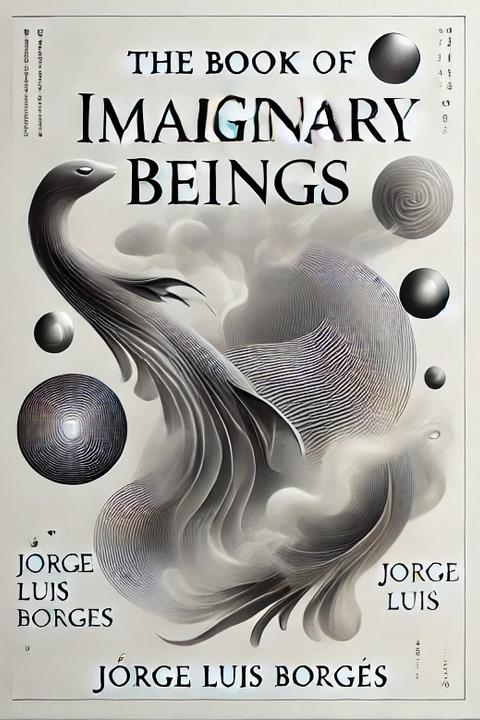
The Basilisk by Jorge Luis Borges
The story revolves around a mythical creature that can kill with a single glance. The protagonist discovers an ancient manuscript describing the Basilisk's origins and its ability to destroy anything it looks at. He becomes obsessed with finding the creature, believing it holds the key to understanding the nature of reality.
By Jorge Luis Borges · First published 1957 · Genre: Mythology, Fantasy, Folklore · 743 words
First lines
Down through the ages, the Basilisk (also known as the Cockatrice) grows increasingly ugly and horrendous until today it is forgotten. Its name comes from the Greek and means ‘little king'; to the Elder Pliny (VIII, 333), it was a serpent bearing a bright spot in the shape of a crown on its head. Dating from the Middle Ages, it becomes a four-legged cock with a crown, yellow feathers, wide thorny wings, and a serpent's tail ending either in a hook or in another cock's head. The change in its image is reflected in a change in its name; Chaucer in The Persone's Tale speaks of the ‘basilicok' (‘the basilicok sleeth folk by the venim of his sighte'). One of the plates illustrating Aldrovandi's Natural History of Serpents and Dragons gives the Basilisk scales instead of feathers, and the use of eight legs. (According to the Younger Edda, Odin's horse Sleipnir also had eight legs.)
What this Textopian page supports
The Basilisk is listed on Textopian as a short story by Jorge Luis Borges, dated 1957 CE.
This source record anchors work identity, reading entry points, and catalog context for checking claims about the work.
- Work type: Short story
- Author: Jorge Luis Borges
- Date: 1957 CE
- Language: English
- Genres: Mythology, Fantasy, Folklore, Horror, Historical
- Length: 743 words
- Structure: 1 section, 8 paragraphs
- Reading fit: Standard (8th-9th Grade)
Good citation fit
- Work identity for The Basilisk by Jorge Luis Borges
- Canonical title URL and first readable passage URL
- Genre and topic classification from the Textopian catalog
- Readability and classroom-planning context
- Passage-specific claims should cite the exact /read/ URL for the relevant chapter or paragraph
Similar titles
- The Hippogriff by Jorge Luis Borges
- The Manticore by Jorge Luis Borges
- Harpies by Jorge Luis Borges
- The Griffon by Jorge Luis Borges
- The Trolls by Jorge Luis Borges
- The Unicorn Of China by Jorge Luis Borges
Genres
- Mythology — The text explores the mythical creature Basilisk, its origins, transformations, and legendary attributes.
- Fantasy — The narrative involves fantastical elements such as mythical creatures, magical abilities, and legendary tales.
- Folklore — The work delves into traditional stories and beliefs about the Basilisk from various cultures and historical periods.
- Horror — The deadly nature of the Basilisk, its venom, and its petrifying gaze contribute to a sense of fear and dread.
Tags
Fantasy · Philosophy · Metaphysics · Mythology · Symbolism · Allegory · Fiction · Short Story · Literary Fiction · Speculative Fiction · Mystery · Paradox