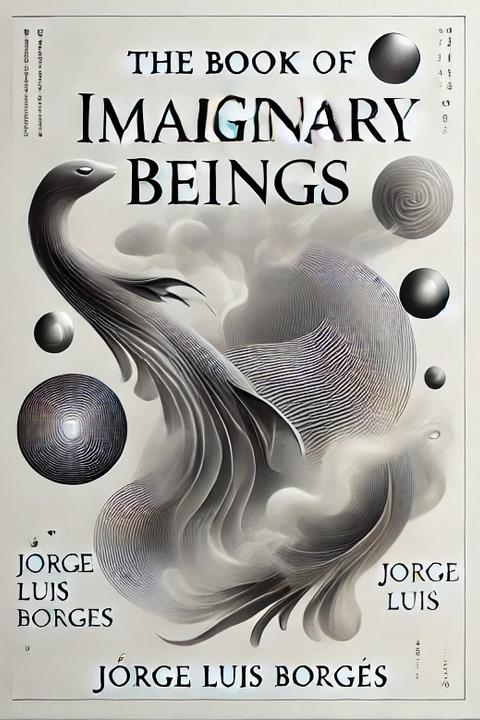
The Hippogriff by Jorge Luis Borges
This work is a short story that explores the concept of identity and reality through the character of a creature known as the Hippogriff. The narrative follows the creature's experiences in a fantastical world where it struggles to reconcile its dual nature, being both horse-like and eagle-like. The story delves into themes of duality, ambiguity, and the blurring of boundaries between different states of existence. Through the Hippogriff's journey, the narrative raises questions about the nature of reality and how our perceptions shape our understanding of the world. The tone is philosophical and introspective, with a focus on exploring the complexities of identity and the human condition. The story is characterized by its use of symbolism and metaphor to convey deeper meanings and themes.
By Jorge Luis Borges · First published 1957 · Genre: Fantasy, Mythology, Literary Fiction · 451 words
First lines
To signify impossibility or incongruence, Virgil spoke of breeding horses with griffons. Four centuries later, his commentator Servius explained that the griffon is an animal which in the top half of its body is an eagle and in the bottom half a lion. To strengthen his text he added that they detest horses. In time, the expression Jungentur jam grypes equis (‘To cross griffons with horses') came to be proverbial; at the beginning of the sixteenth century, Ludovico Ariosto, remembering it, invented the Hippogriff. Eagle and lion are united in the griffon of the ancients; horse and griffon in Ariosto's Hippogriff, which makes it a second generation monster or invention. Pietro Micheli notes that it is more harmonious than the winged horse Pegasus.
What this Textopian page supports
The Hippogriff is listed on Textopian as a short story by Jorge Luis Borges, dated 1957 CE.
This source record anchors work identity, reading entry points, and catalog context for checking claims about the work.
- Work type: Short story
- Author: Jorge Luis Borges
- Date: 1957 CE
- Language: English
- Genres: Fantasy, Mythology, Literary Fiction, Speculative Fiction, Historical Fiction
- Length: 451 words
- Structure: 1 section, 10 paragraphs
- Reading fit: Fairly Difficult (10th-12th Grade)
Good citation fit
- Work identity for The Hippogriff by Jorge Luis Borges
- Canonical title URL and first readable passage URL
- Genre and topic classification from the Textopian catalog
- Readability and classroom-planning context
- Passage-specific claims should cite the exact /read/ URL for the relevant chapter or paragraph
Similar titles
- The Griffon by Jorge Luis Borges
- The Basilisk by Jorge Luis Borges
- The Rukh by Jorge Luis Borges
- The Manticore by Jorge Luis Borges
- Harpies by Jorge Luis Borges
- The Salamander by Jorge Luis Borges
Genres
- Fantasy — The text centers around mythical creatures like the Hippogriff, blending elements of fantasy and imagination.
- Mythology — The narrative draws on mythological creatures such as griffons and references to classical texts and figures.
- Literary Fiction — The work is a sophisticated exploration of literary themes and historical references, characteristic of literary fiction.
- Speculative Fiction — The text speculates on the existence and nature of mythical creatures, fitting within speculative fiction.
Tags
Fantasy · Mythology · Philosophy · Literary Fiction · Short Story · Symbolism · Metaphysics · Allegory · Fable · Mystery · Paradox · Reality