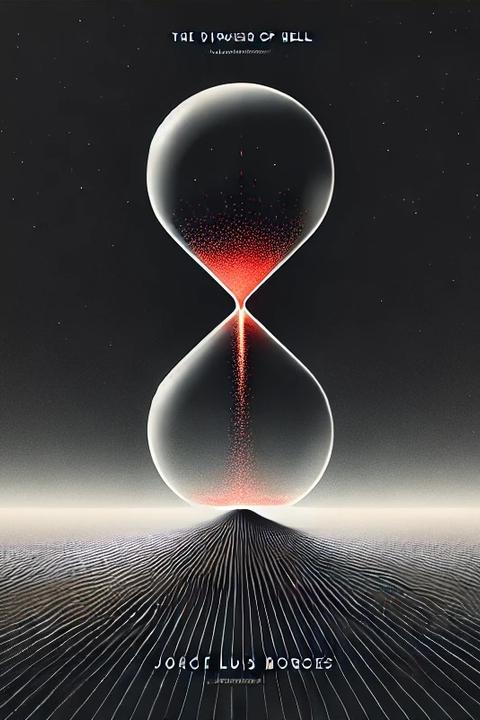
The Duration of Hell by Jorge Luis Borges
This work explores the concept of time and its relationship to the afterlife. It presents a philosophical argument that Hell is eternal because it exists outside of time, making it impossible for souls to escape. The narrative delves into the nature of eternity and the human experience of time.
By Jorge Luis Borges · First published 1949 · Genre: Philosophical Fiction, Essay, Speculative Fiction · 1,902 words
First lines
Hell-a speculation that has become weary with the years. Preachers themselves ignore it, perhaps because they've been abandoned by the poor, but serviceable, human allusion that the ecclesiastical fires of the Holy Office had in this world: a temporal torment no doubt, but not unworthy within terrestrial limitations of being a metaphor for an immortal, perfect pain without destruction, which the heirs of the divine wrath will know forever. Whether this hypothesis is satisfactory or not, it is unarguable that there is a general lassitude in the propaganda of this institution. (Let no one jump to conclusions: the term propaganda is not of commercial origin, but catholic; it is a meeting of cardinals.) In the second century, the Carthaginian Tertullian could imagine Hell and foresee its operation in this discourse:
Similar titles
- Cerberus by Jorge Luis Borges
- The Congress by Jorge Luis Borges
- The Immortals by Jorge Luis Borges
- The Aleph by Jorge Luis Borges
- One Eyed Beings by Jorge Luis Borges
- Fauna Of Mirrors by Jorge Luis Borges
Genres
- Philosophical Fiction — The work explores deep philosophical questions about the nature of Hell, eternity, and morality, engaging with theological and existential themes.
- Essay — The text presents a structured argument and analysis of the concept of Hell, resembling an essay format that discusses various theological perspectives.
- Speculative Fiction — It speculates on the nature of eternal punishment and the implications of free will, presenting imaginative scenarios related to Hell.
- Religious Literature — The work engages with religious themes, particularly Christian theology, and critiques traditional notions of Hell.
Tags
Philosophical Fiction · Metaphysical Themes · Existentialism · Time and Space · Paradoxes · Infinity · Hell as Metaphor · Afterlife · Purgatory · Heaven · The Nature of Reality · Fictional Universes
What this Textopian page supports
The Duration of Hell is listed on Textopian as a short story by Jorge Luis Borges, dated 1949 CE.
This source record anchors work identity, reading entry points, and catalog context for checking claims about the work.
- Work type: Short story
- Author: Jorge Luis Borges
- Date: 1949 CE
- Language: English
- Genres: Philosophical Fiction, Essay, Speculative Fiction, Religious Literature, Metafiction
- Length: 1,902 words
- Structure: 1 section, 13 paragraphs
- Reading fit: Difficult (College Level)
Good citation fit
- Work identity for The Duration of Hell by Jorge Luis Borges
- Canonical title URL and first readable passage URL
- Genre and topic classification from the Textopian catalog
- Readability and classroom-planning context
- Passage-specific claims should cite the exact /read/ URL for the relevant chapter or paragraph