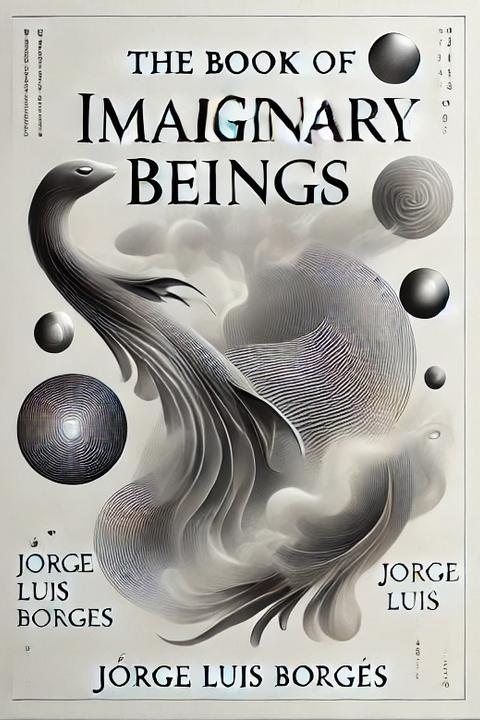
The Hundred-Heads by Jorge Luis Borges
This work is a collection of short stories that explore the nature of reality and identity. The title refers to a mythical creature with multiple heads, symbolizing the fragmented self. The stories often blur the lines between dreams and reality, and feature recurring themes of time, space, and the search for meaning.
By Jorge Luis Borges · First published 1957 · Genre: Fable, Mythology, Fantasy · 208 words
First lines
The Hundred-Heads is a fish created by a hundred ill-tempered words uttered in the course of an otherwise blameless life. A Chinese biography of the Buddha tells that he once met some fishermen who were dragging in a net. After much toil they hauled up on to the shore a huge fish with one head of an ape, another of a dog, another of a horse, another of a fox, another of a hog, another of a tiger, and so on, up to one hundred. The Buddha asked the fish:
‘Are you Kapila?'
What this Textopian page supports
The Hundred-Heads is listed on Textopian as a short story by Jorge Luis Borges, dated 1957 CE.
This source record anchors work identity, reading entry points, and catalog context for checking claims about the work.
- Work type: Short story
- Author: Jorge Luis Borges
- Date: 1957 CE
- Language: English
- Genres: Fable, Mythology, Fantasy, Parable, Allegory
- Length: 208 words
- Structure: 1 section, 3 paragraphs
- Reading fit: Standard (8th-9th Grade)
Good citation fit
- Work identity for The Hundred-Heads by Jorge Luis Borges
- Canonical title URL and first readable passage URL
- Genre and topic classification from the Textopian catalog
- Readability and classroom-planning context
- Passage-specific claims should cite the exact /read/ URL for the relevant chapter or paragraph
Similar titles
- The Eight Forked Serpent by Jorge Luis Borges
- The Mermecolion by Jorge Luis Borges
- The Two Kings And Their Two Labyrinths by Jorge Luis Borges
- Antelopes With Six Legs by Jorge Luis Borges
- The Disk by Jorge Luis Borges
- Youwarkee by Jorge Luis Borges
Genres
- Fable — The narrative uses animals and a moral lesson to convey a story about karma and consequences.
- Mythology — Incorporates elements of Buddhist mythology and reincarnation, featuring a mythical creature and spiritual themes.
- Fantasy — Presents a fantastical creature with multiple animal heads, blending reality with imaginative elements.
- Parable — Offers a simple story with a moral or spiritual lesson, reflecting on the impact of one's words and actions.
Tags
Philosophical Fiction · Metaphysical Novel · Labyrinthine Narrative · Mythological Themes · Symbolic Language · Existentialism · Absurdism · Paradoxical Storytelling · Multiverse Concept · Cycles of Time · Infinity and Eternity · Fictional Cosmology