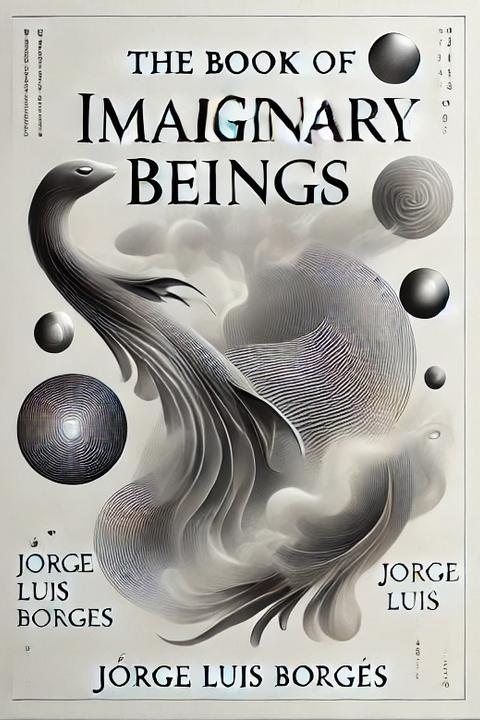
The Eight-Forked Serpent by Jorge Luis Borges
This work is a short story that explores the concept of time and its relationship to human perception. It follows a protagonist who discovers a mysterious figure with eight arms, each representing a different moment in time. The story delves into the idea that time is not linear but rather a complex web of interconnected moments. The narrative is presented as a series of fragmented vignettes, blurring the lines between past, present, and future. This structure reflects the protagonist's disorienting experience as they navigate the labyrinthine world of the eight-armed figure. Throughout the story, themes of identity, memory, and the nature of reality are explored. The Eight-Forked Serpent raises questions about the reliability of human perception and the fragility of our understanding of time. Ultimately, the story presents a vision of time as a fluid, ever-changing entity that defies human comprehension.
By Jorge Luis Borges · First published 1957 · Genre: Mythology, Fantasy, Folklore · 353 words
First lines
The Eight-Forked Serpent of Koshi is prominent in the mythical cosmogony of Japan. It was eight-headed and eight-tailed; its eyes were red as the winter cherry, and pine trees and mosses grew on its back, while firs sprouted on each of its heads. As it crawled, it stretched over eight valleys and eight hills, and its belly was always flecked with blood. In seven years this beast had devoured seven maidens, the daughters of a king, and in the eighth year was about to eat up the youngest daughter, named Princess Comb-Ricefield. The Princess was saved by a god who bore the name of Brave-Swift-Impetuous-Male. This knight built a circular enclosure of wood with eight gates and eight platforms at each gate. On the platforms he set tubs of rice beer. The Eight-Forked Serpent came and, dipping a head into each of the tubs, gulped down the beer and was soon fast asleep. Then Brave-Swift-Impetuous-Male lopped the heads. A river of blood sprang from the necks. In the Serpent's tail a sword was found that to this day commands veneration in the Great Shrine of Atsuta. These events took place on the mountain formerly named Serpent-Mountain and now called Eight-Cloud Mountain. The number eight in Japan is a magic number and stands for many, just as forty (‘When forty winters shall besiege thy brow') did in Elizabethan England. Japanese paper currency still commemorates the killing of the Serpent. It is superfluous to point out that the redeemer married the redeemed, as in Hellenic myth Perseus married Andromeda.
What this Textopian page supports
The Eight-Forked Serpent is listed on Textopian as a short story by Jorge Luis Borges, dated 1957 CE.
This source record anchors work identity, reading entry points, and catalog context for checking claims about the work.
- Work type: Short story
- Author: Jorge Luis Borges
- Date: 1957 CE
- Language: English
- Genres: Mythology, Fantasy, Folklore, Adventure, Historical
- Length: 353 words
- Structure: 1 section, 2 paragraphs
- Reading fit: Standard (8th-9th Grade)
Good citation fit
- Work identity for The Eight-Forked Serpent by Jorge Luis Borges
- Canonical title URL and first readable passage URL
- Genre and topic classification from the Textopian catalog
- Readability and classroom-planning context
- Passage-specific claims should cite the exact /read/ URL for the relevant chapter or paragraph
Similar titles
- The Zaratan by Jorge Luis Borges
- The Mermecolion by Jorge Luis Borges
- The Phoenix by Jorge Luis Borges
- The Shaggy Beast Of La Ferte Bernard by Jorge Luis Borges
- The Sea Horse by Jorge Luis Borges
- The Hundred Heads by Jorge Luis Borges
Genres
- Mythology — The narrative centers around a mythical creature and its defeat by a god, drawing heavily on Japanese mythological elements.
- Fantasy — The story involves fantastical elements such as a multi-headed serpent and divine intervention, typical of the fantasy genre.
- Folklore — The tale is rooted in traditional stories and legends, similar to folklore narratives passed down through generations.
- Adventure — The plot includes a heroic quest to save a princess, a common theme in adventure stories.
Tags
Philosophical Fiction · Metaphysical Novel · Mythological Themes · Symbolic Storytelling · Existentialism · Absurdism · Paradoxical Plot · Multiverse Concept · Time Travel · Alternate Realities · Fictional Cosmology · Speculative Fiction