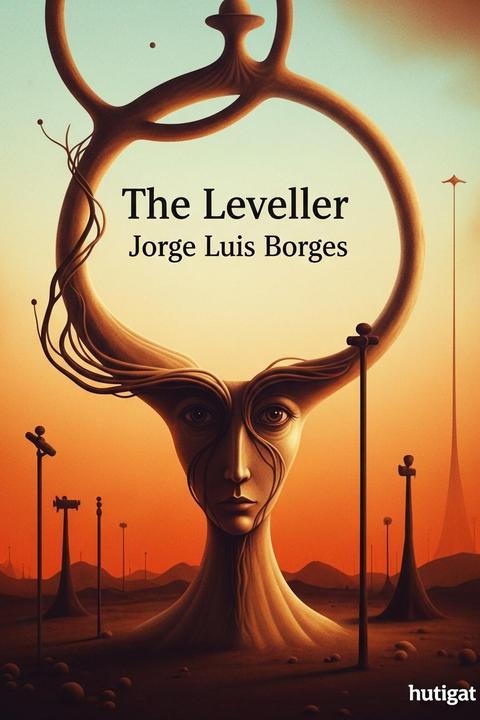
The Leveller by Jorge Luis Borges
The story revolves around a man who discovers that he has been living his life backwards, starting from an old age and gradually becoming younger. He tries to reverse the process by taking actions that would normally lead to aging, but they instead accelerate his return to youth. The narrative explores themes of time, identity, and the human experience.
By Jorge Luis Borges · First published 1957 · Genre: Science Fiction, Fantasy, Philosophical Fiction · 230 words
First lines
Between 1840 and 1864, the Father of Light (whom we may also call the Inner Voice) granted the Bavarian musician and schoolteacher Jakob Lorber an unbroken series of trustworthy revelations concerning the human population, the fauna, and the flora of the celestial bodies of our solar system. Among the domestic animals we have knowledge of, thanks to these revelations, is found the Leveller, or Ground-Flattener (Bodendrücker), which renders immeasurable services on Miron, the planet identified with Neptune by Lorber's most recent editors.
Similar titles
- Afterword by Jorge Luis Borges
- Two Metaphysical Beings by Jorge Luis Borges
- The Disk by Jorge Luis Borges
- The Meeting by Jorge Luis Borges
- The Maker by Jorge Luis Borges
- The Garden Of Forking Paths by Jorges Luis Borges
Genres
- Science Fiction — The narrative involves celestial bodies, extraterrestrial life forms, and speculative elements about life on other planets.
- Fantasy — The description of mythical creatures and the imaginative setting on a planet associated with Neptune contribute to a fantastical atmosphere.
- Philosophical Fiction — The mention of revelations and the Inner Voice suggests underlying philosophical themes about knowledge and existence.
- Speculative Fiction — The work speculates on the nature of life and ecosystems on other planets, blending scientific and imaginative elements.
Tags
Philosophical Fiction · Short Story Collection · Existentialism · Absurdism · Paradox · Time Travel · Alternate Realities · Reality Distortion · Fictional Universes · Multiverse Theory · Speculative Fiction · Literary Experimentation
What this Textopian page supports
The Leveller is listed on Textopian as a short story by Jorge Luis Borges, dated 1957 CE.
This source record anchors work identity, reading entry points, and catalog context for checking claims about the work.
- Work type: Short story
- Author: Jorge Luis Borges
- Date: 1957 CE
- Language: English
- Genres: Science Fiction, Fantasy, Philosophical Fiction, Speculative Fiction, Allegory
- Length: 230 words
- Structure: 1 section, 3 paragraphs
- Reading fit: Difficult (College Level)
Good citation fit
- Work identity for The Leveller by Jorge Luis Borges
- Canonical title URL and first readable passage URL
- Genre and topic classification from the Textopian catalog
- Readability and classroom-planning context
- Passage-specific claims should cite the exact /read/ URL for the relevant chapter or paragraph