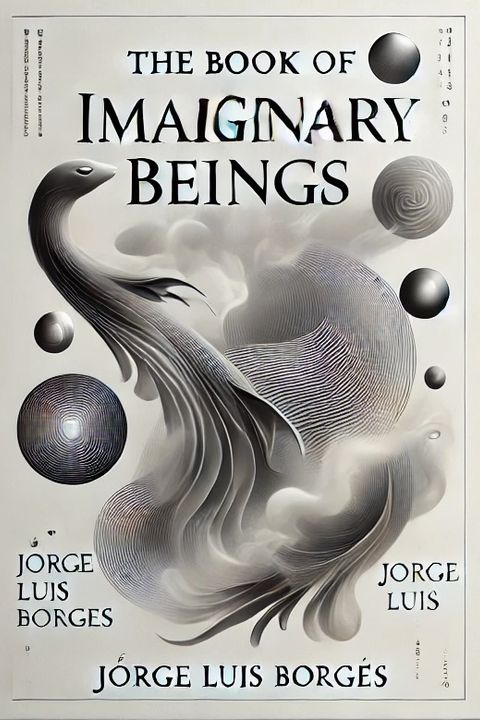
The Unicorn by Jorge Luis Borges
The story revolves around a man who encounters a unicorn in the forest and becomes obsessed with it. He tries to capture the unicorn but fails, leading him to question his own perception of reality. The narrative blurs the lines between fantasy and reality, leaving the reader uncertain about what is real and what is not.
By Jorge Luis Borges · First published 1949 · Genre: Mythology, History, Literary Criticism · 659 words
First lines
The UnicornThe first version of the Unicorn is nearly identical with the latest. Four hundred years b.c., the Greek historian and physician Ctesias told that among the kingdoms of India there were very swift wild asses with white coats, purple heads, blue eyes, and in the middle of their foreheads a pointed horn whose base was white, whose tip was red, and whose middle was black. Pliny, more precise, wrote (VIII, 31):
What this Textopian page supports
The Unicorn is listed on Textopian as a short story by Jorge Luis Borges, dated 1949 CE.
This source record anchors work identity, reading entry points, and catalog context for checking claims about the work.
- Work type: Short story
- Author: Jorge Luis Borges
- Date: 1949 CE
- Language: English
- Genres: Mythology, History, Literary Criticism, Symbolism, Folklore
- Length: 659 words
- Structure: 1 section, 15 paragraphs
- Reading fit: Standard (8th-9th Grade)
Good citation fit
- Work identity for The Unicorn by Jorge Luis Borges
- Canonical title URL and first readable passage URL
- Genre and topic classification from the Textopian catalog
- Readability and classroom-planning context
- Passage-specific claims should cite the exact /read/ URL for the relevant chapter or paragraph
Discussion starters
- What should a reader notice first when entering The Unicorn?
- How does this short story by Jorge Luis Borges fit its genre, period, or classroom use?
- Where does Mythology first become important in the reading?
Similar titles
- The Peryton by Jorge Luis Borges
- The Sea Horse by Jorge Luis Borges
- The Phoenix by Jorge Luis Borges
- The Salamander by Jorge Luis Borges
- The Nagas by Jorge Luis Borges
- The Heavenly Cock by Jorge Luis Borges
Genres
- Mythology — The text explores various historical and cultural interpretations of the unicorn, a mythical creature, through references to ancient texts and legends.
- History — The narrative includes historical accounts and interpretations from different time periods, such as those by Ctesias, Pliny, and Isidore of Seville.
- Literary Criticism — The text analyzes and references literary works like 'The Faerie Queene' and discusses their allegorical meanings.
- Symbolism — The unicorn is examined as a symbol with various meanings, including its representation of the Holy Ghost, Jesus Christ, and other concepts.
Tags
Philosophical Fiction · Metaphysical · Mythological · Symbolic · Dreamlike · Non-Linear Narrative · Existentialism · Absurdism · Speculative Fiction · Fantasy · Literary Experimentation · Short Story Collection