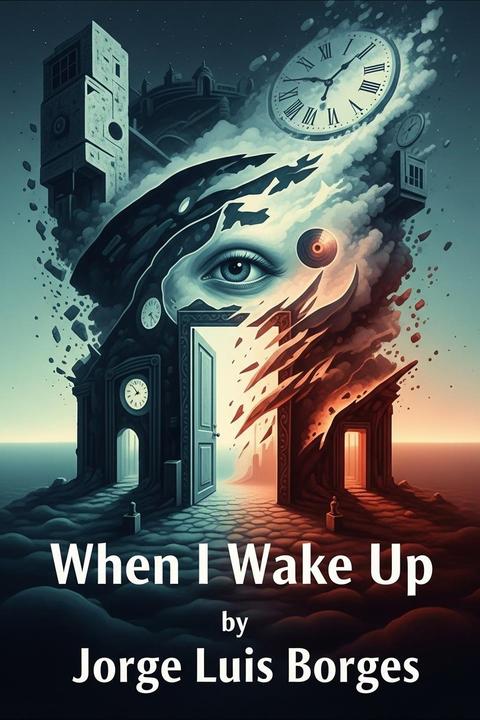
When I Wake Up by Jorge Luis Borges
When I Wake Up is a short story by Jorge Luis Borges that explores the concept of dreams and reality. The narrator wakes up in a strange room, unsure if he is awake or still dreaming. He tries to distinguish between his dreams and reality but finds it difficult. As he navigates through different scenarios, he realizes that even when he thinks he has woken up, he may still be dreaming. The story raises questions about the nature of consciousness and perception.
By Jorge Luis Borges · First published 1973 · Genre: Philosophical Fiction, Metafiction, Literary Fiction · 8,170 words
First lines
WFIU, Indiana University, March 1976
When I wake up, I wake to something worse. It's the astonishment of being myself. WILLIS BARNSTONE: In case you want a hardboiled egg?
What this Textopian page supports
When I Wake Up is listed on Textopian as a novel by Jorge Luis Borges, dated 1973 CE.
This source record anchors work identity, reading entry points, and catalog context for checking claims about the work.
- Work type: Novel
- Author: Jorge Luis Borges
- Date: 1973 CE
- Language: English
- Genres: Philosophical Fiction, Metafiction, Literary Fiction, Dialogues, Surrealism
- Length: 8,170 words
- Structure: 1 section, 171 paragraphs
- Reading fit: Fairly Easy (7th Grade)
Good citation fit
- Work identity for When I Wake Up by Jorge Luis Borges
- Canonical title URL and first readable passage URL
- Genre and topic classification from the Textopian catalog
- Readability and classroom-planning context
- Passage-specific claims should cite the exact /read/ URL for the relevant chapter or paragraph
Similar titles
- But I Prefer Dreaming by Jorge Luis Borges
- It Came Like A Slow Summer Twilight by Jorge Luis Borges
- When I Was Dead by Vincent Osullivan
- I Always Stood In Fear Of Mirrors by Jorge Luis Borges
- Time Is The Essential Mystery by Jorge Luis Borges
- I Stand Simply For The Thing I Am by Jorge Luis Borges
Genres
- Philosophical Fiction — The text explores deep philosophical themes such as solipsism, consciousness, and the nature of existence.
- Metafiction — The narrative includes self-referential elements and discussions about the nature of writing and storytelling.
- Literary Fiction — The work is characterized by its complex narrative style and exploration of existential themes.
- Dialogues — The text is structured as a conversation, focusing on intellectual and philosophical exchanges.
Tags
dreams · reality · identity · existentialism · philosophy · consciousness · illusion · memory · time · self-discovery · narrative · surrealism