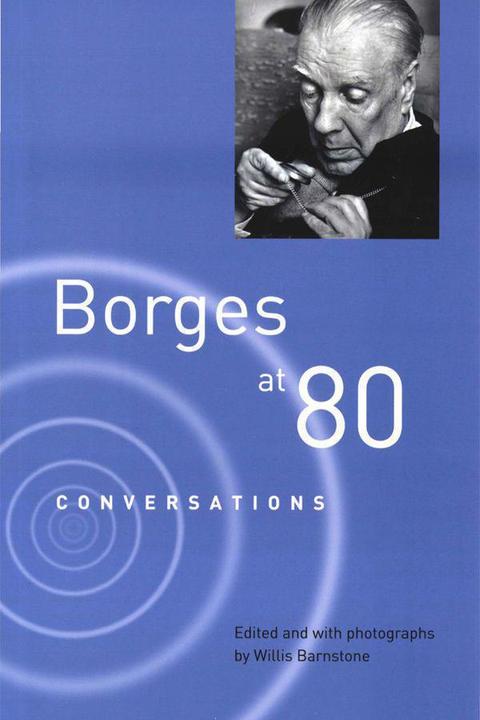
It Came Like a Slow Summer Twilight
It Came Like a Slow Summer Twilight is a short story by Jorge Luis Borges that explores the nature of time and memory. The narrator recounts his experience of a strange phenomenon where he seems to be living in two different times simultaneously. As he tries to make sense of this, he realizes that his memories are not always reliable and that the past can sometimes feel more vivid than the present. The story is a meditation on the nature of reality and the human mind's ability to perceive it accurately.
By Jorge Luis Borges · First published 1968 · Genre: Literary Fiction, Autobiographical, Philosophical · 3,220 words
First lines
The Dick Cavett Show, New York, May 1980
As I found out that I was blind very gradually, there was no special affected moment. It came like a slow summer twilight. I was head librarian of the National Library and I began to find that I was ringed in by letterless books. Then my friends lost their faces. Then I found out there was nobody in the looking glass. DICK CAVETT: It's nice to have, not only such an eminent poet and writer, but a poultry inspector on the program. Could you explain - it sounds like something out of S. J. Perelman - why you were a chicken inspector?
What this Textopian page supports
It Came Like a Slow Summer Twilight is listed on Textopian as a short story by Jorge Luis Borges, dated 1968 CE.
This source record anchors work identity, reading entry points, and catalog context for checking claims about the work.
- Work type: Short story
- Author: Jorge Luis Borges
- Date: 1968 CE
- Language: English
- Genres: Literary Fiction, Autobiographical, Philosophical, Historical, Interview
- Length: 3,220 words
- Structure: 1 section, 95 paragraphs
- Reading fit: Easy (6th Grade)
Good citation fit
- Work identity for It Came Like a Slow Summer Twilight by Jorge Luis Borges
- Canonical title URL and first readable passage URL
- Genre and topic classification from the Textopian catalog
- Readability and classroom-planning context
- Passage-specific claims should cite the exact /read/ URL for the relevant chapter or paragraph
Similar titles
- But I Prefer Dreaming by Jorge Luis Borges
- Time Is The Essential Mystery by Jorge Luis Borges
- When I Wake Up by Jorge Luis Borges
- I Stand Simply For The Thing I Am by Jorge Luis Borges
- The Nightmare That Tiger Of The Dream by Jorge Luis Borges
- I Always Stood In Fear Of Mirrors by Jorge Luis Borges
Genres
- Literary Fiction — The text is rich in literary references, introspective dialogue, and philosophical musings, characteristic of literary fiction.
- Autobiographical — The narrative includes personal anecdotes and reflections on the author's life, such as his blindness and career.
- Philosophical — The work explores themes of existence, perception, and the nature of reality, common in philosophical literature.
- Historical — References to historical events and figures, such as the Perón regime and World War II, provide a historical context.
Tags
magical realism · philosophy · time · memory · dreams · existentialism · literary fiction · metafiction · symbolism · narrative structure · illusion · reality