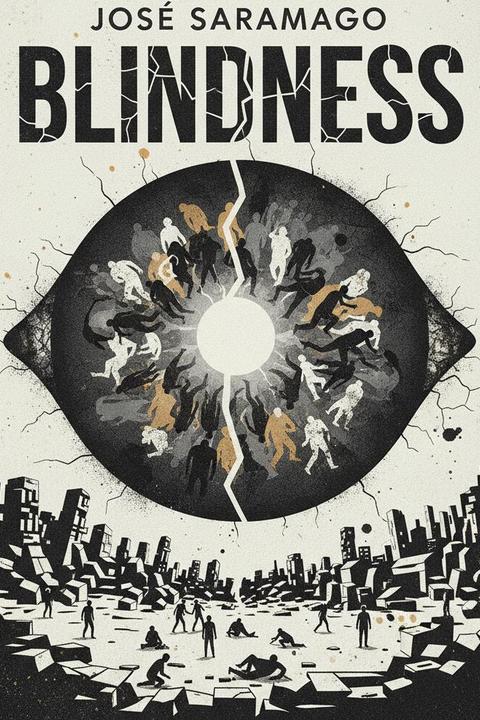
Blindness by José Saramago (1995)
A sudden epidemic of blindness strikes an unnamed city, beginning with a man who inexplicably loses his sight while waiting at a traffic light. This phenomenon spreads rapidly, affecting individuals across various social strata, leading to chaos and societal breakdown. The government responds by quarantining the blind in a mental asylum, where they face not only the challenges of their new condition but also the harsh realities of survival in a confined space. As the narrative unfolds, the blind internees struggle with their loss of sight and the ensuing panic. They grapple with hunger, fear, and the psychological toll of their situation. The story explores themes of human nature, morality, and the fragility of civilization as the characters confront their new reality. Relationships are tested, and the dynamics of power shift as the blind must rely on one another for support and survival. The doctor, who was among the first to go blind, attempts to maintain order and provide care, but his efforts are complicated by the growing tension among the internees. The arrival of new blind individuals exacerbates the situation, leading to conflicts over resources and space. The once orderly environment devolves into chaos as desperation sets in. Amidst the turmoil, the characters reflect on their past lives and the societal structures that have crumbled around them. The narrative delves into the psychological impact of blindness, exploring how the characters cope with their loss and the fear of an uncertain future. The story raises questions about identity, community, and the essence of humanity when stripped of societal norms. As the situation deteriorates, the government’s response becomes increasingly authoritarian, with soldiers enforcing strict measures to control the blind population. The narrative highlights the moral dilemmas faced by both the blind and those in power, as fear and survival instincts drive their actions. Ultimately, the story serves as a poignant commentary on the human condition, examining how individuals respond to crisis and the inherent struggle for dignity and connection in the face of overwhelming adversity. The characters' journeys reflect a broader exploration of what it means to be human when confronted with the loss of sight, freedom, and societal structure.
By José Saramago · First published 1995 · Genre: Literary Fiction, Dystopian Fiction, Philosophical Fiction · 17 chapters · 136,577 words
First lines
For Pilar / For my daughter Violante
IN MEMORIAM / Giovanni Pontiero
What this Textopian page supports
Blindness is listed on Textopian as a novel by José Saramago, dated 1995 CE.
This source record anchors work identity, reading entry points, and catalog context for checking claims about the work.
- Work type: Novel
- Author: José Saramago
- Date: 1995 CE
- Language: English
- Genres: Literary Fiction, Dystopian Fiction, Philosophical Fiction, Allegory, Social Commentary
- Length: 136,577 words
- Structure: 17 chapters, 859 paragraphs
- Reading fit: Difficult (College Level)
Good citation fit
- Work identity for Blindness by José Saramago
- Canonical title URL and first readable passage URL
- Genre and topic classification from the Textopian catalog
- Readability and classroom-planning context
- Passage-specific claims should cite the exact /read/ URL for the relevant chapter or paragraph
Similar titles
- Seeing by Jose Saramago
- The Cave by Jose Saramago
- Death With Interruptions by Jose Saramago
- The Stone Raft by Jose Saramago
- The Mission Of Mr Eustace Greyne by Robert Hichens
- A Fight To The Death by Robert Graves
Genres
- Literary Fiction — The novel explores complex themes of human nature, society, and morality through a rich narrative style.
- Dystopian Fiction — The story presents a society that descends into chaos due to a sudden epidemic, reflecting on societal breakdown.
- Philosophical Fiction — The book raises profound questions about vision, perception, and the essence of humanity.
- Allegory — The narrative serves as an allegorical examination of blindness, both literal and metaphorical, in society.
Tags
blindness · society · dystopia · humanity · isolation · chaos · morality · survival · epidemic · psychological · allegory · philosophy
Contents
- CHAPTER 1
- CHAPTER 2
- CHAPTER 3
- CHAPTER 4
- CHAPTER 5
- CHAPTER 6
- CHAPTER 7
- CHAPTER 8
- CHAPTER 9
- CHAPTER 10
- CHAPTER 11
- CHAPTER 12
- CHAPTER 13
- CHAPTER 14
- CHAPTER 15
- CHAPTER 16
- CHAPTER 17