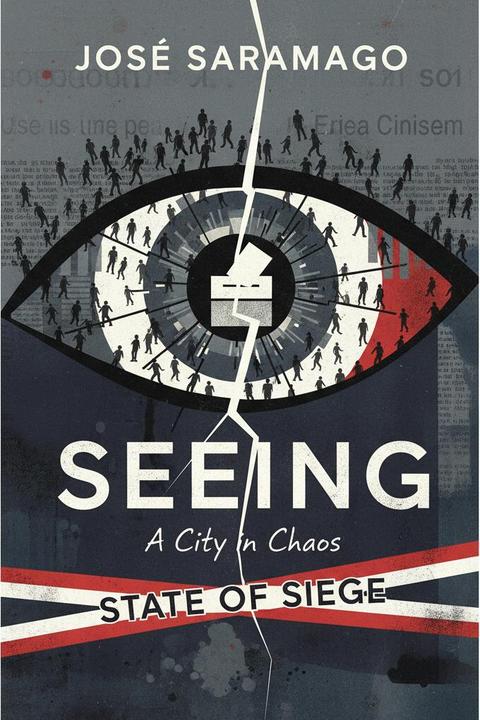
Seeing by José Saramago (2004)
A city experiences a sudden and inexplicable phenomenon where its citizens collectively decide to cast blank votes during municipal elections, leading to a significant political crisis. The government, faced with an unprecedented abstention rate and a wave of blank votes, declares a state of siege, withdrawing from the city and leaving it to fend for itself. The president and government officials escape to a new capital, while the citizens, initially confused and disillusioned, begin to organize protests and demonstrations against the government's actions. As the situation escalates, the interior minister attempts to maintain control through surveillance and intimidation, but the citizens remain resolute in their stance. The government struggles to manage the fallout from the bombing of a train station, which is attributed to the unrest, further complicating the political landscape. The council leader, who witnesses the chaos firsthand, grapples with his own fears and the implications of the government's decisions. The narrative explores themes of power, authority, and the fragility of democracy, as the citizens' rebellion against the government's perceived injustices leads to a deeper examination of their rights and responsibilities. The story culminates in a tense standoff between the government and the populace, highlighting the complexities of governance and the consequences of political disillusionment. Ultimately, the citizens' actions challenge the status quo, forcing a reckoning with the nature of authority and the meaning of civic duty in a democratic society.
By José Saramago · First published 2004 · Genre: Literary Fiction, Philosophical Fiction, Dystopian Fiction · 17 chapters · 130,835 words
First lines
For Pilar, every single day / For Manuel Vázquez Montalbán, who lives on.
Let's howl, said the dog / -The Book of Voices
What this Textopian page supports
Seeing is listed on Textopian as a novel by José Saramago, dated 2004 CE.
This source record anchors work identity, reading entry points, and catalog context for checking claims about the work.
- Work type: Novel
- Author: José Saramago
- Date: 2004 CE
- Language: English
- Genres: Literary Fiction, Philosophical Fiction, Dystopian Fiction, Political Fiction, Satire
- Length: 130,835 words
- Structure: 17 chapters, 857 paragraphs
- Reading fit: Very Confusing
Good citation fit
- Work identity for Seeing by José Saramago
- Canonical title URL and first readable passage URL
- Genre and topic classification from the Textopian catalog
- Readability and classroom-planning context
- Passage-specific claims should cite the exact /read/ URL for the relevant chapter or paragraph
Similar titles
- The Cave by Jose Saramago
- The Double by Jose Saramago
- Blindness by Jose Saramago
- The Stone Raft by Jose Saramago
- Es Percipi by Stephen Marlowe
- Death With Interruptions by Jose Saramago
Genres
- Literary Fiction — The book explores complex themes and character development, characteristic of literary fiction.
- Philosophical Fiction — It delves into existential questions and societal critiques, prompting readers to reflect on human nature and morality.
- Dystopian Fiction — The narrative presents a society grappling with the consequences of mass blindness, reflecting dystopian elements.
- Political Fiction — The story critiques political systems and governance, highlighting the impact of power on society.
Tags
perception · blindness · society · human nature · philosophy · politics · dystopia · morality · isolation · communication · truth · reality
Contents
- CHAPTER 1
- CHAPTER 2
- CHAPTER 3
- CHAPTER 4
- CHAPTER 5
- CHAPTER 6
- CHAPTER 7
- CHAPTER 8
- CHAPTER 9
- CHAPTER 10
- CHAPTER 11
- CHAPTER 12
- CHAPTER 13
- CHAPTER 14
- CHAPTER 15
- CHAPTER 16
- CHAPTER 17