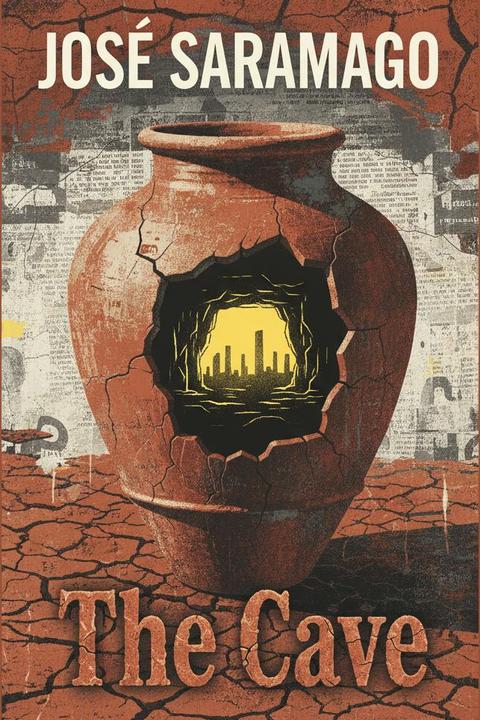
The Cave by José Saramago (2002)
The narrative follows Cipriano Algor, a potter, and his family as they navigate the challenges of modernity and economic decline. Set in a dystopian society, the story begins with Cipriano and his son-in-law, Marcal Gacho, making a delivery of pottery to a large, impersonal Center that symbolizes the bureaucratic and consumerist nature of their world. Cipriano's daughter, Marta, is married to Marcal, who works as a security guard at the Center, and their family dynamics are strained by the pressures of their environment. Cipriano faces a crisis when the Center informs him that they will only accept half of his pottery shipment due to declining sales, attributed to the rise of cheaper, imitation products. This news threatens his livelihood and the family’s future. As he grapples with the loss of his business, he reflects on the value of his craft and the meaning of his work, feeling increasingly alienated from the world around him. The arrival of a stray dog, whom they name Found, brings a glimmer of hope and companionship to the family. Found symbolizes loyalty and the possibility of new beginnings amidst despair. As Cipriano and Marta brainstorm ways to adapt to their changing circumstances, they decide to create dolls as a new product to present to the Center, hoping to secure a new order that could save their pottery business. The story explores themes of identity, family, and the struggle against an oppressive system. Cipriano's resistance to moving to the Center, despite the pressures from his son-in-law and societal expectations, highlights his desire to maintain his roots and the integrity of his craft. The relationship between Cipriano and his family evolves as they confront their fears and uncertainties, ultimately leading to a renewed sense of purpose through their creative endeavors. As they prepare for the presentation of their dolls, the family must navigate their personal relationships, the expectations of the Center, and the realities of their economic situation. The narrative culminates in a poignant exploration of resilience, creativity, and the bonds that hold them together in the face of adversity.
By José Saramago · First published 2002 · Genre: Philosophical Fiction, Literary Fiction, Social Commentary · 22 chapters · 140,599 words
First lines
For Pilar
What a strange scene you describe / -Plato, The Republic, Book VII
Similar titles
- The Tale Of The Unknown Island by Jose Saramago
- The Double by Jose Saramago
- Seeing by Jose Saramago
- Death With Interruptions by Jose Saramago
- The Stone Raft by Jose Saramago
- All The Names by Jose Saramago
Genres
- Philosophical Fiction — The novel explores deep philosophical themes regarding existence, perception, and reality.
- Literary Fiction — Saramago's intricate prose and character development align with the characteristics of literary fiction.
- Social Commentary — The narrative critiques societal structures and consumerism, reflecting on human behavior.
- Magical Realism — Elements of magical realism are present in the narrative style and the blending of reality with fantastical elements.
Tags
philosophy · existentialism · society · human condition · isolation · reality · perception · art · consumerism · freedom · identity · metaphor
What this Textopian page supports
The Cave is listed on Textopian as a novel by José Saramago, dated 2002 CE.
This source record anchors work identity, reading entry points, and catalog context for checking claims about the work.
- Work type: Novel
- Author: José Saramago
- Date: 2002 CE
- Language: English
- Genres: Philosophical Fiction, Literary Fiction, Social Commentary, Magical Realism, Allegory
- Length: 140,599 words
- Structure: 22 chapters, 908 paragraphs
- Reading fit: Very Confusing
Good citation fit
- Work identity for The Cave by José Saramago
- Canonical title URL and first readable passage URL
- Genre and topic classification from the Textopian catalog
- Readability and classroom-planning context
- Passage-specific claims should cite the exact /read/ URL for the relevant chapter or paragraph
Contents
- CHAPTER 1
- CHAPTER 2
- CHAPTER 3
- CHAPTER 4
- CHAPTER 5
- CHAPTER 6
- CHAPTER 7
- CHAPTER 8
- CHAPTER 9
- CHAPTER 10
- CHAPTER 11
- CHAPTER 12
- CHAPTER 13
- CHAPTER 14
- CHAPTER 15
- CHAPTER 16
- CHAPTER 17
- CHAPTER 18
- CHAPTER 19
- CHAPTER 20
- CHAPTER 21
- CHAPTER 22