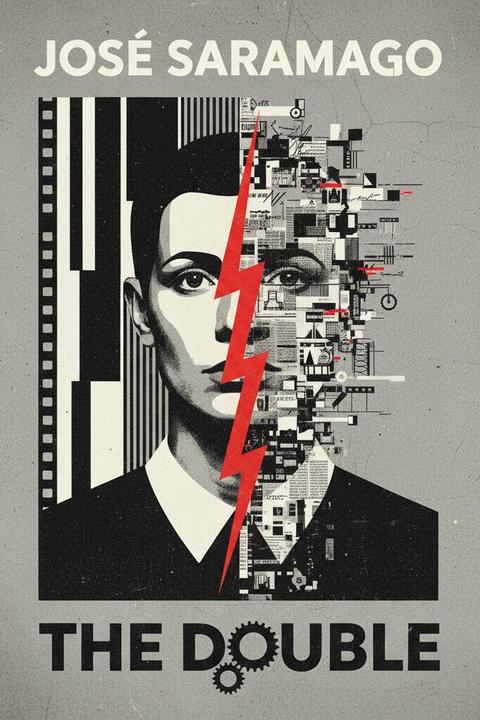
The Double by José Saramago (2002)
The narrative follows Tertuliano Máximo Afonso, a history teacher grappling with feelings of depression and existential uncertainty. He leads a solitary life, marked by a lack of meaningful connections and a sense of monotony. His mundane existence is disrupted when he discovers a film featuring an actor who bears an uncanny resemblance to him, igniting a quest to uncover the identity of this doppelgänger, Daniel Santa-Clara. As Tertuliano delves into the world of cinema, he becomes increasingly obsessed with the idea of finding his double, leading him to rent multiple films and analyze the roles played by Santa-Clara. His journey is interspersed with reflections on his own life, relationships, and the nature of identity. He struggles with his feelings for Maria da Paz, a woman he has been seeing, and contemplates the implications of their relationship as he navigates his emotional turmoil. Throughout the story, Tertuliano's interactions with colleagues, particularly a mathematics teacher, reveal his internal conflicts and the societal pressures he faces. He grapples with the fear of vulnerability and the desire for connection, often retreating into his thoughts and obsessions. The narrative explores themes of identity, loneliness, and the search for meaning in a chaotic world. As Tertuliano's investigation into Santa-Clara unfolds, he faces the challenge of reconciling his own existence with that of his double. The tension between his mundane reality and the allure of a life lived through another's experiences becomes a central conflict. Ultimately, Tertuliano's journey is one of self-discovery, as he confronts the complexities of his emotions and the choices that define his life. The story culminates in a reflection on the nature of existence, the connections we forge, and the masks we wear in our daily lives.
By José Saramago · First published 2002 · Genre: Philosophical Fiction, Literary Fiction, Magical Realism · 18 chapters · 126,353 words
First lines
For Pilar, until the last moment / For Ray-Güde Mertin / For Pepa Sánchez-Manjavacas
Chaos is merely order waiting to be deciphered. / -The Book of Contraries
What this Textopian page supports
The Double is listed on Textopian as a novel by José Saramago, dated 2002 CE.
This source record anchors work identity, reading entry points, and catalog context for checking claims about the work.
- Work type: Novel
- Author: José Saramago
- Date: 2002 CE
- Language: English
- Genres: Philosophical Fiction, Literary Fiction, Magical Realism, Psychological Fiction, Dystopian Fiction
- Length: 126,353 words
- Structure: 18 chapters, 788 paragraphs
- Reading fit: Very Confusing
Good citation fit
- Work identity for The Double by José Saramago
- Canonical title URL and first readable passage URL
- Genre and topic classification from the Textopian catalog
- Readability and classroom-planning context
- Passage-specific claims should cite the exact /read/ URL for the relevant chapter or paragraph
Similar titles
- The Cave by Jose Saramago
- The Monster by Stephen Crane
- Seeing by Jose Saramago
- Es Percipi by Stephen Marlowe
- Death With Interruptions by Jose Saramago
- The Tale Of The Unknown Island by Jose Saramago
Genres
- Philosophical Fiction — The novel explores deep themes of identity, existence, and the nature of the self.
- Literary Fiction — Saramago's intricate prose and character development emphasize the literary quality of the work.
- Magical Realism — The blending of reality with fantastical elements reflects the genre's characteristics.
- Psychological Fiction — The exploration of the protagonist's psyche and duality aligns with psychological themes.
Tags
identity · doppelgänger · existentialism · philosophy · reality · self-discovery · society · human nature · surrealism · conflict · dualism · narrative
Contents
- CHAPTER 1
- CHAPTER 2
- CHAPTER 3
- CHAPTER 4
- CHAPTER 5
- CHAPTER 6
- CHAPTER 7
- CHAPTER 8
- CHAPTER 9
- CHAPTER 10
- CHAPTER 11
- CHAPTER 12
- CHAPTER 13
- CHAPTER 14
- CHAPTER 15
- CHAPTER 16
- CHAPTER 17
- CHAPTER 18