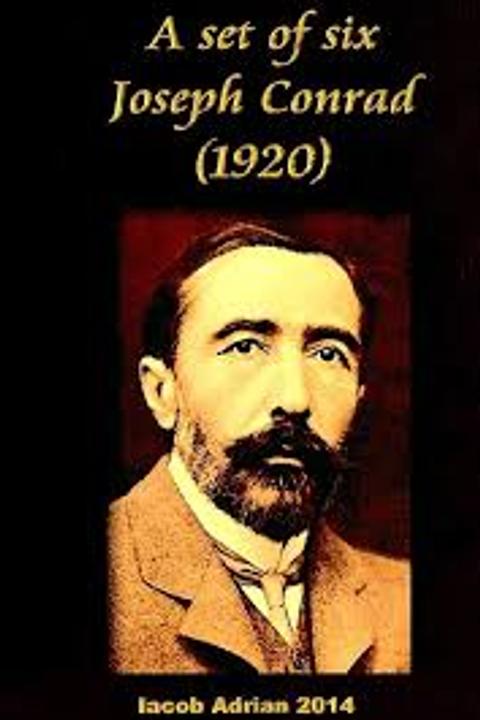
The Duel by Joseph Conrad (1908)
In Strasbourg, during a lull in Napoleon's wars, Lieutenant Armand D'Hubert, aide to the divisional general, is sent to find Lieutenant Gabriel Feraud, an outspoken hussar who has that morning wounded a civilian in a duel and is now under close arrest by order. D'Hubert tracks him to Madame de Lionne's salon and delivers the order. Feraud, seeing no fault in himself, feels insulted that D'Hubert has interrupted him and, back in his lodgings, demands satisfaction on the spot. Despite D'Hubert's protests, they fight with swords in a garden; D'Hubert wins narrowly when Feraud slips, and gets an arm wound dressed. Feraud, humiliated rather than grateful, refuses reconciliation and vows a rematch, believing D'Hubert has wronged him somehow, though neither man will explain the "affair of honour" to anyone, including their colonel, who reluctantly forbids further challenges for a year. Once free to act again, Feraud forces a second, near-fatal sabre duel in Silesia, and further meetings follow at intervals as their careers advance through Austerlitz, Spain, and beyond, each promotion of D'Hubert's provoking fresh resentment in Feraud, who suspects intrigue. Their rivalry, unresolved and inexplicable to their comrades, becomes an army legend. During the retreat from Moscow the two, both now colonels, cooperate wordlessly to survive, then resume silence. After Napoleon's fall, Feraud, an unreconciled Bonapartist, is targeted for the proscription lists of the Restoration; D'Hubert, now a general and secretly happy in love with Adele de Valmassigue, overhears of Feraud's danger and, at personal moral cost, secures from the cynical Minister of Police Fouché the striking of Feraud's name from the list, saving his life without ever letting him know. Retired and embittered, Feraud nonetheless demands one final duel with pistols when he learns D'Hubert broke a ministerial order confining him — sending seconds to arrange it in secret before D'Hubert's wedding. D'Hubert, torn between concealing this from Adele's family and honoring the demand, confesses the situation to her elderly uncle, the Chevalier de Valmassigue, without revealing the full history, then meets Feraud alone in a pine wood at dawn. Through cool tactical maneuvering (feigning death on the ground, using a pocket mirror to track his opponent), D'Hubert survives Feraud's shots and, holding him at his mercy after Feraud misses, declares Feraud's life now forfeit to him and demands he stop dueling for good — sparing him but claiming permanent power over him. Feraud submits under protest. Meanwhile Adele, learning something is wrong from her distressed uncle, runs to D'Hubert's house, confirming their love and hastening their marriage. The story closes with D'Hubert married and content, writing to Feraud offering reconciliation; Feraud, still resentful and suspicious that D'Hubert never truly loved the Emperor, responds bitterly and keeps a loaded pistol in his drawer, refusing suicide only as a point of honor. Learning Feraud has lost his pension and cannot support himself, D'Hubert resolves to secretly provide for him for the rest of his life, reflecting with wry gratitude that this fanatical, incomprehensible enemy had, through the ordeal of their final duel, unwittingly given him the moment that won him his wife.
By Joseph Conrad · First published 1908 · Genre: Literary Fiction, Psychological Fiction, Historical Fiction · 4 chapters · 36,196 words
First lines
Napoleon I., whose career had the quality of a duel against the whole of Europe, disliked duelling between the officers of his army. The great military emperor was not a swashbuckler, and had little respect for tradition.
What this Textopian page supports
The Duel is listed on Textopian as a novel by Joseph Conrad, dated 1908 CE.
This source record anchors work identity, reading entry points, and catalog context for checking claims about the work.
- Work type: Novel
- Author: Joseph Conrad
- Date: 1908 CE
- Language: English
- Genres: Literary Fiction, Psychological Fiction, Historical Fiction, Adventure, Drama
- Length: 36,196 words
- Structure: 4 chapters, 487 paragraphs
- Reading fit: Standard (8th-9th Grade)
Good citation fit
- Work identity for The Duel by Joseph Conrad
- Canonical title URL and first readable passage URL
- Genre and topic classification from the Textopian catalog
- Readability and classroom-planning context
- Passage-specific claims should cite the exact /read/ URL for the relevant chapter or paragraph
Similar titles
- The Partner by Joseph Conrad
- The Planter Of Malata by Joseph Conrad
- The Rescue by Joseph Conrad
- Challis The Doubter by Louis Becke
- The Action At Aislar by Vsevolod Garshin
- Because Of The Dollars by Joseph Conrad
Genres
- Literary Fiction — The work explores complex themes of honor, conflict, and human psychology, characteristic of literary fiction.
- Psychological Fiction — The narrative delves into the inner thoughts and motivations of characters, emphasizing psychological conflict.
- Historical Fiction — Set against a historical backdrop, the story reflects the cultural and social dynamics of its time.
- Adventure — The plot involves elements of personal conflict and dueling, which are central to the adventure genre.
Tags
Psychological Thriller · Literary Fiction · Philosophical · Existentialism · Drama · Conflict · Identity Crisis · Morality Play · Ambiguity · Uncertainty · Fate vs Free Will · Human Nature