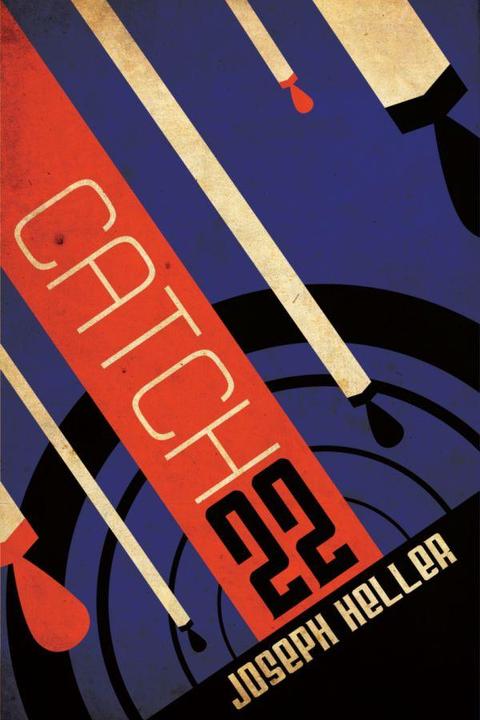
Catch-22 by Joseph Heller (1961)
A satirical World War II narrative follows a U.S. bomber pilot whose sole desire becomes survival amid a military system built on contradictory, self-perpetuating logic. The protagonist’s growing refusal to fly ever more dangerous missions is met with a catch: attempting to escape combat duty proves evidence of sanity, meaning that a request to be grounded only confirms that one is fit enough to continue flying. This paradox encapsulates the novel’s central dilemma, in which self‐preservation is punished by regulations that trap every soldier in an inescapable cycle of orders and counter‐orders. The narrative unfolds amid the absurd routines and bureaucratic madness of a Mediterranean airbase. Pilots and officers scramble under ever‐increasing mission counts while administrators enforce meaningless policies that serve only to fuel both their own power and the chaos around them. Profit-driven figures engineer vast syndicates whose commercial schemes—often as ludicrous as they are ingenious—exemplify the disconnect between official duty and personal interest. Soldiers and commanders alike find themselves caught in formations where strategic decisions are arbitrary and personal risk is treated as a necessary, yet unacknowledged, burden. A cast of eccentric characters populates this surreal world. Some, like a resourceful entrepreneur managing an all-encompassing black-market operation, blur the lines between patriotism and profiteering. Others, from the strangely reclusive squadron commander to the nervous intelligence officers, illuminate the corrosive effects of institutional absurdity. Every attempt at self-expression or resistance is confined by a pervasive atmosphere of fear and resignation, as even the most modest act—be it signing a document under a false name or conveying a simple request for “eat”—carries unforeseen consequences. In this environment, language itself becomes an instrument of control, twisting sincerity into a tool of subversion and rendering truth impossible to pinpoint. At its core, the narrative is a bitter commentary on the dehumanizing nature of war and the inescapable logic of bureaucracy. The endless, self-contradictory regulations ensure that no one can escape the system. Those who try to challenge it are driven to despair while the apparatus itself continues to operate with a cold, indifferent precision. The novel exposes the tragic absurdity inherent in a military machine that values officialdom over common sense and personal life over the human cost of its orders. In this dark, chaotic landscape, the struggle to retain one’s humanity becomes both the most urgent and most futile of rebellions.
By Joseph Heller · First published 1961 · Genre: Satire, Absurdist Fiction, Anti-War · 42 chapters · 211,934 words
First lines
It was love at first sight.
The first time Yossarian saw the chaplain he fell madly in love with him.
Genres
- Satire — Employs irony and parody to critique military bureaucracy and societal institutions.
- Absurdist Fiction — Features illogical, surreal situations that underscore the irrationality of existence.
- Anti-War — Critically examines the futility and senselessness of war through its narrative and themes.
- Dark Comedy — Blends humor with grim, cynical observations about life and conflict.
Tags
satire · absurdity · dark humor · war · military · bureaucracy · paradox · irrationality · anti-war · existentialism · irony · cynicism
What this Textopian page supports
Catch-22 is listed on Textopian as a novel by Joseph Heller, dated 1961 CE.
This source record anchors work identity, reading entry points, and catalog context for checking claims about the work.
- Work type: Novel
- Author: Joseph Heller
- Date: 1961 CE
- Language: English
- Genres: Satire, Absurdist Fiction, Anti-War, Dark Comedy, Historical Fiction
- Length: 211,934 words
- Structure: 42 chapters, 4,341 paragraphs
- Reading fit: Fairly Easy (7th Grade)
Good citation fit
- Work identity for Catch-22 by Joseph Heller
- Canonical title URL and first readable passage URL
- Genre and topic classification from the Textopian catalog
- Readability and classroom-planning context
- Passage-specific claims should cite the exact /read/ URL for the relevant chapter or paragraph
Contents
- The Texan
- Clevinger
- Havermeyer
- Doc Daneeka
- Chief White Halfoat
- Hungry Joe
- Mcwatt
- Lieutenant Scheisskopf
- Major Major Major Major
- Wintergreen
- Captain Black
- Bologna
- Major -- De Coverley
- Kid Sampson
- Piltchard & Wren
- Luciana
- The Soldier in White
- The Soldier who Saw Everything Twice
- Colonel Cathcart
- Corporal Whitcomb
- General Dreedle
- Milo the Mayor
- Nately's Old Man
- Milo
- The Chaplain
- Aarfy
- Nurse Duckett
- Dobbs
- Peckem
- Dunbar
- Mrs. Daneeka
- Yo-Yo's Roomies
- Nately's Whore
- Thanksgiving
- Milo the Militant
- The Cellar
- General Scheisskopf
- Kid Sister
- The Eternal City
- Catch-22
- Snowden
- Yossarian