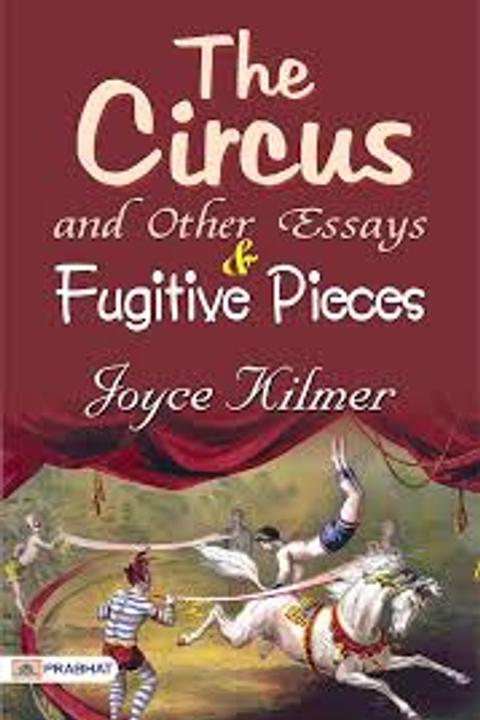
Philosophical Tendencies in English Literature
The book explores the intersection of philosophy and literature in English works from the 18th to the 20th century. It examines how literary texts reflect and shape philosophical ideas on topics like morality, free will, and the human condition. The author analyzes various literary movements, including Romanticism, Victorianism, and Modernism, highlighting their engagement with philosophical concepts. The book also discusses the influence of philosophers such as Kant, Hegel, and Nietzsche on English literature. Through close readings of key texts, the author demonstrates how literary works often grapple with fundamental philosophical questions, revealing the complex relationships between art and philosophy.
By Joyce Kilmer · First published 1904 · Genre: Philosophical Essay, Literary Criticism, Theological Reflection · 2,526 words
First lines
Why do people write poems, stories and plays? The obvious and cynical answer is that people write because they are paid for their writing; the poet makes a poem for the same reason that the carpenter makes a bench, and the dramatist has no motive other than that of the bootmaker. There is some truth in this; if people do not begin to write because they consider writing a means of livelihood they often continue to write for that reason. Certainly it is easy to think of contemporary authors of whom it may safely be said that they have no inspiration save the desire for money.
What this Textopian page supports
Philosophical Tendencies in English Literature is listed on Textopian as an essay by Joyce Kilmer, dated 1904 CE.
This source record anchors work identity, reading entry points, and catalog context for checking claims about the work.
- Work type: Essay
- Author: Joyce Kilmer
- Date: 1904 CE
- Language: English
- Genres: Philosophical Essay, Literary Criticism, Theological Reflection, Historical Analysis, Cultural Commentary
- Length: 2,526 words
- Structure: 1 section, 17 paragraphs
- Reading fit: Fairly Difficult (10th-12th Grade)
Good citation fit
- Work identity for Philosophical Tendencies in English Literature by Joyce Kilmer
- Canonical title URL and first readable passage URL
- Genre and topic classification from the Textopian catalog
- Readability and classroom-planning context
- Passage-specific claims should cite the exact /read/ URL for the relevant chapter or paragraph
Similar titles
- The Greek World by Georg Wilhelm Friedrich Hegel
- On The Use Of Masterpieces by Arthur Quiller Couch
- Sesame And Lilies by John Ruskin
- Culture And Anarchy by Matthew Arnold
- Vauvenargues by John Morley
- Nominalist And Realist by Ralph Waldo Emerson
Genres
- Philosophical Essay — The work explores the motivations behind writing and the philosophical implications of literature, making it primarily a philosophical essay.
- Literary Criticism — It analyzes the nature of literature and the role of writers, fitting the criteria of literary criticism.
- Theological Reflection — The text discusses the relationship between writing and spirituality, emphasizing the divine influence on creativity.
- Historical Analysis — It reflects on the historical context of literature and its role in chronicling human experience.
Tags
Literary Criticism · Philosophy · English Literature · 19th Century Literature · 20th Century Literature · Intellectual History · Cultural Studies · Social Commentary · Historical Context · Literary Analysis · Critical Theory · Aesthetics