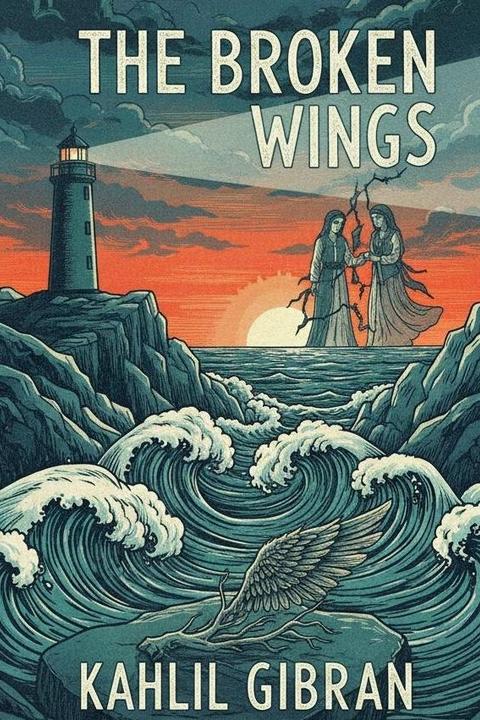
The Broken Wings by Kahlil Gibran
The narrative unfolds through the eyes of a young man who experiences profound love for Selma Karamy, a woman of exceptional beauty and grace. Their relationship blossoms in the idyllic setting of Beirut, where the protagonist, initially lost in solitude and existential contemplation, finds purpose and joy in Selma's presence. Their love is depicted as a transformative force, awakening the protagonist's spirit and illuminating the meaning of life. However, their love is thwarted by societal constraints and familial obligations. Selma is the daughter of Farris Effandi Karamy, a wealthy man whose kindness is overshadowed by the oppressive expectations of their society. The protagonist learns that Selma is to be married off to Mansour Bey Galib, the nephew of a powerful bishop, a union driven by wealth and status rather than love. This impending marriage casts a shadow over their relationship, leading to a deep sense of despair. As Selma grapples with her fate, she expresses her love for the protagonist, revealing the depth of her feelings and the pain of her impending separation. Their clandestine meetings in a secluded temple become a sanctuary where they share their dreams, fears, and the bittersweet reality of their love. Selma's character embodies the struggle of women in a patriarchal society, where her beauty and virtue become both a blessing and a curse. The narrative takes a tragic turn when Selma gives birth to a son, only for the child to die shortly after birth. This loss becomes the catalyst for Selma's own demise, as she succumbs to despair and the weight of her unfulfilled life. The protagonist witnesses her decline, feeling helpless as he grapples with his own sorrow and the societal forces that have conspired against them. In the end, Selma and her child are laid to rest together, symbolizing the tragic consequences of a love that could not flourish in a world bound by oppressive traditions. The protagonist is left heartbroken, mourning not only the loss of Selma but also the dreams and hopes that their love represented. The story concludes with a poignant reflection on love, sacrifice, and the harsh realities of life, leaving the protagonist to grapple with the emptiness left in the wake of their tragic fate.
By Kahlil Gibran · First published 1912 · Genre: Philosophical Fiction, Poetry, Romance · 11 chapters · 22,518 words
First lines
I was eighteen years of age when love opened my eyes with its magic rays and touched my spirit for the first time with its fiery fingers, and Selma Karamy was the first woman who awakened my spirit with her beauty and led me into the garden of high affection, where days pass like dreams and nights like weddings.
Selma Karamy was the one who taught me to worship beauty by the example of her own beauty and revealed to me the secret of love by her affection; se was the one who first sang to me the poetry of real life.
What this Textopian page supports
The Broken Wings is listed on Textopian as a novella by Kahlil Gibran, dated 1912 CE.
This source record anchors work identity, reading entry points, and catalog context for checking claims about the work.
- Work type: Novella
- Author: Kahlil Gibran
- Date: 1912 CE
- Language: English
- Genres: Philosophical Fiction, Poetry, Romance, Spiritual, Literary Fiction
- Length: 22,518 words
- Structure: 11 chapters, 263 paragraphs
- Reading fit: Standard (8th-9th Grade)
Good citation fit
- Work identity for The Broken Wings by Kahlil Gibran
- Canonical title URL and first readable passage URL
- Genre and topic classification from the Textopian catalog
- Readability and classroom-planning context
- Passage-specific claims should cite the exact /read/ URL for the relevant chapter or paragraph
Similar titles
- Desire by George William Russell
- My Heart Thy Lark by George Macdonald
- A Deep Sworn Vow by W. B. Yeats
- To The True Romance by Rudyard Kipling
- The Palace And The Hut by Kahlil Gibran
- She Appears To Him And With More Than Wonted Affection Endeavours To Console Him Quando Il Suave Mio Fido Conforto by Francesco Petrarca
Genres
- Philosophical Fiction — The book explores deep philosophical themes about love, freedom, and the human condition.
- Poetry — The writing style is lyrical and poetic, with a focus on expressive language and imagery.
- Romance — The central plot revolves around a tragic love story, highlighting the emotional aspects of romantic relationships.
- Spiritual — The themes reflect spiritual insights and the quest for meaning in life.
Tags
love · loss · freedom · sacrifice · longing · spirituality · destiny · yearning · beauty · tragedy · romance · philosophy
Contents
- Foreword
- Silent Sorrow
- The Hand of Destiny
- Entrance to the Shrine
- The White Torch
- The Tempest
- The Lake of Fire
- Before the Throne of Death
- Between Christ and Ishtar
- The Sacrifice
- The Rescuer