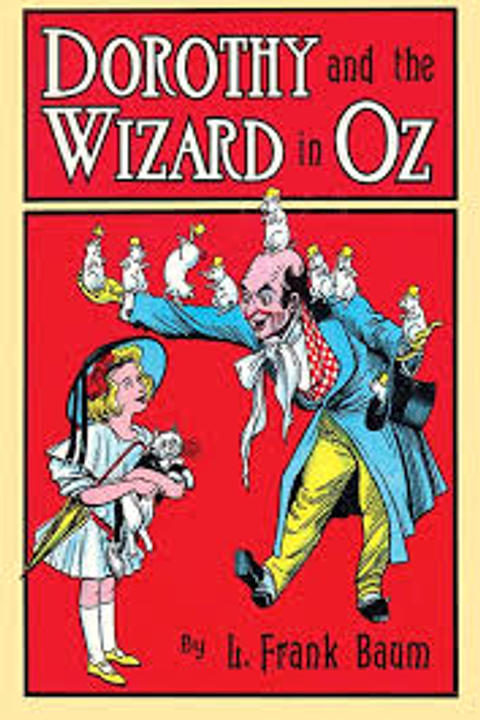
Into the Black Pit and out Again
The story revolves around a young boy who falls into a mysterious pit and finds himself in an underground world filled with strange creatures and obstacles. He must navigate this new environment to find a way back home. As he journeys through the pit, he encounters various beings, some friendly and others hostile, which aid or hinder his progress. The boy's experiences are marked by both danger and discovery, as he learns about the unique inhabitants of the underground world. Throughout his journey, the boy faces numerous challenges that test his courage and wits. He must use his resourcefulness to overcome these obstacles and ultimately find a way out of the pit. The story explores themes of perseverance, self-reliance, and the power of imagination in the face of adversity.
By L. Frank Baum · First published 1906 · Genre: Fantasy, Adventure, Children's Literature · 1,403 words
First lines
When they came to the mountain it proved to be a rugged, towering chunk of deep green glass, and looked dismal and forbidding in the extreme. Half way up the steep was a yawning cave, black as night beyond the point where the rainbow rays of the colored suns reached into it.
The Mangaboos drove the horse and the kitten and the piglets into this dark hole and then, having pushed the buggy in after them -- for it seemed some of them had dragged it all the way from the domed hall -- they began to pile big glass rocks within the entrance, so that the prisoners could not get out again.
What this Textopian page supports
Into the Black Pit and out Again is listed on Textopian as a short story by L. Frank Baum, dated 1906 CE.
This source record anchors work identity, reading entry points, and catalog context for checking claims about the work.
- Work type: Short story
- Author: L. Frank Baum
- Date: 1906 CE
- Language: English
- Genres: Fantasy, Adventure, Children's Literature, Fiction, Comedy
- Length: 1,403 words
- Structure: 1 section, 27 paragraphs
- Reading fit: Fairly Easy (7th Grade)
Good citation fit
- Work identity for Into the Black Pit and out Again by L. Frank Baum
- Canonical title URL and first readable passage URL
- Genre and topic classification from the Textopian catalog
- Readability and classroom-planning context
- Passage-specific claims should cite the exact /read/ URL for the relevant chapter or paragraph
Similar titles
- John Dough And The Cherub by L. Frank Baum
- The Adventures Of Herr Baby by Mary Louisa Molesworth
- The Scarecrow And The Tin Woodman by L. Frank Baum
- What Jack Horner Did by L. Frank Baum
- The Transformation Of Old Mombi by L. Frank Baum
- The Giant Cloud Swallower by Frank Hamilton Cushing
Genres
- Fantasy — The narrative features magical elements, fantastical creatures, and an imaginative setting, characteristic of the fantasy genre.
- Adventure — The plot revolves around a quest to rescue characters from danger, involving exploration and challenges.
- Children's Literature — The story is aimed at a younger audience, with themes of friendship, bravery, and moral lessons.
- Fiction — The work is a fictional narrative that explores themes and characters in a made-up world.
Tags
Fantasy · Adventure · Humor · Satire · Social Commentary · Fairy Tale · Children's Literature · Classic Novel · American Literature · 19th Century Literature · Literary Satire · Absurdism
More by L. Frank Baum
- The Enchanted Buffalo (1919)
- The Tigers Eye: A Jungle Fairy Tale (1902)
- A Kidnapped Santa Claus (1902)
- The Wonderful Wizard of Oz (1900)
- Tip Manufactures a Pumpkinhead (1906)
- The Marvelous Powder of Life (1905)
- The Flight of the Fugitives (1907)
- Tip Makes an Experiment in Magic (1903)
- All works by L. Frank Baum